
The Rise of Stablecoin Enforcement and Its Impact on Crypto Compliance Investing
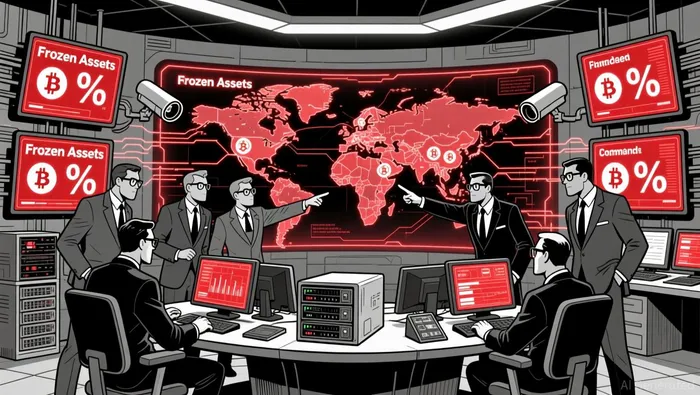
The crypto industry is witnessing a seismic shift in how stablecoins are governed, enforced, and perceived by regulators and investors alike. At the center of this transformation is TetherUSDT-- (USDT), whose aggressive wallet-freezing initiatives between 2023 and 2025 have redefined the landscape of stablecoin compliance. By seizing over $3.3 billion in assets and blacklisting 7,268 wallets linked to illicit activities, Tether has demonstrated a proactive alignment with global regulatory priorities, from countering terrorism financing to enforcing sanctions. These actions are not just operational updates-they signal a new era where stablecoin issuers are becoming critical partners in the fight against financial crime, reshaping market trust and institutional investment strategies.
Tether's Enforcement: A New Standard for Regulatory Collaboration
Tether's enforcement model is both expansive and precise. In July 2025, the company froze $1.6 million in USDT tied to a Gaza-based terror financing network, reissuing the tokens to U.S. government-controlled wallets under a civil forfeiture framework. This operation, conducted in collaboration with the Department of Justice, exemplifies how Tether leverages its centralized control to act preemptively-often without waiting for court orders. By contrast, competitors like Circle (USDC) adopt a more legally cautious approach, freezing funds only when compelled by formal legal mandates.
Tether's reach extends beyond U.S. borders. The company now works with over 275 law enforcement agencies across 59 jurisdictions, enabling it to freeze wallets based on real-time investigative intelligence. For instance, in January 2026, Tether froze $182 million in USDT across five Tron-based wallets linked to illicit activity, showcasing its ability to scale enforcement across blockchain ecosystems. Such actions underscore Tether's role as a global compliance actor, bridging the gap between decentralized finance and traditional regulatory frameworks.
Strategic Infrastructure Shifts and Market Implications
Tether's enforcement efforts are complemented by strategic infrastructure overhauls. In September 2025, the company announced the discontinuation of USD₮ support for five legacy blockchains (including Omni, EOS, and Algorand) to focus resources on active ecosystems like EthereumETH-- and TronTRX--. This move not only streamlines operations but also aligns with regulatory expectations for transparency and traceability. By concentrating on high-liquidity chains, Tether enhances its ability to monitor and act on suspicious activity, further solidifying its position as a compliance-driven stablecoin.
However, Tether's centralized model is not without controversy. The 2025 Texas lawsuit over a $44.7 million freeze highlighted tensions between user rights and enforcement priorities. Critics argue that such actions risk eroding trust in decentralized systems, while proponents view them as necessary to prevent stablecoins from becoming conduits for crime. This debate reflects a broader industry struggle to balance innovation with accountability-a challenge that Tether's enforcement model is forcing into sharper focus.
The Compliance Premium: How Tether's Actions Influence Institutional Investment
Tether's aggressive compliance stance is reshaping investor perceptions. According to a report by Yahoo Finance, Tether's $3.3 billion in freezes between 2023 and 2025 dwarfed Circle's $109 million in similar actions during the same period, creating a 30x gap in enforcement rigor. For institutional investors, this disparity signals a critical differentiator: stablecoins that actively combat illicit use are more likely to gain regulatory approval and long-term market viability.
The burn-and-reissue mechanism-where frozen tokens are destroyed and replaced to return assets to victims or authorities- further enhances Tether's appeal to compliance-focused investors. This process not only mitigates reputational risks but also demonstrates a commitment to ethical governance. As a result, institutions increasingly view Tether as a "compliance-ready" asset, particularly in jurisdictions where stablecoin oversight is tightening.
Conclusion: A New Era of Stablecoin Governance
Tether's enforcement initiatives mark a turning point in stablecoin governance. By freezing billions in illicit assets, collaborating with global law enforcement, and refining its infrastructure, Tether has positioned itself as a regulatory ally rather than a disruptive force. While concerns about centralization persist, the market's response-measured in institutional adoption and investor confidence-suggests that these actions are paying dividends.
For crypto compliance investing, the lesson is clear: stablecoins that prioritize proactive enforcement and regulatory alignment will dominate in an increasingly scrutinized industry. Tether's model may not be perfect, but it is undeniably influential-a blueprint for how digital assets can coexist with traditional financial systems while maintaining their utility and integrity.






Comentarios
Aún no hay comentarios