
The Rise of Stablecoin-Driven Fintech in Asia: LINE and Kaia's Strategic Play for Cross-Border Dominance
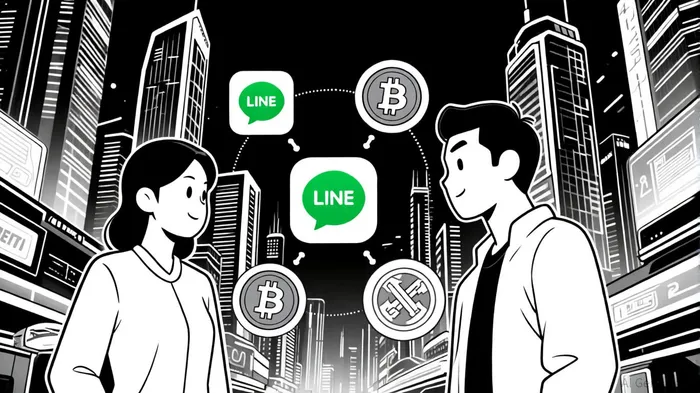
Asia's fintech landscape is undergoing a seismic shift, driven by stablecoins that are redefining cross-border payments and financial inclusion. As of 2025, stablecoin transaction value in the region has surged to $5.7 trillion, with USD-backed stablecoins forming the backbone of payments infrastructure[3]. This growth is fueled by regulatory progress, technological innovation, and the urgent need for efficient, low-cost solutions in a region where 1.7 billion people remain underbanked[6]. At the forefront of this transformation is Project Unify, a strategic collaboration between LINE and Kaia, which is poised to dominate the stablecoin-driven fintech ecosystem in Asia.
Strategic Advantages: LINE and Kaia's Cross-Border Play
LINE, the messaging giant with 200 million monthly active users across Japan, Taiwan, Thailand, and Indonesia[2], and KaiaKAIA--, a Layer 1 blockchain formed from the 2024 merger of Kakao's KlaytnKLAY-- and LINE's Finschia, are leveraging their combined strengths to create a stablecoin superapp. Project Unify aims to unify payments, remittances, and on/off-ramps into a single interface, supporting stablecoins pegged to major Asian currencies like the U.S. dollar, Japanese yen, Thai baht, and Singapore dollar[1].
The strategic advantage lies in their ecosystem integration. By embedding stablecoin functionality directly into LINE Messenger, the platform enables users to send and receive stablecoins via messages, earn real-time incentives on deposits, and conduct transactions with rewards. This approach bypasses traditional banking intermediaries, reducing fees by up to 90% and accelerating settlement times to near-instant[5]. For example, a user in Thailand can send SGD-pegged stablecoins to a merchant in Singapore without converting to fiat, avoiding currency conversion costs and volatility[6].
Kaia's technological edge further strengthens this model. The blockchain's Layer 2 solutions and multi-chain deployment optimize transaction costs and scalability, addressing a critical pain point for legacy systems[5]. Additionally, Kaia's “stablecoin orchestration layer” consolidates Asia's fragmented payment infrastructure, enabling seamless interoperability between different stablecoin protocols[1]. This is a game-changer for B2B settlements, where 70% of DeFi liquidity pools now rely on stablecoins[5].
Regulatory Momentum and Market Traction
Regulatory clarity is accelerating adoption. Hong Kong's stablecoin bill, Singapore's proactive licensing framework, and South Korea's anticipated regulatory updates are creating a fertile ground for innovation[3]. The U.S. GENIUS Act, which provides legislative support for stablecoins, further reduces jurisdictional risks for global players[5]. LINE and Kaia's compliance-first approach—Project Unify will launch with a beta version as a standalone app and a Mini Dapp within LINE—positions them to capitalize on these developments[1].
Market dynamics also favor their strategy. USD stablecoins dominate 99% of the global market[6], but multi-currency stablecoins are gaining traction in high-inflation economies and trade corridors. For instance, CNH-pegged stablecoins are enabling Chinese SMEs to hedge against yuan volatility, while MXN-pegged tokens are streamlining remittances to Latin America[6]. LINE and Kaia's focus on localized stablecoins aligns with this demand, offering a reliable store of value and seamless cross-border utility.
Financial Inclusion and Real-World Utility
The impact on financial inclusion is profound. In Indonesia, where 60% of adults lack access to traditional banking, LINE's 50 million active users in the country could now transact using stablecoins without a bank account[2]. Similarly, Kaia's SDK empowers developers to integrate stablecoin functionality into third-party apps, expanding liquidity and use cases[1]. This mirrors JD.com's success in using stablecoins for closed-loop foreign trade corridors, demonstrating the scalability of tokenized finance[1].
Moreover, DeFi integration is unlocking new revenue streams. With 70% of DeFi liquidity pools relying on stablecoins[5], Project Unify's users can earn yield on their stablecoin holdings while transacting. This dual utility—payments and earning—addresses a key barrier to adoption: the perception that crypto is only for speculation.
Investment Implications
The $3.5 trillion Asian cryptocurrency market is primed for disruption[4]. LINE and Kaia's Project Unify is not just a product but a platform that bridges messaging, payments, and DeFi. Their first-mover advantage in integrating stablecoins into a 200-million-user ecosystem, combined with regulatory alignment and technological scalability, positions them to capture a significant share of this growth.
For investors, the key metrics to watch include:
1. User adoption rates of the beta app and Mini Dapp.
2. Partnerships with stablecoin issuers and traditional banks (e.g., BNY Mellon's interest in tokenized finance[6]).
3. Transaction volume and fee revenue generated by the orchestration layer.
In a world where legacy systems are increasingly challenged by blockchain-native solutions, LINE and Kaia are building the rails for the next era of global finance. Their ability to combine mass-market appeal with institutional-grade infrastructure makes them a compelling bet for the future of stablecoin-driven fintech in Asia.







Comentarios
Aún no hay comentarios