
The Rise of Software-Defined Vehicles: Strategic Alliances and AI-Driven Innovation in the Automotive Sector
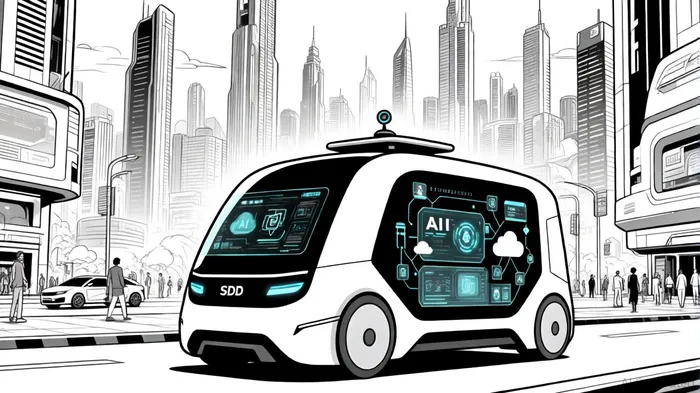
The automotive industry is undergoing a seismic shift, driven by the rapid adoption of software-defined vehicles (SDVs) and artificial intelligence (AI). No longer just mechanical machines, modern vehicles are evolving into rolling data centers, with software accounting for up to 40% of their value[1]. This transformation is accelerating cross-border partnerships between automakers and technology firms, creating a fertile ground for investment opportunities. From Intel's next-generation system-on-chip (SoC) to the $5.8 billion Rivian-Volkswagen joint venture, the sector is witnessing a strategic realignment that prioritizes collaboration over competition.
The Strategic Imperative of Cross-Border Alliances
The complexity of SDVs—requiring advanced AI, real-time data processing, and seamless connectivity—has forced automakers to seek expertise beyond their traditional capabilities. For instance, Intel's second-generation SDV SoC, developed in partnership with ModelBest and Black Sesame Technologies, underscores the need for specialized AI-driven cockpits and driver-assistance systems[2]. Similarly, BMW's collaboration with Tata Technologies highlights how joint innovation is critical for advancing autonomous driving and infotainment ecosystems[1]. These alliances are not merely technical collaborations but strategic bets on the future of mobility.
The Rivian-Volkswagen joint venture, now valued at $5.8 billion by 2027, exemplifies this trend[3]. By combining Rivian's software architecture with Volkswagen's manufacturing scale, the partnership aims to develop SDV platforms for both companies' electric vehicle (EV) lineups. With a 50-50 ownership structure and joint leadership from Rivian's software team and Volkswagen's engineering division, the venture is positioned to redefine automotive software development. This level of financial commitment—up from an initial $5 billion in 2024—signals confidence in the long-term profitability of SDVs[3].
Market Dynamics and Growth Projections
The SDV market is poised for explosive growth, valued at $475.4 billion in 2025 and projected to reach $1.6 trillion by 2030, driven by a 27.3% compound annual growth rate (CAGR)[4]. This trajectory is fueled by the integration of AI and cloud technologies, as seen in NTT DATA's partnership with DENSO Corporation. Together, they are building a globally deployable mobility platform that leverages AI to optimize user experiences and address societal challenges like urban congestion[5].
Open-Source Innovation and Cost Efficiency
Open-source strategies are emerging as a key enabler of SDV development. At the 2025 AUTOMOBIL-ELEKTRONIK Kongress, BMW and Mercedes-Benz showcased their contributions to shared software repositories, with BMW open-sourcing half a million lines of code and Mercedes-Benz integrating its diagnostic tools into the Eclipse community[6]. These initiatives reduce development costs and accelerate innovation by fostering broader industry participation. The joint Foundational Vehicle Software Platform by QNX, Vector, and TTTech Auto further illustrates how open-source collaboration can deliver secure, scalable solutions for original equipment manufacturers (OEMs)[6].
Investment Opportunities in the SDV Ecosystem
For investors, the SDV landscape offers multiple entry points:
1. Chipmakers and AI Foundries: Companies like IntelINTC-- and Black Sesame Technologies are critical to powering SDV architectures.
2. Joint Ventures: The Rivian-Volkswagen partnership represents a capital-intensive but high-reward opportunity, with clear financial milestones.
3. Software Platforms: NTT DATA and Intellias are leveraging cloud and AI to create data-driven mobility services, opening avenues for recurring revenue models.
4. Open-Source Ecosystems: Firms contributing to shared SDV frameworks, such as QNX and Vector, stand to benefit from reduced R&D costs and industry-wide adoption.
Conclusion
The rise of SDVs is not just a technological revolution—it is a redefinition of value creation in the automotive sector. Cross-border partnerships are the linchpin of this transformation, enabling automakers to navigate the complexities of AI, cybersecurity, and real-time data processing. As the market expands, investors who align with these strategic alliances will be well-positioned to capitalize on the next era of mobility.







Comentarios
Aún no hay comentarios