
The Rise of Shovel-Ready Industrial Real Estate in Upstate New York
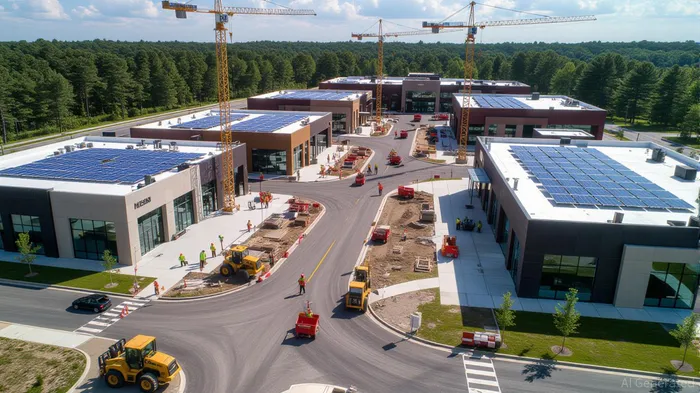
In the shadow of Rochester's tech corridor, a quiet revolution is unfolding in Webster, New York. This once-overlooked town is now a case study in how infrastructure grants, , and public-private partnerships are transforming industrial real estate into a high-yield investment opportunity. For investors seeking to capitalize on the next wave of regional growth, Webster offers a blueprint for success.
The Shovel-Ready Gold Rush
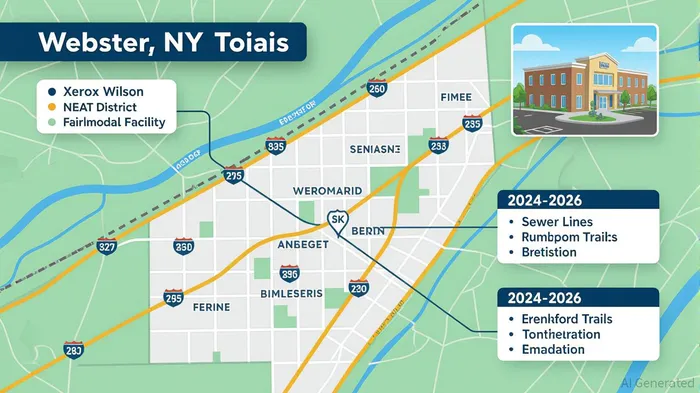
The term “shovel-ready” has long been a buzzword in infrastructure circles, but in Webster, it's becoming a reality. ; . This is no speculative land grab. The XeroxXRX-- Wilson Campus, once a sprawling corporate campus, is being reimagined as a hub for semiconductor manufacturing, , and food production.
The key to this transformation lies in . By 2026, the campus will be subdivided into 40–100 acre parcels, each surrounded by publicly maintained roads and high-capacity utilities. This eliminates the lag time and cost typically associated with site development, making Webster a magnet for companies like Tessy Plastics and Ranger Design, which have already secured leases. For investors, this means reduced risk and faster returns.
Corporate Divestitures as Catalysts
Xerox's decision to divest parts of its 800-acre campus is not an anomaly—it's a symptom of a broader trend. As corporations shed underutilized assets, towns like Webster are stepping in with infrastructure funding to convert these properties into revenue-generating assets. , for instance, .
The math is compelling. For every $1 million invested in infrastructure, . This multiplier effect is amplified by rate-driven capital flows. With interest rates stabilizing and industrial real estate yields outpacing traditional assets, capital is flocking to regions where public funding reduces upfront costs.
Public-Private Partnerships: The Webster Model
What sets Webster apart is its collaborative approach. The Webster Economic Development Alliance (WEDA) acts as a bridge between state grants and private developers, ensuring that projects align with long-term economic goals. For example, , . This site, once an EPA-designated brownfield, .
The success of these partnerships hinges on municipal boundary adjustments. By shifting lines to ensure parcels are entirely within the Village of Webster, the town has eliminated bureaucratic hurdles that often stall development. This level of coordination is rare and replicable—other regions should take note.
Data-Driven Opportunities
The numbers tell a story of rapid ascent. , . Meanwhile, , driven by high-paying jobs from projects like fairlife and Tessy Plastics. These metrics suggest a self-reinforcing cycle: infrastructure attracts jobs, jobs attract residents, and residents drive demand for commercial and residential real estate.
Investment Thesis: Why Webster?
For investors, the case for Webster is threefold:
1. Low-Risk, High-Yield, reducing the capital required for site development.
2. Diversified Demand: The mix of advanced manufacturing, logistics, and mixed-use projects ensures long-term occupancy.
3. Scalability: The model can be replicated in other underappreciated markets across Upstate New York.
Consider the fairlife project: a $650 million investment yielding 250 jobs and a 10-year lease with a Fortune 500 subsidiary. For REITs or private equity firms, this represents a stable cash flow stream with minimal operational risk. Similarly, brownfield redevelopments offer tax incentives and ESG-aligned returns, appealing to a broad range of capital sources.
The Road Ahead
Webster's story is far from over. , the town is future-proofing its industrial ecosystem. The next phase—announced in Spring 2025—will allocate funds for sidewalk improvements, trail resurfacing, and road diets, further enhancing connectivity.
For investors, the message is clear: the next industrial boom is happening in places like Webster, where infrastructure grants and corporate divestitures are creating a perfect storm of opportunity. The question is not whether to invest, but how to position capital to benefit from this paradigm shift.
In a world where “shovel-ready” is no longer a promise but a reality, Webster stands as a testament to the power of strategic investment. For those willing to look beyond the headlines, the rewards are substantial—and the timing, impeccable.





Comentarios
Aún no hay comentarios