
The Rise of Privacy and Institutional Adoption in Crypto: A Strategic Investment Outlook for 2026
The crypto landscape in 2025 has been defined by two converging forces: the resurgence of privacy-centric assets and the institutionalization of blockchain infrastructure. As macroeconomic pressures and regulatory clarity reshape investor priorities, privacy-focused blockchains like ZcashZEC-- (ZEC) and institutional-grade platforms such as the Canton Network are emerging as critical players. This analysis evaluates their growth trajectories and strategic implications for 2026.
Zcash's Resurgence: A Privacy-First Asset in the Spotlight
Zcash has defied the broader market's volatility in 2025, surging over 1,500% in November to a peak of $750. This rally was fueled by a combination of macroeconomic tailwinds, institutional interest, and regulatory progress. According to a report by Bitget, the U.S. Clarity Act of 2025 provided Zcash with a legal framework that distinguishes it from banned mixers, enabling optional transparency while preserving privacy. This clarity, paired with technological upgrades like Halo 2 and Sapling, has enhanced scalability and user experience.
Institutional adoption has been a key driver. Cypherpunk Technologies and Grayscale have collectively invested $76.88 million in Zcash, viewing it as a strategic hedge against financial surveillance and currency depreciation. On-chain metrics reinforce this trend: daily transaction volumes have surged 1,300%, and shielded pool usage-a proxy for privacy demand-has risen in tandem. Zcash's dual-transaction model, which allows users to choose between transparent and shielded transactions, is particularly appealing in a regulatory environment that prioritizes compliance.
Investors are also positioning Zcash as a counter-cyclical asset. While Bitcoin entered a correction phase in late 2025, privacy-focused assets like Zcash staged a 700% rally since September. This divergence highlights a philosophical shift: privacy is no longer a niche concern but a fundamental financial safeguard. 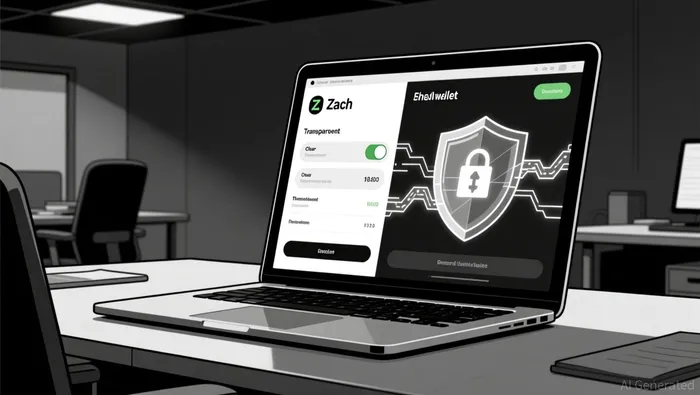 The launch of the Grayscale Zcash Trust and speculation around a ZECZEC-- ETF further amplify institutional interest.
Institutional Infrastructure: Canton Network and DTCC's Tokenization Play
The institutionalization of crypto infrastructure is being spearheaded by projects like the Canton Network and DTCC's tokenization initiatives. DTCC, in collaboration with Digital Asset and Canton, is tokenizing a subset of U.S. Treasury securities custodied at DTC-a move supported by a SEC No-Action Letter. This initiative marks a pivotal step in bridging traditional and digital financial ecosystems.
The Canton Network, a privacy-centric blockchain designed for regulated markets, offers institutions granular control over data visibility while maintaining compliance. DTCC's ComposerX platform will facilitate this tokenization, with a Minimum Viable Product (MVP) expected by mid-2026. By co-chairing the Canton Foundation alongside Euroclear, DTCC is positioning itself as a leader in shaping decentralized financial infrastructure standards.
This partnership is not merely experimental. The tokenization of DTC-custodied assets is expected to enhance liquidity, reduce operational risk, and enable 24/7 financing and faster settlement speeds. For market participants, including hedge funds and major market makers, the Canton Network's institutional-grade governance and interoperability address long-standing pain points in traditional finance.
Strategic Investment Outlook for 2026
The growth of privacy-centric blockchains and institutional infrastructure players hinges on three pillars: regulatory alignment, technological maturation, and macroeconomic demand.
- Regulatory Tailwinds: The U.S. Clarity Act and SEC's No-Action Letter demonstrate a growing recognition of privacy's role in compliance. As governments grapple with balancing surveillance and privacy, assets and platforms that offer optional transparency will gain favor.
- Technological Differentiation: Zcash's Halo 2 and Sapling upgrades, coupled with Canton's interoperability features, address scalability and governance challenges. These advancements are critical for sustaining institutional adoption.
- Macro Demand: With inflationary pressures and currency depreciation concerns persisting, privacy-focused assets are increasingly viewed as hedges. Zcash's 0.8 correlation with inflation and Canton's role in tokenizing real-world assets position them to benefit from this trend.
For investors, the key is to differentiate between speculative plays and foundational infrastructure. Zcash's price surge and institutional backing suggest it is transitioning from a niche privacy coin to a strategic asset. Meanwhile, Canton and DTCC's tokenization efforts represent a structural shift in financial infrastructure, with potential for exponential growth as tokenized assets gain traction.
Conclusion
The rise of privacy and institutional adoption in crypto is not a passing trend but a fundamental reimagining of financial systems. Zcash's resurgence and Canton Network's institutional partnerships underscore a broader thesis: privacy is becoming a non-negotiable in an increasingly surveilled world, while blockchain infrastructure is evolving to meet the demands of traditional finance. For 2026, investors who align with these forces stand to benefit from both speculative upside and long-term structural growth.







Comentarios
Aún no hay comentarios