
The Rise of Institutional-Grade Tokenized Real-World Assets: A $34.6 Billion Market in 2025
The financial world is undergoing a quiet revolution. Real-World Assets (RWAs)-physical or tangible assets like real estate, infrastructure, and commodities-are being tokenized on blockchain networks, unlocking liquidity, fractional ownership, and institutional-grade investment opportunities. By November 2025, the tokenized RWA market has already surpassed $34.63 billion, with EthereumETH-- hosting the largest share of these assets. This growth is driven by a confluence of regulatory clarity, technological innovation, and institutional demand for yield in a low-interest-rate environment.
Market Growth: From Niche to Mainstream
Tokenized real estate has emerged as the most prominent segment of the RWA market. By 2025, its value has exceeded $10 billion, with projections suggesting it could reach $1.4 trillion in 2026 and $4 trillion by 2035. This explosive growth is fueled by platforms like Zoniqx, which is expanding its Tokenized Asset Lifecycle Management (TALM) platform to support multi-chain infrastructure and ESG-focused offerings according to market analysis. Meanwhile, platforms such as RealT and Lofty are democratizing access to U.S. real estate by enabling fractional ownership starting at $50 as reported by industry sources.
Beyond real estate, tokenized private credit and treasuries have become dominant asset classes. As of April 2025, private credit accounted for 61% of tokenized assets ($17 billion), while U.S. Treasuries made up 30% ($7.3 billion). This diversification reflects institutional investors' appetite for yield-bearing assets in a post-pandemic economy.
Institutional Adoption: A Tipping Point
Institutional adoption has been the linchpin of RWA growth. By mid-2024, 12% of global real estate firms had integrated tokenization solutions, while 46% were actively piloting such programs. By 2027, institutional investors are expected to allocate 7–9% of their portfolios to tokenized assets according to market forecasts. This shift is not speculative: in 2024, 70% of capital deployed in tokenized assets came from institutional players, with 76% of global investors planning to expand their digital asset exposure in 2026 as industry data shows.
The infrastructure supporting this adoption is maturing rapidly. Qualified custody solutions, on-chain settlement, and API connectivity have transformed tokenized assets into a regulated asset class for professional investors as detailed in market reports. For example, Franklin Templeton and OndoONDO-- Finance have issued over $4 billion in tokenized treasuries, leveraging 24/7 trading and fractional ownership to enhance liquidity according to financial analysis.
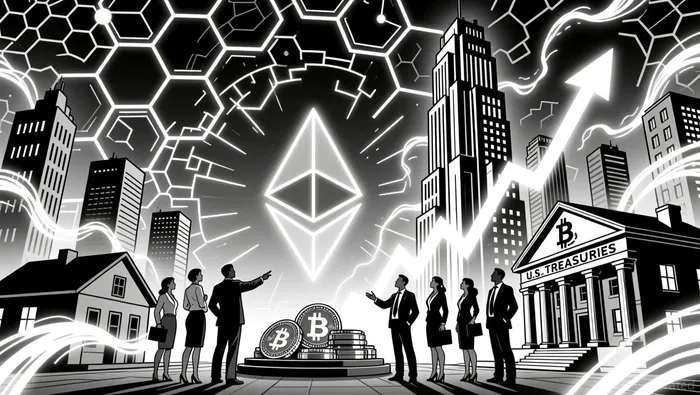
Regulatory frameworks are playing a critical role in legitimizing tokenized RWAs. The European Union's Markets in Crypto-Assets (MiCA) regulation, Singapore's MAS stablecoin regime, and the U.S. CLARITY Act have created structured environments for institutional participation according to industry analysis. In the U.S., the repeal of SAB 121 and the passage of the CLARITY Act have normalized institutional engagement with digital assets as reported by legal experts. These frameworks reduce legal uncertainties and enable cross-border compliance, which is essential for global investors.
Future Outlook: Challenges and Opportunities
While the RWA market is thriving, challenges remain. Scalability, interoperability, and adoption rates in commodities (which grew at a 50.10% CAGR but still lag behind real estate and treasuries) require further innovation as market data indicates. However, the integration of legal wrappers, custody solutions, and compliance tools is addressing these gaps according to industry experts.
By 2026, the RWA market is projected to hit $1.4 trillion, with tokenized treasuries and private credit leading the charge as projections suggest. For institutional investors, this represents a unique opportunity to diversify portfolios, access previously illiquid assets, and capitalize on blockchain's efficiency.
Conclusion
The tokenization of RWAs is not a passing trend-it's a fundamental shift in how assets are owned, traded, and managed. With institutional demand surging, regulatory frameworks maturing, and technological infrastructure evolving, tokenized RWAs are poised to become a cornerstone of modern finance. For investors, the message is clear: the future of institutional-grade assets is on-chain.







Comentarios
Aún no hay comentarios