
The Rise of Institutional-Grade Tokenization: DTCC's SEC-Approved Launch and Its Impact on Digital Finance
The Depository Trust & Clearing Corporation (DTCC) has emerged as a pivotal player in the evolution of digital finance, with its recent SEC-approved tokenization platform poised to redefine the intersection of traditional finance (TradFi) and decentralized finance (DeFi). By leveraging blockchain technology to tokenize highly liquid assets such as Russell 1000 equities, ETFs, and U.S. Treasuries, DTCC is not only addressing long-standing inefficiencies in asset settlement but also creating a regulated framework that bridges two historically siloed ecosystems. For investors, this development represents a strategic inflection point-a chance to capitalize on the convergence of institutional-grade infrastructure and decentralized innovation while navigating regulatory clarity.
Strategic Entry Points for Investors
1. Portfolio Diversification Through Tokenized Real-World Assets (RWAs)
DTCC's platform enables the tokenization of traditional assets, allowing investors to access fractional ownership and programmable features that enhance liquidity and flexibility. For instance, tokenized U.S. Treasuries and ETFs can be traded 24/7, enabling real-time rebalancing of portfolios across time zones and jurisdictions. This contrasts sharply with traditional markets, where settlement delays and liquidity constraints often hinder dynamic asset allocation. 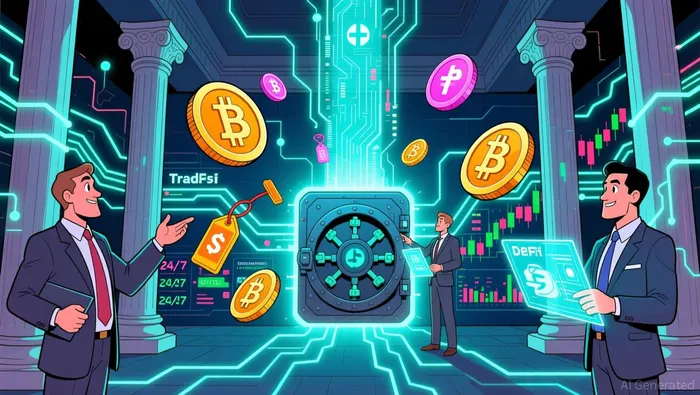 By integrating tokenized RWAs into their holdings, investors can diversify risk across both traditional and digital asset classes while maintaining the same legal entitlements and investor protections as their non-tokenized counterparts according to DTCC's official announcement.
2. Liquidity Management via 24/7 Trading and Collateral Optimization
One of the most compelling advantages of DTCC's platform is its ability to unlock continuous trading and settlement. Unlike traditional markets, which operate within fixed hours, tokenized assets on DTCC's blockchain-based infrastructure can be transferred and settled in real time. This feature is particularly valuable for institutional investors managing large, globally diversified portfolios, as it reduces counterparty risk and operational friction. Additionally, the platform's Collateral AppChain automates collateral management workflows, such as coupon payments and rehypothecation, enabling seamless cross-border asset mobility. For example, tokenized Treasuries can be instantly redeployed as collateral for margin loans or liquidity provision in DeFi protocols, creating a dual-use asset that maximizes capital efficiency.
3. Regulatory-Aligned Innovation and Risk Mitigation
DTCC's SEC-authorized framework provides a critical layer of regulatory alignment, addressing one of the primary barriers to institutional adoption in DeFi. By embedding compliance mechanisms-such as smart contracts for dividend distributions and automated rehypothecation-into its tokenization process, DTCC ensures that tokenized assets adhere to existing securities laws while leveraging blockchain's efficiency according to DTCC's 2025 report. This hybrid model allows investors to engage with DeFi ecosystems without sacrificing the legal safeguards of TradFi. For instance, tokenized equities can be programmatically restricted to accredited investors or subject to real-time compliance checks, mitigating the risks of unauthorized trading.
Case Studies and Market Implications
The DTCC's Great Collateral Experiment, a blockchain-based platform for tokenized collateral, has already demonstrated the potential of this approach. By enabling 24/7 clearing and settlement, the experiment showcased how tokenized assets can be seamlessly integrated into traditional risk and treasury platforms according to DTCC's 2025 report. This innovation is particularly relevant for asset managers seeking to optimize liquidity in volatile markets. Furthermore, DTCC's collaboration with companies like Superstate-where Galaxy Digital tokenized its common stock on Solana-highlights the expanding addressable market for tokenized securities. Such initiatives are not only reshaping issuance workflows but also creating new opportunities for non-U.S. investors to participate in global capital markets according to Reuters.
Conclusion
DTCC's SEC-approved tokenization platform marks a watershed moment in the evolution of digital finance. By harmonizing the strengths of TradFi and DeFi-regulatory compliance, institutional-grade infrastructure, and decentralized innovation-the platform offers investors a robust framework for strategic entry. As the market matures, early adopters who integrate tokenized RWAs into their portfolios will likely gain a competitive edge in liquidity management, risk diversification, and cross-ecosystem interoperability. For institutions and individual investors alike, the convergence of these two worlds is no longer a distant vision but an actionable reality.






Comentarios
Aún no hay comentarios