
The Rise of Institutional-Grade DeFi: How Trust Wallet and Kraken Are Bridging Traditional Assets with Web3
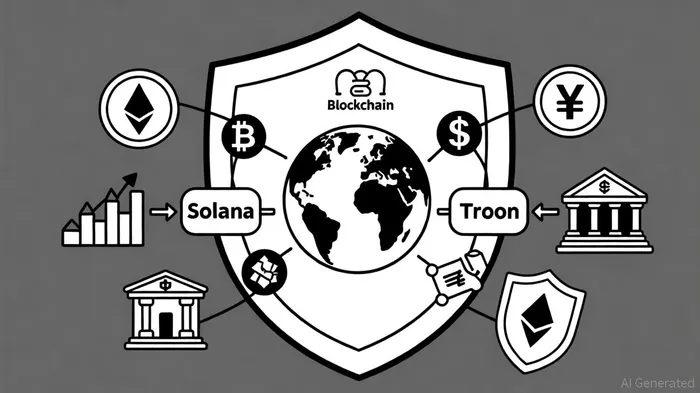
The convergence of decentralized finance (DeFi) and traditional asset markets has long been a theoretical promise. But in 2025, that promise is becoming a reality—thanks to strategic partnerships like the one between Trust Wallet and Kraken. By integrating Kraken's xStocks platform into Trust Wallet's 200 million-user base, the collaboration is notNOT-- just expanding access to tokenized equities; it's signaling a seismic shift in how institutional-grade DeFi adoption is being redefined.
Tokenized Equities: A New Frontier for DeFi
xStocks, a product of Kraken and Backed, allows users to trade tokenized shares of major U.S. equities (e.g., TeslaTSLA--, AppleAAPL--, GameStop) directly within their crypto wallets. These assets are fully collateralized and operate across multiple blockchains, including EthereumETH--, SolanaSOL--, BNB Chain, and Tron[1]. This cross-chain interoperability is critical—it enables users to move tokenized equities seamlessly between ecosystems, a feature previously absent in traditional finance.
The implications are profound. For the first time, retail and institutional investors can hold traditional assets in a self-custodial, programmable format. As Kraken's co-CEO Arjun Sethi stated, this partnership aims to “create borderless, open financial markets akin to the internet”[2]. By eliminating the need for a traditional brokerage account, xStocks democratizes access to equities while leveraging blockchain's inherent advantages: transparency, portability, and composability.
Volume, Velocity, and Validation
Since their June 2025 launch, xStocks have generated over $4 billion in trading volume across centralized and decentralized exchanges[3]. This rapid adoption underscores a growing demand for tokenized assets, particularly among users seeking to bridge the gap between Web3 and traditional markets. Trust Wallet's CEO, Eowyn Chen, emphasized that the partnership “bridges the gap between Web3 and traditional finance” by enabling users to “buy and hold tokenized equities without needing a brokerage account”[4].
The velocity of adoption is equally telling. With 200 million users now able to access 60 tokenized equities, the collaboration has created a flywheel effect: increased liquidity attracts more participants, which in turn drives further innovation. This dynamic mirrors the early days of DeFi lending and stablecoins, where user-friendly interfaces and cross-chain compatibility accelerated mainstream adoption.
Regulatory Hurdles and the Path Forward
Despite the momentum, regulatory constraints remain a significant hurdle. xStocks are currently unavailable in key jurisdictions like the U.S., U.K., Canada, and Australia due to securities laws and KYC requirements[5]. However, Kraken and Trust Wallet are actively working to expand access to compliant EU markets, signaling their commitment to navigating regulatory frameworks rather than circumventing them.
This approach aligns with a broader trend: institutional players are increasingly prioritizing compliance as a competitive advantage. By adhering to KYC and investor protection standards, Kraken and Trust Wallet are building trust with regulators and institutional clients—a critical step for scaling tokenized assets. As Nasdaq and CoinbaseCOIN-- also explore real-world asset tokenization, the industry is moving toward a model where compliance and innovation coexist[6].
Strategic Partnerships as a Catalyst for Adoption
The Trust Wallet-Kraken collaboration is emblematic of a larger shift in DeFi. Institutional-grade adoption isn't about replacing traditional finance but enhancing it with blockchain's capabilities. By integrating tokenized equities into a widely used crypto wallet, the partnership addresses two key pain points: accessibility and interoperability.
For investors, this signals a maturing market. The $4 billion in xStocks trading volume isn't just a number—it's evidence that DeFi is no longer a niche experiment but a viable infrastructure for mainstream financial products. As Kraken's Sethi noted, the goal is to create “financial markets that are as open and accessible as the internet”[7].
Looking Ahead: The Future of Tokenized Assets
The xStocks initiative is just the beginning. With tokenization extending to real estate, commodities, and even carbon credits, the potential for DeFi to redefine asset ownership is vast. However, success will depend on continued collaboration between crypto-native platforms and traditional institutions.
For now, the Trust Wallet-Kraken partnership offers a blueprint for how DeFi can scale without sacrificing compliance or usability. As regulatory clarity emerges and more players enter the space, the line between traditional finance and Web3 will blur—creating opportunities for investors who recognize the value of bridging the two.





Comentarios
Aún no hay comentarios