
The Rise of Compact, High-Performance Diagnostics: KHB's Polaris V150 and Its Strategic Implications for the IVD Sector
A Compact Powerhouse: Redefining Lab Workflow
The Polaris V150's compact footprint of 0.36 m² makes it ideal for small to medium-sized labs, where space is often a limiting factor. Despite its size, the device delivers a throughput of 150 tests per hour, rivaling larger systems. This is achieved through features such as continuous sample, reagent, and reaction cup loading, which minimize downtime. The STAT function further enhances its utility by prioritizing urgent samples, ensuring rapid clinical decision-making in emergency settings.
Automation is central to the Polaris V150's design. It includes automated dilution, real-time monitoring of reagent and consumable status, and onboard refrigeration for reagent stability. These features reduce manual intervention, a critical factor in labs where human error and labor costs are persistent challenges. For instance, the system's ability to detect clots and prevent anti-collision incidents streamlines workflows and reduces the need for troubleshooting, directly improving operational efficiency.
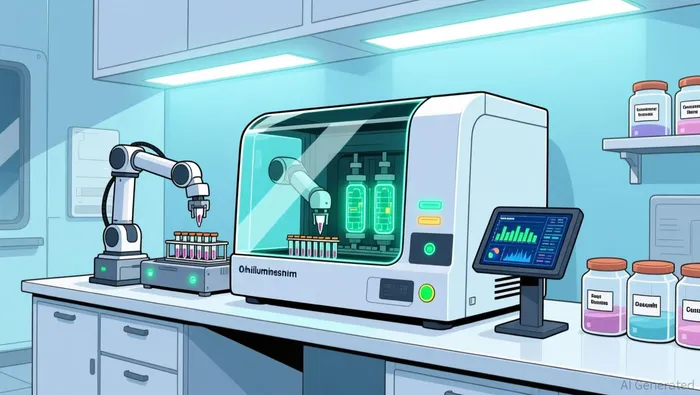
AI-Driven Intelligence: Beyond Automation
While the Polaris V150 does not explicitly integrate machine learning algorithms, its intelligent design aligns with broader AI-driven trends in diagnostics. Real-time reagent monitoring and predictive maintenance capabilities suggest a data-centric approach that could be enhanced with AI in future iterations. For example, AI could optimize reagent usage by analyzing historical consumption patterns or predict equipment failures by processing sensor data. Such capabilities would further reduce costs and downtime, key metrics for lab managers.
The device's intuitive user interface and remote monitoring features also reflect a shift toward smart, connected diagnostics. These tools enable labs to track performance metrics in real time, a capability that becomes increasingly valuable when integrated with AI analytics platforms. For instance, AI could aggregate data from multiple Polaris V150 units to identify trends in test demand or reagent efficiency, enabling proactive resource allocation.
Market Positioning and Strategic Implications
The Polaris V150's versatility positions it as a competitive solution across diverse settings. It supports over 60 assays across 10 disease panels, including thyroid function, tumor markers, and infectious diseases, making it a one-stop solution for routine and urgent diagnostics. This broad menu, combined with its compact design, allows labs to scale operations without compromising speed or accuracy.
From an investment perspective, the device's success at MEDICA 2025 underscores growing demand for compact, high-performance IVD systems. As healthcare systems prioritize cost efficiency and rapid turnaround times, devices like the Polaris V150 are likely to dominate markets where space and budget constraints are significant. Furthermore, the integration of AI-ready features positions KHB to capitalize on future advancements in diagnostic automation, ensuring long-term relevance in an increasingly data-driven sector.
Conclusion: A Catalyst for IVD Innovation
KHB's Polaris V150 exemplifies how compact, high-performance diagnostics can leverage automation and intelligent design to address modern lab challenges. While the device currently relies on rule-based automation, its architecture lays the groundwork for AI integration, a critical differentiator in the evolving IVD landscape. For investors, this represents a compelling opportunity: a product that not only meets current demands but is also adaptable to future innovations. As AI continues to reshape diagnostics, the Polaris V150's strategic design ensures KHB remains at the forefront of this transformation.







Comentarios
Aún no hay comentarios