
The Rise of Cloud Mining and Global Digital Infrastructure Demand: Assessing FEDMINING's Competitive Position in a Shifting Crypto Mining Landscape
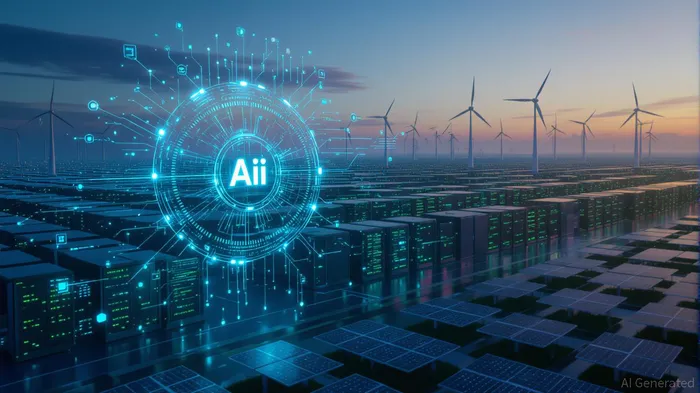
The crypto mining industry is undergoing a seismic shift, driven by the convergence of artificial intelligence (AI), energy transition pressures, and the scalability of cloud infrastructure. As global digital infrastructure demand surges in 2025 Q3, companies like FEDMINING must navigate a landscape defined by energy efficiency, technological agility, and geopolitical fragmentation. While direct data on FEDMINING's strategies remains elusive, broader industry trends offer a framework to assess its potential competitive positioning.
The AI-Driven Infrastructure Boom
The rapid adoption of AI is reshaping digital infrastructure demand. According to the World Economic Forum's Future of Jobs Report 2025, 86% of employers anticipate AI and data analytics to redefine their sectors, with generative AI driving both job creation and displacement[3]. This surge in AI adoption has intensified energy consumption in data centers, which are projected to account for over 3% of global energy use by 2030—up from 1% in 2022[3]. For cloud mining, which relies on distributed computing resources, this trend underscores the criticality of scalable, energy-efficient infrastructure.
Cloud computing platforms like Google Cloud Storage and MicrosoftMSFT-- Azure[2] provide the foundational scalability needed for data-intensive operations, including crypto mining. However, the energy demands of these systems are straining power grids, prompting a shift toward on-site power generation and renewable energy integration[5]. FEDMINING's ability to leverage such technologies—particularly in regions with abundant renewable energy—could position it as a leader in a decarbonizing market.
Energy Transition and the Green Mining Imperative
The energy transition is another pivotal factor. As stated by the WEF, AI's electricity demands are delaying data center projects and accelerating investments in clean energy solutions like osmotic power and structural battery composites[5]. For crypto mining, which has historically faced criticism for its carbon footprint, aligning with sustainable energy trends is no longer optional but existential.
FEDMINING's competitive edge may hinge on its capacity to integrate renewable energy sources and optimize energy efficiency. For instance, companies adopting energy-efficient hardware or partnering with green energy providers are likely to outperform peers in a regulatory and consumer landscape increasingly prioritizing sustainability[5]. Without direct data on FEDMINING's energy strategies, its success will depend on how swiftly it adapts to these pressures.
Geopolitical Fragmentation and Cybersecurity Priorities
The geopolitical landscape further complicates the outlook. Trade uncertainties and digital fragmentation are pushing businesses to prioritize cybersecurity and energy security[1]. In this context, FEDMINING's infrastructure must not only be scalable but also resilient against cyber threats and geopolitical disruptions. The demand for network security skills is rising[1], suggesting that firms with robust cybersecurity frameworks will gain a competitive advantage.
Strategic Implications for FEDMINING
While FEDMINING's specific strategies remain undisclosed, its positioning in this evolving landscape can be inferred through three lenses:
1. Energy Efficiency: Adoption of renewable energy and energy-efficient hardware will determine cost competitiveness.
2. Cloud Scalability: Partnerships with cloud providers offering AI-optimized infrastructure could enhance operational flexibility.
3. Geopolitical Resilience: Diversifying data center locations and strengthening cybersecurity protocols will mitigate risks.
Conclusion
The crypto mining industry is at a crossroads, with cloud infrastructure and energy sustainability defining the next phase of growth. For FEDMINING, success will require a dual focus on technological innovation and strategic alignment with global energy and AI trends. As the WEF notes, the top five energy technology trends of 2025—ranging from AI-driven grid optimization to decentralized energy systems—will shape the viability of digital infrastructure players[4]. In this context, FEDMINING's ability to adapt to these dynamics will be a key determinant of its long-term competitiveness.







Comentarios
Aún no hay comentarios