
The Rise of Chinese Biotech Startups in 3D Molecular Imaging: A New Frontier for Global Investment
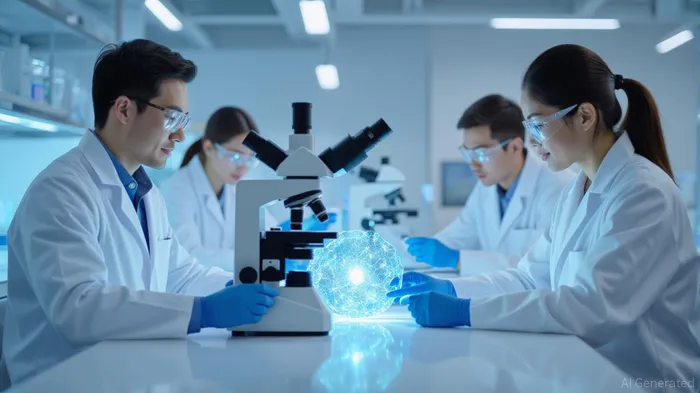
The global biotechnology landscape is undergoing a seismic shift, driven by advancements in 3D molecular imaging and the rapid ascent of Chinese startups. These firms are not only challenging traditional Western dominance in drug discovery but also redefining the economics of innovation. For investors, the intersection of technological disruption, regulatory alignment, and geopolitical dynamics presents both opportunities and risks. This analysis examines the rise of Chinese biotech startups in 3D molecular imaging, their global market potential, and the capitalization pathways that could accelerate their growth.
The Technological Leap: From Cryo-EM to Global Partnerships
At the forefront of this revolution is Shuimu BioSciences, a Beijing-based startup that has developed China's first cryo-electron microscopy (cryo-EM) system for biomolecular imaging[1]. This breakthrough, previously dominated by U.S. firms like Thermo Fisher ScientificTMO--, enables high-resolution visualization of protein structures, a critical step in drug design. Shuimu's technology is already attracting global attention, with plans for an IPO in 2027[2]. Such innovations are not isolated; they reflect a broader trend of Chinese startups leveraging AI and automation to reduce R&D costs and accelerate timelines.
Beyond imaging, Chinese firms are securing high-value partnerships with Western pharmaceutical giants. For instance, 3SBio struck a $1.25 billion licensing deal with PfizerPFE-- for its PD-1/VEGF bispecific antibody[3], while BioNTech acquired Biotheus, a Chinese startup, for $800 million to bolster its oncology pipeline[3]. These deals underscore the growing trust in China's ability to produce next-generation therapeutics. Morgan StanleyMS-- projects that annual revenue from China-originated drugs could surge to $34 billion by 2030 and $220 billion by 2040[4], driven by breakthroughs in areas like oncology and metabolic diseases.
Regulatory Alignment and Cost Efficiency: A Strategic Edge
China's biotech boom is underpinned by a combination of state-backed policies and cost advantages. The “Made in China 2025” initiative and harmonized regulatory standards with the FDA have enabled Chinese firms to generate globally acceptable clinical trial data[5]. This alignment reduces the need for redundant trials in Western markets, cutting time-to-market by up to 40%[5]. Additionally, lower R&D costs—estimated to be 30–50% cheaper than in the U.S.—allow startups to allocate capital toward high-risk, high-reward projects[5].
The result is a surge in global out-licensing deals. In the first half of 2025, 32% of global pharmaceutical out-licensing deals involved China-made assets, up from 21% in prior years[5]. This trend is particularly evident in high-value therapeutic areas: Kailera Therapeutics, backed by $400 million in venture capital, is advancing weight-loss and metabolic disease candidates with midstage trial success[6]. Meanwhile, Hengrui Pharmaceuticals secured a $500 million upfront payment from GSKGSK-- for a portfolio of respiratory and oncology drugs, with potential milestone payments totaling $12 billion[6].
Geopolitical Risks and the Path Forward
Despite these gains, geopolitical tensions pose significant hurdles. U.S. regulatory scrutiny and the National Security Commission on Emerging Biotechnology's cautious stance on Chinese partnerships could delay approvals or restrict market access[7]. However, the pandemic demonstrated the value of cross-border collaboration, with Chinese firms contributing to global vaccine and antiviral development[7]. For now, the benefits of shared innovation appear to outweigh the risks, particularly in urgent therapeutic areas.
For investors, the key lies in identifying startups with clear capitalization pathways. Shuimu's planned IPO and Kailera's venture funding illustrate how Chinese biotech firms are accessing both domestic and international capital. Additionally, strategic partnerships with Western pharma giants provide revenue streams and de-risk clinical development.
Conclusion: A New Era of Biotech Innovation
Chinese startups in 3D molecular imaging are no longer mere participants in the global biotech ecosystem—they are reshaping it. By combining cutting-edge technology, regulatory agility, and cost efficiency, these firms are creating a new paradigm for drug discovery. While geopolitical uncertainties persist, the momentum of the sector suggests that China's biotech industry will remain a critical force in the next decade of medical innovation. For investors, the challenge is to balance the risks of geopolitical friction with the rewards of a market poised for exponential growth.





Comentarios
Aún no hay comentarios