
The Rise of On-Chain Real-World Assets (RWAs) and Institutional Adoption in Crypto
The convergence of traditional finance and blockchain technology has given rise to a transformative asset class: tokenized real-world assets (RWAs). By 2025, the tokenized RWA market had surged to $24 billion, a 380% increase from $5 billion in 2022, driven by institutional innovation and regulatory clarity. This evolution marks a pivotal shift in how global capital is allocated, with tokenization unlocking liquidity, transparency, and efficiency across asset classes. For investors, the question is no longer if to enter this market, but how to strategically position themselves in a rapidly maturing ecosystem.
Market Growth and Institutional Leadership
Tokenized RWAs have transitioned from experimental pilots to mainstream adoption, with institutions like BlackRockBLK--, ApolloAPO--, and Siemens leading the charge. BlackRock's BUIDL tokenized U.S. Treasury fund, for instance, attracted $2.8 billion in assets under management by 2025, demonstrating strong demand for low-risk, high-liquidity tokenized assets. Similarly, Siemens' €300 million on-chain corporate bond issuance highlighted the scalability of blockchain for traditional debt instruments according to market analysis. These examples underscore a broader trend: institutions are leveraging tokenization to streamline settlement, reduce costs, and access new investor bases.
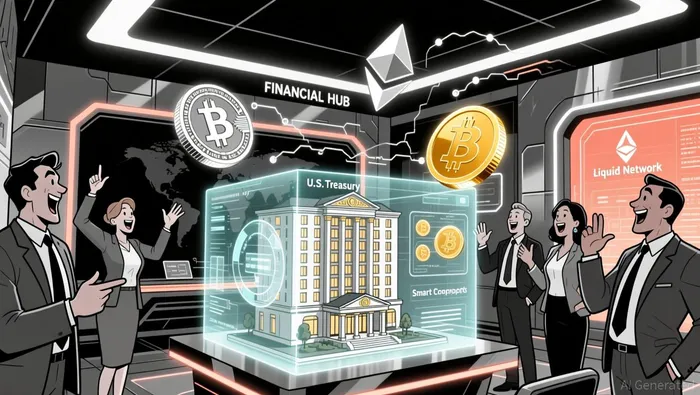
The market's expansion is further fueled by regulatory frameworks such as the EU's Markets in Crypto-Assets (MiCA) and the U.S. SEC's approval of tokenized funds. These developments have reduced legal ambiguity, enabling institutional players to deploy capital with confidence. By 2025, tokenized U.S. Treasuries alone accounted for $7.5 billion in value, with platforms like Franklin Templeton's BENJI and OndoONDO-- Financial's offerings gaining traction according to industry reports.
Strategic Entry Points for Investors
For investors seeking exposure to tokenized RWAs, diversification across asset classes and geographies is critical. Here are three strategic entry points:
Tokenized U.S. Treasuries and Government Securities
These assets offer a low-risk on-ramp to the RWA market. Tokenized Treasuries enable real-time settlement and serve as collateral in DeFi ecosystems, creating dual utility for investors according to market analysis. Platforms like BUIDL and BENJI provide institutional-grade access, while smaller players such as Ondo Financial cater to retail investors.Real Estate Tokenization
Fractional ownership of real estate, particularly in commercial and residential properties in Latin America and Asia, is gaining momentum. A 2025 case study involved a New York luxury hotel tokenized at $1,000 per share, democratizing access to high-value assets. Smart contracts automate income distribution and governance, reducing operational friction. The UAE's regulatory sandbox has further accelerated adoption in this sector.Private Credit and Debt Instruments
Tokenized private credit is the largest non-stablecoin RWA segment, valued at $14 billion by mid-2025. Platforms like Maple FinanceSYRUP-- and Apollo's credit vaults allow investors to participate in microloans and SME financing, bypassing traditional intermediaries. Santander's $20 million blockchain-issued bond in 2024 exemplifies how tokenization reduces issuance costs and expands capital access according to industry analysis.
Risk Management and Institutional Frameworks
While the growth of tokenized RWAs is undeniable, risk management remains a cornerstone of institutional adoption. By 2025, 78% of global institutional investors had formal crypto risk frameworks, up from 54% in 2023. Cybersecurity, regulatory compliance, and custody solutions are top priorities. For instance, 65% of insurance underwriters now require proof of a risk management framework before offering coverage according to industry statistics.
Investors must also navigate legal complexities, such as securities laws governing tokenized assets. Most RWA tokens fall under investment contract regulations, necessitating compliance with jurisdiction-specific rules like the SEC's registration requirements or MiCA according to market analysis. Structuring through Special Purpose Vehicles (SPVs) and ensuring asset rights are transferred correctly are critical to mitigating corporate and property law risks.
Future Projections and Strategic Recommendations
The RWA market is projected to grow to $500 billion–$3 trillion by 2030, driven by continued institutional adoption and infrastructure advancements. Investors should prioritize diversification across asset classes, leverage tokenization for liquidity, and align with ESG frameworks. For example, tokenized gold (e.g., PAXG, XAUT) and carbon credits offer hedging opportunities against macroeconomic risks while supporting sustainability goals according to market analysis.
Technological infrastructure will also play a key role. While EthereumETH-- and Layer-2 networks dominate, Bitcoin-based solutions like Blockstream's Liquid Network are emerging as alternatives for tokenized securities. Investors should monitor developments in fiat-rail integrations and automated compliance tools, which will further reduce friction in the ecosystem.
Conclusion
The tokenization of real-world assets represents a paradigm shift in global finance, bridging the gap between traditional markets and blockchain innovation. For investors, the path forward lies in strategic diversification, rigorous risk management, and early adoption of high-growth segments like real estate, private credit, and ESG-aligned assets. As regulatory clarity and institutional infrastructure continue to evolve, the RWA market is poised to redefine liquidity, accessibility, and efficiency in the decades ahead.







Comentarios
Aún no hay comentarios