
The Rise of Campus Logistics Startups: Capitalizing on the $2.8 Billion Education-Adjacent Market
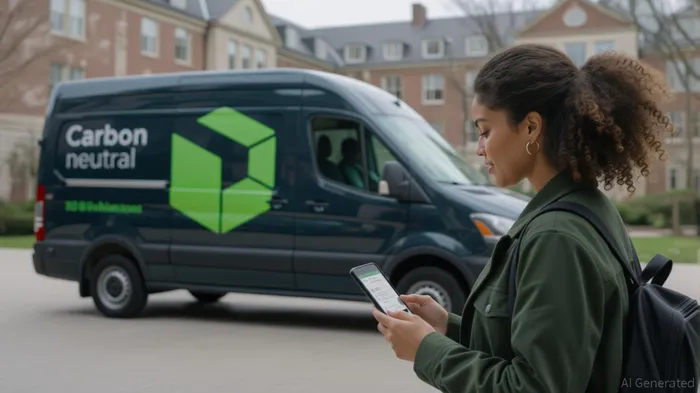
The campus logistics sector is undergoing a quiet revolution. By 2025, the market for student-centric logistics—spanning semester storage, cross-campus deliveries, and hyperlocal moving services—has surged to $2.8 billion, driven by a confluence of demographic shifts, technological adoption, and generational expectations. For investors, this represents a high-margin, scalable opportunity at the intersection of education infrastructure and SaaS innovation. The key lies in identifying startups that are not only solving logistical pain points but also leveraging university partnerships and AI-driven models to create defensible moats.
Valuation Trends: Efficiency Over Hype
The broader SaaS and logistics sectors have seen a correction in valuations post-2021, with investors prioritizing unit economics and product-market fit over speculative growth. Campus logistics startups, however, are bucking the trend in niche areas. The U.S. student relocation market alone is projected to grow at 12% CAGR through 2030, with startups like Zooz Moving and SMARTBOX Solutions demonstrating gross margins of 30–45% and revenue growth exceeding 40% year-over-year.
These valuations are underpinned by two factors:
1. Pay-per-use models that reduce overhead costs for universities and students.
2. Data monetization via SaaS platforms, where startups sell insights on student relocation patterns to universities for campus planning and retention strategies.
A would highlight how these startups are achieving efficiency through automation and AI.
Market Entry Barriers: Integration, Security, and Scalability
Despite the market's potential, entry barriers remain steep. Universities often rely on legacy systems that require customization to integrate with SaaS platforms. Startups must also navigate data privacy regulations like GDPR and CCPA, particularly when handling student data. Additionally, the need for on-campus infrastructure—such as micro-fulfillment hubs or locker networks—demands upfront capital investment.
For example, FacilityOS overcame these barriers by building a modular LogisticsOS platform compatible with over 15 locker vendors and ERP systems like ServiceNowNOW--. This interoperability reduced integration costs by 60%, enabling rapid adoption across universities. Startups that prioritize API-first architecture and partnerships with local logistics providers (e.g., Kelly's Storage Ltd in China) are better positioned to scale without owning physical assets.
Strategic University Partnerships: The Catalyst for Scalability
The most successful campus logistics startups are those that embed themselves into university ecosystems. These partnerships are not transactional but symbiotic:
- Zooz Moving's 60% market penetration in Tucson, Arizona, is tied to its collaboration with the University of Arizona, which provides access to student demand data and on-campus storage facilities.
- SMARTBOX Solutions leverages AI to optimize vehicle routes, reducing idle time by 30% while offering universities anonymized data on student relocation trends.
- Milaha and Carnegie Mellon University in Qatar (CMU-Q) have co-developed logistics research programs, aligning academic innovation with industry needs and creating a pipeline for talent and IP.
These partnerships create a "flywheel effect": universities gain data-driven insights to improve student retention and infrastructure, while startups secure recurring revenue and operational scale. For investors, the key metric is LTV:CAC ratios—startups with ratios above 3:1, like Zooz, indicate strong unit economics and long-term viability.
Investment Opportunities: The Under-the-Radar Winners
The market remains fragmented, with no single dominant player. This presents opportunities for early-stage investors to back innovators in the following categories:
1. AI-Driven Platforms: Startups like SMARTBOX and Nuvocargo are integrating predictive analytics and blockchain for real-time inventory tracking.
2. Sustainability-First Models: Companies such as Student Storage Box and Zooz are aligning with Gen Z's eco-conscious preferences through carbon-neutral packaging and green logistics.
3. International Expansion: The Chinese student storage market, projected to reach $4.8 billion by 2033, is a hotspot for startups like My Baggage Ltd, which uses AI for route optimization.
A would underscore the geographic diversification potential.
Risks and Mitigation Strategies
While the sector is promising, risks include regulatory shifts, competition from legacy players, and over-reliance on single university contracts. Startups must diversify their university portfolios and invest in compliance frameworks. For example, LOVESPACE's European expansion mitigates U.S. regulatory risks by tapping into the continent's growing student population.
Conclusion: A Win-Win for Investors and Universities
Campus logistics is no longer a niche—it's a $2.8 billion market with clear pathways to scalability. Startups that combine SaaS innovation, strategic university partnerships, and sustainability are positioned to capture market share ahead of consolidation. For investors, the focus should be on companies with defensible technology, strong LTV:CAC ratios, and a clear path to international expansion. As Gen Z's demand for convenience and eco-friendliness reshapes logistics, the startups that thrive will be those that see universities not as clients, but as collaborators in redefining campus life.
Final Takeaway: The next logistics unicorn may not be in a warehouse—it could be in a university dormitory, powered by AI and student data.







Comentarios
Aún no hay comentarios