
The Rise of Automotive Innovation in North America
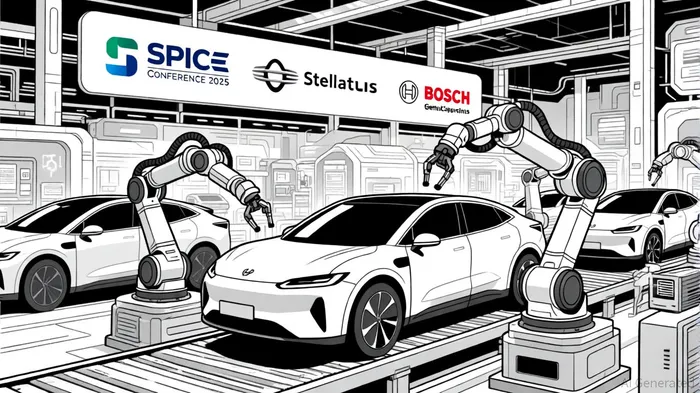
The North American automotive industry is undergoing a transformative shift, driven by electrification, software innovation, and cross-industry collaboration. The inaugural North American SPICE Conference (NASPICE) in September 2025 underscored this momentum, bringing together industry leaders such as General MotorsGM-- (GM), StellantisSTLA--, and Bosch to address challenges in automotive software, functional safety, and sustainable mobility, according to a PR Newswire release. For investors, the conference highlighted strategic opportunities in companies aligning with these trends, offering a glimpse into the future of the sector.
Strategic Investment Opportunities in SPICE-Aligned Companies
General Motors: Electrification and Digital Transformation
GM has positioned itself at the forefront of the EV revolution, with its Ultium battery platform and partnerships like the one with Microsoft Azure to enhance cloud computing capabilities. Despite a 2024 net income decline to $6.0 billion (from $10.13 billion in 2023), the company's revenue rose 9.08% to $187.44 billion, reflecting strong demand for its electric and hybrid vehicles, as detailed in GM's 2024 results. GM's 2025 financial guidance projects $11.2–$12.5 billion in net income, with capital expenditures focused on battery manufacturing and EV scaling. The company's decision to scale back its Cruise robotaxi project and refocus on core EV development further signals a pragmatic approach to resource allocation, a theme highlighted at NASPICE.
Stellantis: Multi-Energy Strategy and Global Partnerships
Stellantis, which saw a 10% drop in 2025 global vehicle deliveries, is doubling down on electrification, with EV sales now accounting for 15% of its total output, according to the NASPICE coverage. Its collaboration with Samsung SDI to establish the StarPlus Energy battery joint venture in the U.S. is a cornerstone of its "Dare Forward 2030" plan, as noted in a Forbes piece. While the company faces challenges-such as a 9% revenue decline in the first half of 2025 to €73 billion-it maintains a robust liquidity position of over €15 billion, enabling continued investment in software-defined vehicles (SDVs) and connectivity services. Stellantis' "multi-energy" approach, which retains flexibility across internal combustion engines and hybrids, also positions it to adapt to regional market preferences.
Bosch: Software Leadership and U.S. Expansion
Bosch's North American sales reached $17.3 billion in 2024, driven by its Mobility sector's focus on ADAS, SDVs, and hybrid systems, as described in a Digital Dealer profile. The company's $1.9 billion investment in silicon carbide (SiC) chip production in California and its pending acquisition of Johnson Controls' HVAC business highlight its commitment to technological leadership. Bosch's partnerships with Microsoft and AWS to integrate generative AI into vehicle safety systems further underscore its role in shaping the software-driven automotive future. With plans to make North America 20% of its global sales by 2030, Bosch's U.S. expansion and sustainability goals (including a 30% CO2 reduction target by 2030) present compelling long-term value.
Collaborative Innovation and Policy Tailwinds
The SPICE Conference emphasized the importance of cross-industry collaboration, with GMGM-- and Stellantis receiving over $1 billion in U.S. Department of Energy grants under the Inflation Reduction Act to convert manufacturing plants to EV production, funding that is discussed in GM's investor materials. These funds, directed toward facilities like GM's Lansing plant and Stellantis' Belvidere Assembly, are expected to create jobs and enhance competitiveness in the global EV race. Additionally, alliances like the European open-source software platform involving Bosch, Volkswagen, and BMW reflect a broader industry shift toward shared infrastructure to reduce costs and accelerate innovation, as covered in the Forbes analysis.
Conclusion: A Sector Poised for Growth
North America's automotive innovation ecosystem is being reshaped by SPICE Conference-aligned companies that are redefining electrification, software integration, and sustainability. For investors, the strategic realignments of GM, Stellantis, and Bosch-backed by robust financials and forward-looking partnerships-signal a sector primed for resilience and growth. As the industry navigates supply chain challenges and regulatory shifts, these companies' emphasis on collaboration and technological agility offers a compelling case for long-term investment.







Comentarios
Aún no hay comentarios