
The Rise of AI-Driven E-Commerce: A New Paradigm in Holiday Retail Growth
The holiday retail landscape in 2025 has been irrevocably transformed by the integration of artificial intelligence (AI) into e-commerce ecosystems. As consumer behavior shifts toward hyper-personalized, frictionless shopping experiences, AI-driven platforms and buy-now-pay-later () fintechs are emerging as critical drivers of growth. AdobeADBE-- and SalesforceCRM-- data underscore a seismic shift: AI agents boosted U.S. , , signaling a structural redefinition of holiday commerce according to data. For investors, this represents a compelling opportunity to capitalize on a retail revolution powered by technology and evolving consumer preferences.
AI Agents: The Catalyst for Retail Growth
Adobe's October 2025 report revealed that U.S. , with AI-powered traffic in sales growth. according to Adobe data. 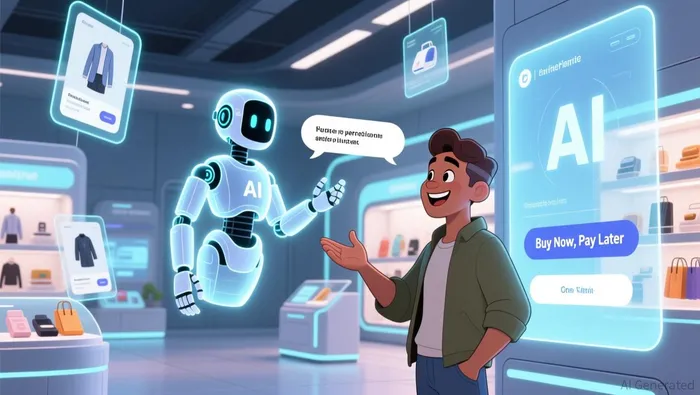 The rise of generative AI further amplified this trend, with traffic to U.S. retail sites powered by generative AI by July 2025.
Salesforce's Cyber Week data reinforced this momentum. , . In the U.S., according to Salesforce reports. Notably, data, highlighting the precision of AI in targeting high-intent shoppers. During Cyber Week, AI agents drove $13.5 billion in U.S. sales, with retailers using these tools (13%) compared to non-AI adopters.
BNPL's Synergy with AI-Driven Commerce
The integration of BNPL services into AI-powered e-commerce platforms has further accelerated consumer spending. , . , reflecting the dominance of mobile-first shopping according to Retail Touchpoints data. AI tools, such as chatbots and personalized shopping assistants, streamlined the purchasing process, . AI-driven traffic to retail sites on Black Friday , .
This synergy between AI and BNPL is reshaping consumer behavior. AI-powered personalization encourages higher-ticket purchases in categories like electronics and appliances, while BNPL offers financial flexibility, reducing purchase friction according to The Daily Record analysis. The result is a compounding effect: AI identifies optimal deals, BNPL enables instant gratification, and retailers capture market share through seamless, data-driven experiences.
Strategic Investment Opportunities
For investors, the convergence of AI-integrated retail platforms and BNPL fintechs presents a dual opportunity. AI-driven retail platforms (e.g., Adobe, Salesforce) are essential for brands seeking to optimize customer engagement and operational efficiency. These platforms leverage predictive analytics, dynamic pricing, and real-time inventory management to maximize margins and customer retention. Adobe's and Salesforce's own data demonstrate that AI adoption correlates with exponential sales growth, making their technologies foundational to modern retail.
BNPL fintechs are equally poised for growth, as consumers increasingly prioritize flexibility over traditional credit. according to IndexBox data reflects a broader trend: 42% of U.S. , . Fintechs that partner with AI platforms to offer tailored payment options-such as interest-free installments or credit scoring based on AI-driven spending patterns-will dominate this space.
Conclusion
The 2025 holiday season has cemented AI-driven e-commerce as the new standard in retail. Adobe and Salesforce data reveal that AI agents are not just enhancing sales but redefining consumer expectations around convenience, personalization, and payment flexibility. As BNPL adoption accelerates, the interplay between AI and fintech will create a self-reinforcing cycle of growth. For investors, prioritizing companies at the intersection of these technologies-those offering AI-powered retail infrastructure and BNPL solutions-offers a strategic pathway to capitalize on the next phase of e-commerce evolution.





Comentarios
Aún no hay comentarios