
Ripple's Strategic Expansion in European Banking and Its Implications for Fintech Stocks
Ripple's strategic expansion into European banking in 2025 has positioned the company as a pivotal player in the blockchain-enabled financial infrastructure space. By securing regulatory clarity, forging partnerships with established institutions, and leveraging its XRPXRP-- Ledger (XRPL) for cross-border payments, Ripple is reshaping the fintech landscape. This analysis explores how these developments are influencing fintech stocks and broader investment trends in blockchain infrastructure.
Strategic Partnerships and Regulatory Alignment
Ripple's collaboration with AMINA Bank, a FINMA-regulated Swiss crypto bank, marks a turning point in European banking. The partnership enables near-real-time cross-border payments using Ripple Payments, bridging blockchain-based settlement with traditional banking infrastructure. This integration supports stablecoins like RLUSD and provides access to over 90% of global FX markets, demonstrating how regulated institutions can adopt blockchain without compromising compliance.
Regulatory alignment has been central to Ripple's strategy. The company secured conditional approval from the U.S. Office of the Comptroller of the Currency (OCC) to establish a national trust bank, subject to oversight by the New York Department of Financial Services (NYDFS) and the OCC according to reports. This move aligns with broader trends, as firms like Circle and Paxos have also obtained similar approvals according to the same report. In Europe, Ripple's engagement with the EU's Markets in Crypto-Assets (MiCA) framework further underscores its commitment to regulatory compliance according to analysis.
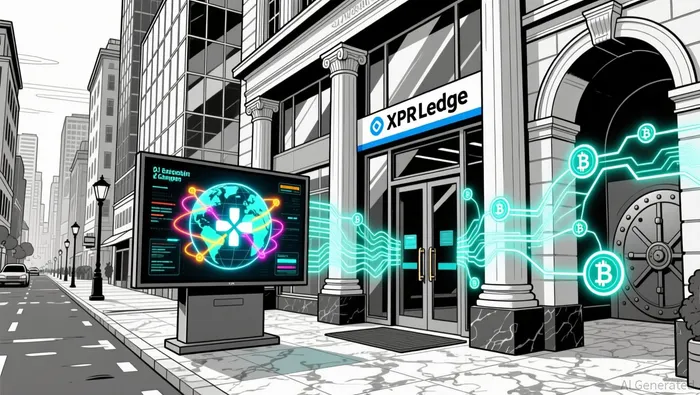
Financial Infrastructure and Institutional Backing
Ripple's valuation has surged to $40 billion following a $500 million investment from Wall Street firms in November 2025. This funding includes structured investor protections, such as put options guaranteeing annual returns, which could influence risk modeling for market participants according to financial analysis. The company's $80 billion in XRP holdings remains a double-edged sword, offering liquidity but introducing volatility risks according to market reports.
Ripple's acquisition of Rail, a stablecoin payment leader, and its integration of RLUSD into the XRP Ledger highlight its focus on utility-driven blockchain solutions according to industry analysis. These moves align with the company's broader vision to tokenize financial assets and streamline cross-border payments according to Ripple's official statements.
Impact on Fintech Stocks and ETFs
The SEC's settlement with Ripple in May 2025 removed a major regulatory hurdle, spurring a 11% price increase in XRP. This clarity has driven institutional adoption, with nine asset managers filing applications for XRP spot ETFs by late 2025 according to financial reports. Analysts project these ETFs could channel $5 billion to $7 billion into XRP by 2026 according to market forecasts, shifting demand from retail speculation to institutional investment.
Ripple's Q4 2025 acquisition of Hidden Road for $1.25 billion further solidified its position in the fintech space, enabling the launch of Ripple Prime, a crypto-owned global prime brokerage according to industry analysis. These developments position XRP as a competitive fintech coin relative to alternatives like StellarXLM-- and AlgorandALGO-- according to market predictions.
Blockchain Infrastructure Investment Trends
Q3 2025 venture capital data reveals $4.59 billion invested in blockchain infrastructure across 414 deals, with 56% allocated to later-stage companies according to research. The U.S. passage of the GENIUS Act in July 2025 provided regulatory clarity for stablecoins, encouraging institutional adoption according to industry analysis. Ripple's energy-efficient XRP Ledger, which processes 1,500 transactions per second with minimal fees, is particularly attractive for ESG-conscious investors according to technology analysis.
Conclusion: Assessing Investment Potential
Ripple's strategic expansion and regulatory alignment position it as a leader in blockchain-enabled financial infrastructure. The company's partnerships, institutional backing, and technological innovation create a compelling case for long-term investment. However, risks such as XRP volatility and evolving regulations require careful consideration. For fintech stocks, Ripple's success highlights the growing importance of blockchain in cross-border payments and asset tokenization, signaling a shift toward utility-driven crypto adoption.






Comentarios
Aún no hay comentarios