
Ripple's Strategic Expansion in Europe: A Catalyst for XRP Institutional Adoption and Price Appreciation
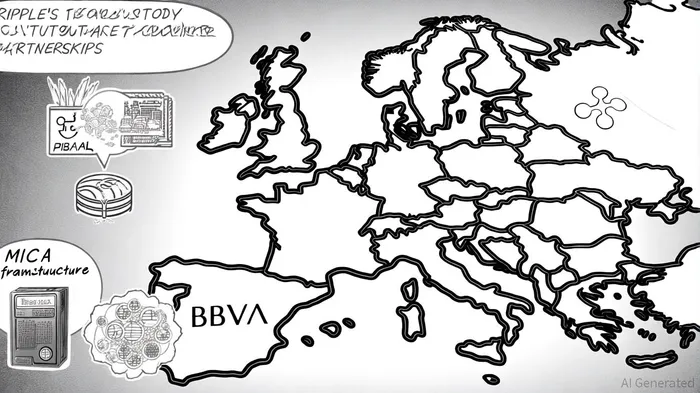
Ripple's strategic expansion into Europe in 2025 has positioned the company as a pivotal infrastructure provider in the continent's rapidly evolving digital asset ecosystem. By securing institutional partnerships with major banks and aligning with regulatory frameworks such as the European Union's Markets in Crypto-Assets (MiCA) regulation, Ripple is not only solidifying its market presence but also creating a tailwind for XRP's institutional adoption and long-term price appreciation.
Institutional Partnerships: Building a Scalable Infrastructure
Ripple's collaboration with Spain's Banco Bilbao Vizcaya Argentaria (BBVA) exemplifies its strategy to integrate blockchain technology into traditional banking systems. Through this partnership, BBVABBAR-- now offers institutional-grade custody services for BitcoinBTC-- (BTC) and Ether (ETH) to retail customers in Spain, leveraging Ripple's secure and scalable infrastructure [1]. This marks an extension of Ripple's existing relationships with BBVA's subsidiaries in Switzerland and Turkey, underscoring the bank's confidence in Ripple's technology as a reliable backbone for crypto services [3].
Such partnerships are critical for Ripple's vision of becoming the “plumbing” of global digital asset markets. By providing custody solutions, Ripple enables banks to comply with regulatory requirements while meeting surging customer demand for crypto exposure. As noted by CoinDesk, this collaboration “aligns with the broader trend of traditional financial institutionsFISI-- adopting blockchain-based infrastructure to streamline operations and reduce costs” [2].
Regulatory Tailwinds: MiCA as a Catalyst
The EU's MiCA regulation, which came into effect in 2024, has created a harmonized legal framework for crypto services across member states. This regulatory clarity has incentivized banks like BBVA to launch crypto offerings, with Ripple's compliance-focused infrastructure serving as a natural fit. As stated in a Ripple press release, the partnership “demonstrates how MiCA-compliant solutions can empower banks to innovate while maintaining trust and security” [4].
MiCA's emphasis on transparency and consumer protection has also elevated the credibility of digital assets, indirectly benefiting Ripple's XRPXRP-- Ledger (XRPL). By operating within this framework, Ripple reinforces its reputation as a compliant and trustworthy partner for institutions, a factor that could drive broader adoption of XRP for cross-border payments and tokenized assets.
XRP's Path to Institutional Adoption
While Ripple's custody solutions currently focus on BTC and ETH, the company's deep integration with institutional clients increases the likelihood of XRP being used as a bridge asset or settlement token in future use cases. Ripple's global regulatory licenses—over 60 in 2025—further bolster confidence in XRP's utility, as institutions prioritize partners with proven compliance expertise [6].
Moreover, the growing demand for crypto custody services in Europe could create a flywheel effect. As more banks adopt Ripple's infrastructure, the network effect may drive increased XRP transactions, particularly in cross-border payments and decentralized finance (DeFi) applications. This dynamic is supported by Bitget's analysis, which highlights Ripple's “strategic positioning to benefit from the EU's crypto-friendly regulatory environment” [5].
Conclusion: A Compelling Investment Thesis
Ripple's European expansion represents more than geographic growth—it is a strategic move to anchor itself in the institutional crypto infrastructure layer. By capitalizing on regulatory tailwinds like MiCA and forming high-profile partnerships with banks such as BBVA, Ripple is laying the groundwork for XRP's increased adoption in institutional workflows. For investors, this convergence of infrastructure growth, regulatory alignment, and market demand presents a compelling case for XRP's long-term price appreciation.






Comentarios
Aún no hay comentarios