
Ripple's Strategic Expansion in Europe: A Catalyst for Institutional XRP Adoption
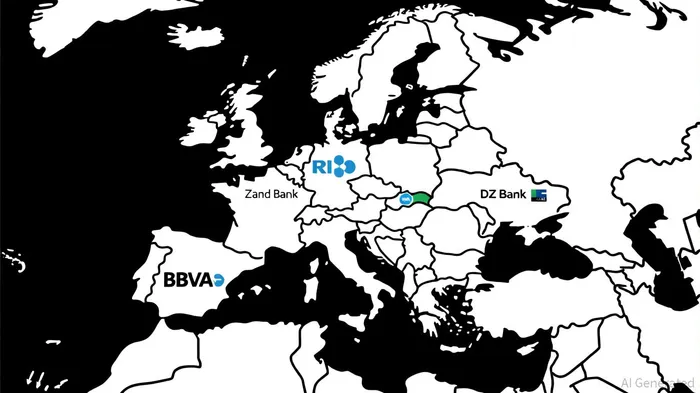
Ripple's strategic expansion in Europe has positioned XRPXRP-- as a cornerstone of institutional digital asset infrastructure, driven by regulatory alignment with the EU's Markets in Crypto-Assets (MiCA) framework and partnerships with major financial institutions. As European banks increasingly adopt Ripple's custody and payment solutions, XRP's utility in cross-border transactions and its growing legitimacy as a regulated asset are reshaping the institutional landscape.
Institutional Partnerships and Custody Innovation
Ripple's collaboration with BBVABBAR--, one of Europe's largest banks, exemplifies its dominance in institutional-grade custody services. By integrating Ripple Custody into its operations in Spain, BBVA now offers retail and institutional clients secure, MiCA-compliant custody for XRP, BitcoinBTC--, and EthereumETH-- [1]. This partnership builds on Ripple's existing relationships with BBVA in Switzerland and Turkey, demonstrating a scalable model for digital asset adoption across the EU. Ripple's acquisition of Swiss custody firm Metaco has further enhanced its infrastructure, enabling end-to-end custody solutions that align with MiCA's stringent compliance requirements [2].
The significance of this expansion is underscored by the EU's regulatory environment. MiCA, which came into effect in late 2024, has provided a harmonized framework for crypto-asset service providers (CASPs), reducing legal uncertainties and encouraging banks to innovate. For instance, BBVA's adoption of Ripple Custody reflects broader trends: over 65% of EU crypto businesses achieved MiCA compliance by Q1 2025, fostering investor confidence and operational clarity [3].
XRP's Role in Cross-Border Payments
Ripple's On-Demand Liquidity (ODL) service has emerged as a critical driver of institutional XRP adoption. In Q2 2025, ODL processed $1.3 trillion in transactions, with banks like SantanderSAN-- and SBI Holdings reporting cost savings of up to 90% compared to traditional SWIFT systems [4]. XRP's ability to settle transactions in seconds at minimal fees—averaging $0.0002 per transaction—has made it an attractive bridge asset for institutions seeking efficiency in corridors such as Europe to Latin America and Japan to Southeast Asia [5].
The regulatory clarity provided by MiCA and the U.S. SEC's 2025 ruling reclassifying XRP as a commodity in secondary markets have further accelerated adoption. This legal certainty has removed barriers for institutions, enabling them to integrate XRP into their operations without fear of regulatory reprisal [6]. For example, the Saudi Arabian Monetary Authority (SAMA) has saved $400 million annually by implementing Ripple's xCurrent system, highlighting the economic incentives for institutional adoption [4].
Regulatory Alignment and Future Prospects
Ripple's proactive approach to regulatory alignment is evident in its plans to apply for a MiCA license, which would grant it operational flexibility across the European Economic Area [7]. This move aligns with the EU's broader push to standardize digital asset regulations, as seen in the 2025 report on asset tokenization, which noted that MiCA's Level 2/3 measures are shaping compliance pathways for crypto firms [8].
Looking ahead, the anticipated approval of XRP spot ETFs in October 2025 could inject billions into the market, further solidifying XRP's role as a utility asset. Ripple's development of RLUSD, a USD-backed stablecoin on the XRP Ledger, also underscores its commitment to regulated solutions, offering institutions a compliant on-ramp to digital assets [9].
Conclusion
Ripple's strategic expansion in Europe, anchored by institutional partnerships and regulatory alignment, has transformed XRP from a speculative asset into a utility-driven infrastructure solution. As MiCA continues to foster a compliant environment, XRP's adoption in cross-border payments and custody services is poised to accelerate, positioning Ripple as a pivotal player in the $2 trillion stablecoin market and the broader evolution of digital finance.





Comentarios
Aún no hay comentarios