
Ripple's RLUSD Integration with BlackRock's BUIDL and Its Implications for XRP Liquidity
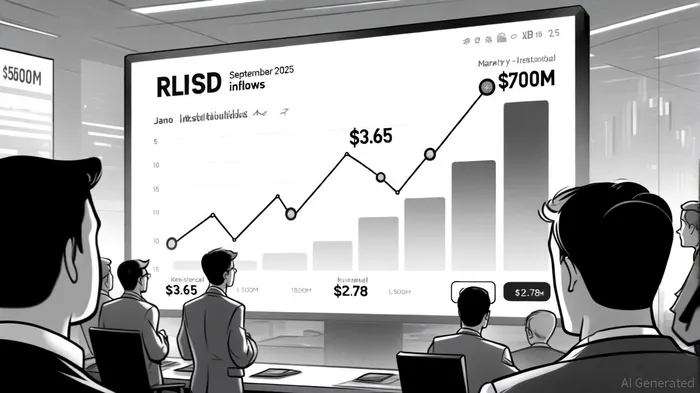
The integration of Ripple's RLUSD stablecoin with BlackRock's USD Institutional Digital Liquidity Fund (BUIDL) marks a pivotal moment in the convergence of traditional finance and blockchain technology. By enabling 24/7 liquidity for tokenized assets, this partnership not only enhances the utility of RLUSD but also signals a structural shift in how institutional players access on-chain markets. For XRPXRP--, the native token of the XRP Ledger (XRPL), this development could catalyze a new era of demand and price discovery, driven by institutional-grade infrastructure and regulatory alignment.
Institutional On-Ramps and the RLUSD-BUIDL Bridge
Ripple and Securitize's collaboration introduces a smart contract that allows BUIDL and VanEck's VBILL tokenized fund holders to redeem shares for RLUSD in real time[1]. This integration operates on the XRP Ledger, leveraging its low-cost, high-speed settlement capabilities to facilitate instant liquidity. For institutional investors, this means bypassing traditional banking hours and intermediaries to access on-chain yields or DeFi strategies while maintaining the stability of a U.S. dollar-pegged asset[2].
RLUSD itself is a critical component of this ecosystem. Fully backed by high-quality liquid assets (such as short-term U.S. Treasury securities) and regulated under a New York DFS Trust Company Charter, RLUSD has already attracted over $700 million in market capitalization[3]. Its custodial backing by BNY Mellon, the oldest U.S. bank, further reinforces its credibility for institutional adoption[4]. By acting as a settlement layer for real-world assets (RWAs), RLUSD bridges the gap between legacy financial systems and blockchain, creating a flywheel effect for XRP's utility.
XRP's Role in Liquidity and Economic Dynamics
The XRP Ledger's unique economic model plays a foundational role in this integration. Every transaction on the XRPL—whether for RLUSD transfers or tokenized asset settlements—requires a small XRP fee, which is permanently burned[5]. This deflationary mechanism, combined with the ledger's compliance tools (e.g., Credentials and Deep Freeze), positions XRP as a critical infrastructure asset for institutional-grade blockchain use cases[6].
Moreover, the migration of RLUSD and tokenized fund activity from EthereumETH-- to the XRP Ledger, as confirmed by Securitize, underscores XRPL's advantages in cost efficiency and regulatory readiness[7]. For XRP, this shift could amplify demand through increased transaction volume and network activity. Analysts note that the XRP Ledger's native lending protocol and Multi-Purpose Tokens (MPTs) further enhance its appeal for tokenizing RWAs, creating a self-reinforcing cycle of adoption[8].
Price Discovery and Institutional Tailwinds
The RLUSD-BUIDL integration has already triggered measurable shifts in XRP's liquidity profile. Data from Q3 2025 shows a surge in institutional inflows, with the REX-Osprey XRPR ETF accumulating $33.57 million in assets within days of its launch[9]. Technically, XRP has formed a bull-flag pattern near $3.08, with $3.65 as a key resistance level for a potential breakout[10]. If institutional demand continues to outpace supply, XRP could see a retest of its 2021 highs, particularly as regulatory clarity post-SEC lawsuit and ETF approvals reduce friction for institutional participation[11].
A critical factor is the interplay between RLUSD's adoption and XRP's utility. As more tokenized assets settle on the XRP Ledger, the demand for XRP as a transaction fee and collateral asset will rise. This dynamic is further amplified by Ripple's On-Demand Liquidity (ODL) system, which has processed $1.3 trillion in cross-border payments, reinforcing XRP's role in global financial infrastructure[12].
Broader Implications for Institutional Adoption
This partnership signals a broader trend: institutional players are increasingly treating blockchain as a complementary infrastructure rather than a disruptive force. By integrating RLUSD into tokenized funds, BlackRockBLK-- and VanEck are normalizing blockchain as a tool for liquidity management and yield generation. For XRP, this means transitioning from a speculative asset to a foundational component of institutional finance.
Platforms like RWA.xyz now provide granular analytics on RLUSD and XRP Ledger activity, offering transparency that aligns with institutional compliance standards[13]. As more asset managers tokenize portfolios and leverage RLUSD for settlements, XRP's network effects will strengthen, creating a virtuous cycle of demand and utility.
Conclusion
Ripple's RLUSD integration with BlackRock's BUIDL is more than a technical upgrade—it is a strategic milestone in institutional blockchain adoption. By providing a regulated, high-liquidity stablecoin infrastructure, Ripple and its partners are laying the groundwork for XRP to capture value in a rapidly expanding on-chain economy. For investors, the implications are clear: institutional on-ramps and stablecoin innovation are not just catalysts for XRP's price discovery but also harbingers of a broader financial system where blockchain and traditional markets coexist.





Comentarios
Aún no hay comentarios