
Ripple’s 2025 Breakthroughs: Why XRP and the Company’s Moves Matter for Investors
Ripple is making headlines in late 2025—not just as a crypto player, but as a company transforming its role in the financial ecosystem. With a recent federal banking approval, growing institutional adoption of XRPXRP--, and a bold new acquisition, the company is redefining what it means to bridge traditional and digital finance. For investors, understanding these moves could offer insight into a key player shaping the future of global payments.
Ripple's Federal Banking Push and the GENIUS Act
In July 2025, President Trump signed the GENIUS Act, which allowed Ripple to take a major step toward becoming a federally supervised financial institution. That led to 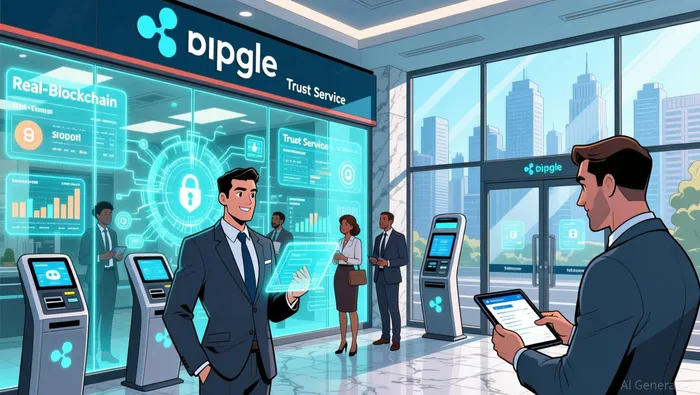 Ripple National Trust Bank (RNTB) receiving conditional approval from the Office of the Comptroller of the Currency (OCC). This move positions Ripple as one of the first crypto-native companies to secure a foothold in the U.S. banking system—a significant regulatory win.
The implications are clear: if RNTB is fully established, Ripple could offer trust services directly to banks and financial institutions, potentially increasing its control over cross-border settlements. For now, the conditional approval means Ripple must prove compliance with federal standards before the bank becomes fully operational.
XRP's Institutional Adoption and Market Dynamics
XRP, Ripple's native asset, is gaining traction among institutional investors. After a $125 million SEC settlement earlier in the year, the token saw a reclassification from a security to a commodity by the regulatory body. That shift has led to increased interest from asset managers, with at least nine spot XRP ETF applications currently in the works.
Market performance has also been strong. XRP's market cap hit $170.3 billion in Q3 2025, with projections suggesting it could trade in a $2.80–$3.20 range by year-end under moderate conditions according to forecasts. In more bullish scenarios, some forecasts see it reaching $5.50–$6.00 if regulatory clarity and institutional adoption continue to expand.
Ripple's Expanding Financial Services Footprint
Beyond XRP, Ripple is building out a broader financial services ecosystem. In one of the most notable moves of the year, the company acquired Hidden Road for $1.25 billion to launch Ripple Prime, the first crypto-owned global prime brokerage. This step gives Ripple access to institutional-grade custody and trading services—an area where it had previously been absent.
In Europe, Ripple has also secured its first banking client for its payments stack: AMINA Bank. Based in Switzerland, AMINA is using Ripple's infrastructure to support cross-border transfers for crypto-native clients, aiming to bridge traditional banking systems with blockchain-based settlement.
Where XRP Stands in a Crowded Crypto Landscape
Despite its recent momentum, XRP still faces competition from other major players. For instance, EthereumETH-- continues to lead in total value locked and daily app fees, while projects like TRONTRX-- and Cold Wallet (CWT) are vying for market attention with high-ROI claims according to analysis.
Still, XRP has carved out a unique position. Unlike Ethereum, which focuses on decentralized applications and smart contracts, XRP is primarily used as a bridge for cross-border payments, offering speed and lower costs. It has also shown a relatively weak correlation with BitcoinBTC--, allowing it to outperform the BTC benchmark by 20% year-to-date.
Looking Ahead: What's Next for Ripple and XRP in 2025
Ripple's federal banking ambitions could reshape how digital assets are integrated into traditional finance. If RNTB is fully launched, the company could become a trusted intermediary between banks and blockchain networks—a role currently dominated by traditional SWIFT and ABA systems.
For XRP, the key variables will be regulatory stability and institutional adoption. With several ETF applications in motion and a growing number of cross-border use cases, the token is likely to remain a top-four cryptocurrency by market cap. However, its long-term success will depend on whether it can scale its adoption beyond pilot programs and into daily banking operations.
At the end of the day, Ripple's 2025 developments signal a shift in how the world views digital assets—not just as speculative tokens but as functional tools for global finance.






Comentarios
Aún no hay comentarios