
Riot Platforms' Strategic Leadership Overhaul: Executive Alignment and Shareholder Value in a Shifting Landscape
In an era marked by economic uncertainty and rapid technological transformation, corporate leadership transitions often serve as a barometer for strategic intent. RiotRIOT-- Platforms' recent executive realignment-centered on the appointment of Jason Chung as Chief Financial Officer (CFO) and the reconfiguration of compensation structures-offers a compelling case study in how companies can recalibrate to balance short-term operational demands with long-term value creation.
Executive Realignment: A Shift in Priorities
Riot Platforms' decision to transition Colin Yee, its CFO since 2022, to a Senior Advisor role while elevating Jason Chung reflects a deliberate pivot toward financial discipline and infrastructure-focused growth. Chung, who previously led corporate development and strategy, brings two decades of investment banking expertise to the CFO role, a move that underscores the company's emphasis on capital efficiency and operational rigor. This transition, unrelated to financial disputes, is part of a broader effort to align executive incentives with the company's evolving business model.
The compensation adjustments further highlight this alignment. Top executives, including CEO Jason Les and Executive Chairman Benjamin Yi, now receive base salaries of $900,000-up from $600,000-while Bitcoin-based compensation metrics have been eliminated. The 2026 Annual Incentive Plan now prioritizes data center performance indicators, such as revenue and net operating income, signaling a strategic shift away from cryptocurrency volatility toward the stability of digital infrastructure.
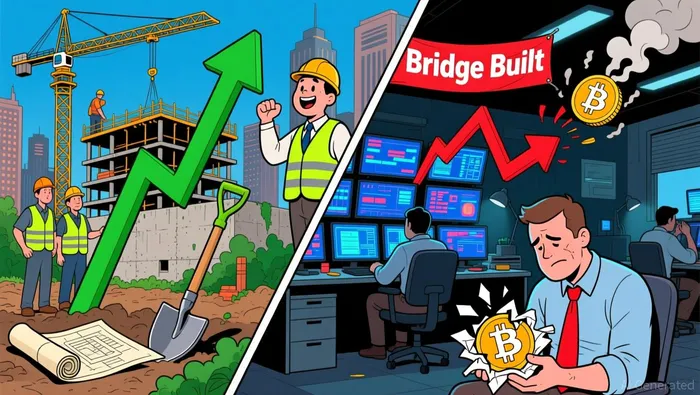
Strategic Realignment: From BitcoinBTC-- to Digital Infrastructure
Riot Platforms' pivot to digital infrastructure is not merely a diversification tactic but a fundamental repositioning. By consolidating Chung's oversight of corporate development and investor relations, the company aims to streamline decision-making and accelerate its expansion into data center operations. This move aligns with broader industry trends, as demand for cloud computing and edge infrastructure surges, driven by artificial intelligence, remote work, and decentralized applications.
The removal of Bitcoin-related metrics from executive compensation is particularly telling. While Bitcoin mining remains a core component of Riot's operations, the company's leadership now appears to prioritize predictable cash flows from infrastructure over the speculative returns tied to cryptocurrency price swings. This shift mirrors the strategies of firms like Microsoft and Amazon, which have leveraged their data center expertise to dominate the cloud computing sector.
Shareholder Value Creation: Balancing Stability and Growth
For shareholders, the implications of this realignment are twofold. First, the emphasis on data center metrics reduces exposure to the volatility of cryptocurrency markets, potentially stabilizing earnings and cash flow. Second, the appointment of a CFO with investment banking experience-Chung's background-could enhance capital allocation decisions, a critical factor in sustaining long-term value.
However, challenges remain. The transition to digital infrastructure requires significant upfront investment in hardware, real estate, and talent, which could strain liquidity in the short term. Additionally, the success of this strategy hinges on Riot's ability to compete with established players in the data center space, such as Equinix and Digital Realty.
Conclusion: A Calculated Bet on the Future
Riot Platforms' leadership overhaul represents a calculated bet on the future of digital infrastructure. By aligning executive incentives with infrastructure growth and appointing a finance leader with deep capital markets experience, the company is positioning itself to navigate both macroeconomic headwinds and industry-specific disruptions. For investors, the key will be monitoring how effectively these strategic shifts translate into operational execution and, ultimately, shareholder returns.





Comentarios
Aún no hay comentarios