
Rio Tinto's Iron Ore Slump Masks Strategic Gains Amid Climate Challenges
The first quarter of 2025 brought a stark reality for Rio TintoRIO-- (ASX:RIO) investors: iron ore shipments fell to 70.7 million tonnes, marking a 9% year-over-year decline and a 17% drop from the prior quarter. While extreme weather cast a shadow over the Pilbara region, the company’s broader strategy—centered on diversification and ambitious growth projects—reveals a path toward resilience. For investors, the question is whether Rio Tinto’s long-term bets can offset near-term turbulence.
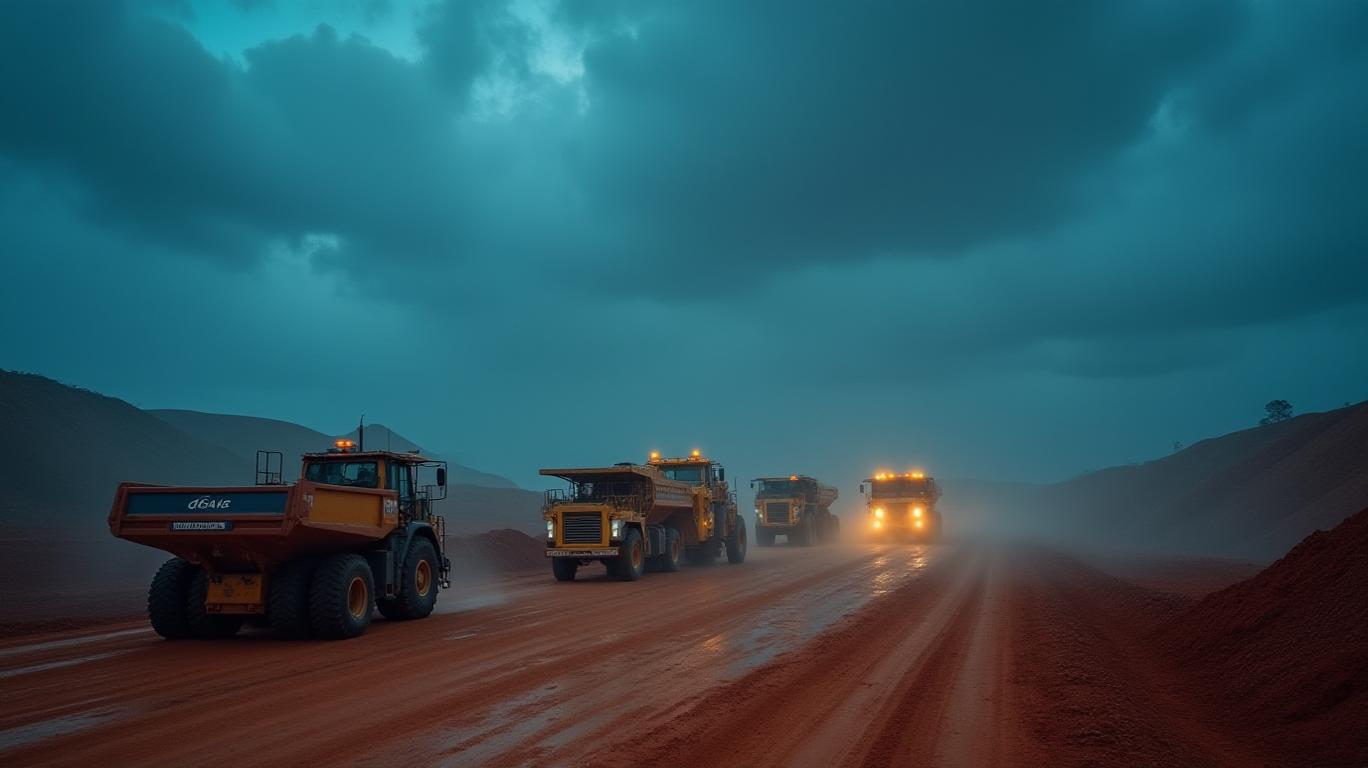
The Weather Factor: A Recurring Headwind
The Q1 production miss was largely blamed on cyclones and flooding in Western Australia, which disrupted rail networks and mine operations. Shipments dropped to 70.7 million tonnes (Mt), while production slid to 69.8 Mt, both below the 2024 and 2023 averages. Rio Tinto’s guidance for 2025 now targets the lower end of its 323–338 Mt range, a stark contrast to earlier optimism.
But weather isn’t the only challenge. The Pilbara’s aging infrastructure—critical for transporting ore to ports—has been repeatedly strained by climate extremes. shows that while weather events are cyclical, the frequency of disruptions is increasing.
Looking Beyond Iron Ore: Diversification in Motion
While iron ore struggles, Rio Tinto’s other commodities shine. Bauxite hit a record 15.0 Mt in Q1 (+12% YoY), driven by strong output in Australia and Guinea. Copper production rose 16% YoY to 210 kilotonnes, with Oyu Tolgoi in Mongolia setting a monthly record. These gains underscore the company’s shift toward higher-margin metals—a strategy that could insulate earnings during iron ore downturns.
The acquisition of Arcadium Minerals to form Rio Tinto Lithium adds further diversification. The Rincon lithium project in Colombia, now part of this new division, positions the firm to capitalize on EV battery demand. illustrates the growing importance of these assets.
Projects to Watch: Weather-Proofing the Future
Despite Q1’s setbacks, Rio Tinto remains laser-focused on expansion. The Western Range project—critical for maintaining Pilbara production—achieved first ore through its new infrastructure, a milestone that could stabilize output post-2026. Meanwhile, the Brockman Syncline 1 project, approved with a $1.8 billion investment, aims to extend mine life in the region.
In Guinea, the Simandou project continues to advance, with rail infrastructure progressing at an “impressive pace.” Once operational, Simandou could produce 70–95 Mt of high-grade iron ore annually, potentially offsetting Pilbara’s climate risks.
The Bottom Line: Patience Rewarded?
Investors should assess Rio Tinto through a multi-year lens. The stock has underperformed as iron ore prices softened, but the company’s balance sheet remains robust. With $8.9 billion in cash and liquidity, it can fund growth while weathering storms.
Key risks remain: China’s demand for iron ore, which accounts for ~70% of global consumption, could weaken further if economic growth slows. However, Rio Tinto’s moves into copper, lithium, and bauxite suggest a deliberate pivot toward commodities less tied to cyclical steel production.
Conclusion: A Bumpy Road to Resilience
Rio Tinto’s Q1 results highlight the vulnerability of commodity giants to climate volatility. Yet, the company’s response—accelerating infrastructure upgrades, expanding into higher-margin metals, and pushing forward with megaprojects—points to a disciplined strategy. While short-term production headwinds may pressure shares, the long-term narrative is one of adaptation.
Investors should focus on two metrics:
1. Execution of growth projects: Western Range, Simandou, and lithium development will determine whether Rio Tinto can stabilize iron ore output and diversify profit streams.
2. Commodity price dynamics: Copper and lithium prices will increasingly influence valuation, while iron ore’s role as a core driver diminishes.
With $16 billion allocated to capital projects in 2025–2027, Rio Tinto is betting big on its ability to navigate disruptions. For now, the storm clouds linger, but the blueprint for a more diversified—and resilient—mining giant is taking shape.





Comentarios
Aún no hay comentarios