
Rio Tinto and Edify Energy Sign Landmark Solar and Battery Agreements
Generado por agente de IACyrus Cole
jueves, 13 de marzo de 2025, 6:18 pm ET3 min de lectura
RIO--
In a significant move towards sustainable energy, Rio TintoRIO-- and Edify Energy have signed two new solar and battery hybrid services agreements (HSAs) to bolster the supply of reliable, competitively priced electricity to Rio Tinto’s GladstoneGAIN-- aluminium operations in Queensland. This strategic partnership underscores the growing trend in the mining industry towards renewable energy solutions, driven by the need to reduce operational costs and carbon emissions.
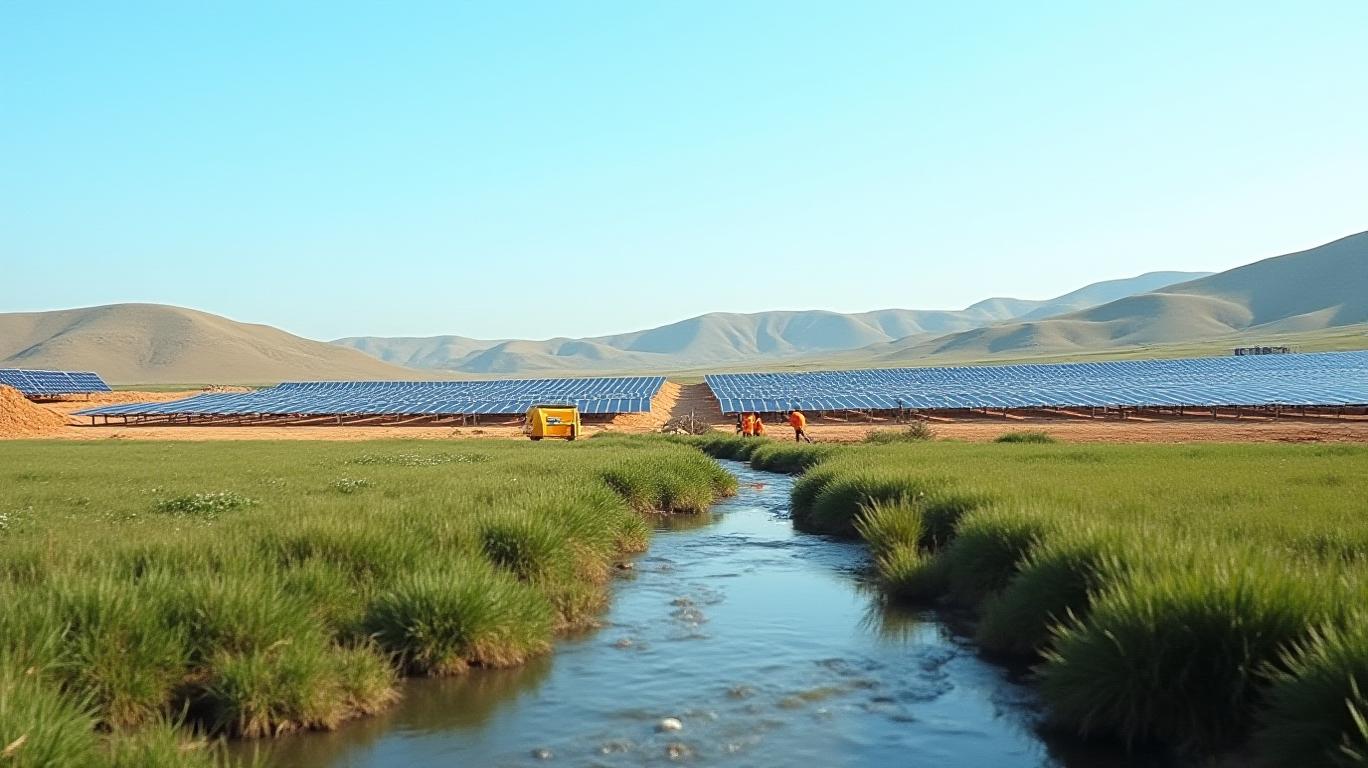
The agreements, which span 20 years, will see Rio Tinto purchase 90% of the power and battery storage capacity generated by the Smoky Creek & Guthrie’s Gap Solar Power Stations. Edify Energy will build, own, and operate these projects, with construction slated to begin in late 2025 and completion targeted for 2028. Located in Central Queensland, these adjacent solar power stations will feature 600MWac of solar capacity and 600MW / 2,400MWh of battery storage, providing a substantial boost to Rio Tinto’s energy infrastructure.
Rio Tinto Chief Executive, Australia, Kellie Parker, emphasized the importance of these agreements, stating, "These agreements are integral to repowering our Gladstone aluminium operations with affordable, reliable and lower carbon energy for decades to come. For the first time, we have integrated crucial battery storage in our efforts to make the Boyne aluminium smelter globally cost-competitive, as traditional energy sources become more expensive. We continue to investigate further renewable energy investments to repower our Gladstone aluminium operations."
Edify Energy Chief Executive, John Cole, also acknowledged the significance of this collaboration, saying, "The Smoky Creek & Guthrie’s Gap Solar Power Stations deliver the latest in solar, battery and inverter technology to support Australia’s power needs. This collaboration is an important commitment to supporting the sustainable future of Australia's industrial sector. We are proud to advance Rio Tinto's goals to repower its Gladstone operations and to play a role in the transition to a low-carbon economy."
The Smoky Creek & Guthrie’s Gap agreements are part of a broader effort by Rio Tinto to secure a total of 2.7GW of future wind and solar energy in Queensland. When combined with the 2.2GW of renewable wind and solar PPAs announced for its Gladstone operations in 2024, these projects are expected to supply 80% of the Boyne smelter’s annual average electricity demand. This transition to renewable energy is projected to reduce the smelter’s scope 1 and 2 emissions by 70%, or 5.6Mt of carbon dioxide equivalent per year, equivalent to removing about 2 million internal combustion engine cars from the road.
The integration of solar and battery storage systems in Rio Tinto's Gladstone aluminium operations aligns closely with the company's broader sustainability goals and its commitment to reducing carbon emissions. Rio Tinto's 90% share of the Smoky Creek & Guthrie's Gap battery system capacity amounts to 2,160MWh, which will provide about 30% of the firming required to repower the Boyne smelter with renewable energy. This will store green energy for reliable use during peak demand periods or low solar output, improving the stability and resilience of Queensland’s power network.
The success of the Smoky Creek & Guthrie’s Gap Solar Power Stations could significantly influence other mining companies to adopt similar renewable energy solutions. The project's ability to provide reliable, competitively priced electricity and integrate crucial battery storage for firming renewable energy could serve as a compelling case study for other mining companies looking to reduce their carbon footprint and operational costs.
However, mining companies might face several barriers in adopting similar renewable energy solutions. One significant barrier is the high upfront cost of installing solar and battery storage systems. While the long-term savings on energy costs and reduced carbon emissions are substantial, the initial investment can be a deterrent for companies with limited capital. Additionally, the integration of renewable energy systems into existing mining operations requires careful planning and coordination, which can be complex and time-consuming.
Another barrier is the regulatory and policy environment. Mining companies may face uncertainties regarding government policies and incentives for renewable energy adoption. For example, changes in tax incentives, subsidies, or regulatory requirements can impact the feasibility and profitability of renewable energy projects. Furthermore, the availability of skilled labor and technical expertise to design, install, and maintain renewable energy systems can also pose a challenge.
Despite these barriers, the success of the Smoky Creek & Guthrie’s Gap Solar Power Stations demonstrates the potential for renewable energy solutions to transform the mining industry. As more companies recognize the benefits of reducing their carbon footprint and operational costs, the adoption of renewable energy solutions is likely to increase. This trend is already evident in the mining industry, with companies like Rio Tinto investing in renewable energy projects to support their operations and meet their sustainability goals.
In a significant move towards sustainable energy, Rio TintoRIO-- and Edify Energy have signed two new solar and battery hybrid services agreements (HSAs) to bolster the supply of reliable, competitively priced electricity to Rio Tinto’s GladstoneGAIN-- aluminium operations in Queensland. This strategic partnership underscores the growing trend in the mining industry towards renewable energy solutions, driven by the need to reduce operational costs and carbon emissions.
The agreements, which span 20 years, will see Rio Tinto purchase 90% of the power and battery storage capacity generated by the Smoky Creek & Guthrie’s Gap Solar Power Stations. Edify Energy will build, own, and operate these projects, with construction slated to begin in late 2025 and completion targeted for 2028. Located in Central Queensland, these adjacent solar power stations will feature 600MWac of solar capacity and 600MW / 2,400MWh of battery storage, providing a substantial boost to Rio Tinto’s energy infrastructure.
Rio Tinto Chief Executive, Australia, Kellie Parker, emphasized the importance of these agreements, stating, "These agreements are integral to repowering our Gladstone aluminium operations with affordable, reliable and lower carbon energy for decades to come. For the first time, we have integrated crucial battery storage in our efforts to make the Boyne aluminium smelter globally cost-competitive, as traditional energy sources become more expensive. We continue to investigate further renewable energy investments to repower our Gladstone aluminium operations."
Edify Energy Chief Executive, John Cole, also acknowledged the significance of this collaboration, saying, "The Smoky Creek & Guthrie’s Gap Solar Power Stations deliver the latest in solar, battery and inverter technology to support Australia’s power needs. This collaboration is an important commitment to supporting the sustainable future of Australia's industrial sector. We are proud to advance Rio Tinto's goals to repower its Gladstone operations and to play a role in the transition to a low-carbon economy."
The Smoky Creek & Guthrie’s Gap agreements are part of a broader effort by Rio Tinto to secure a total of 2.7GW of future wind and solar energy in Queensland. When combined with the 2.2GW of renewable wind and solar PPAs announced for its Gladstone operations in 2024, these projects are expected to supply 80% of the Boyne smelter’s annual average electricity demand. This transition to renewable energy is projected to reduce the smelter’s scope 1 and 2 emissions by 70%, or 5.6Mt of carbon dioxide equivalent per year, equivalent to removing about 2 million internal combustion engine cars from the road.
The integration of solar and battery storage systems in Rio Tinto's Gladstone aluminium operations aligns closely with the company's broader sustainability goals and its commitment to reducing carbon emissions. Rio Tinto's 90% share of the Smoky Creek & Guthrie's Gap battery system capacity amounts to 2,160MWh, which will provide about 30% of the firming required to repower the Boyne smelter with renewable energy. This will store green energy for reliable use during peak demand periods or low solar output, improving the stability and resilience of Queensland’s power network.
The success of the Smoky Creek & Guthrie’s Gap Solar Power Stations could significantly influence other mining companies to adopt similar renewable energy solutions. The project's ability to provide reliable, competitively priced electricity and integrate crucial battery storage for firming renewable energy could serve as a compelling case study for other mining companies looking to reduce their carbon footprint and operational costs.
However, mining companies might face several barriers in adopting similar renewable energy solutions. One significant barrier is the high upfront cost of installing solar and battery storage systems. While the long-term savings on energy costs and reduced carbon emissions are substantial, the initial investment can be a deterrent for companies with limited capital. Additionally, the integration of renewable energy systems into existing mining operations requires careful planning and coordination, which can be complex and time-consuming.
Another barrier is the regulatory and policy environment. Mining companies may face uncertainties regarding government policies and incentives for renewable energy adoption. For example, changes in tax incentives, subsidies, or regulatory requirements can impact the feasibility and profitability of renewable energy projects. Furthermore, the availability of skilled labor and technical expertise to design, install, and maintain renewable energy systems can also pose a challenge.
Despite these barriers, the success of the Smoky Creek & Guthrie’s Gap Solar Power Stations demonstrates the potential for renewable energy solutions to transform the mining industry. As more companies recognize the benefits of reducing their carbon footprint and operational costs, the adoption of renewable energy solutions is likely to increase. This trend is already evident in the mining industry, with companies like Rio Tinto investing in renewable energy projects to support their operations and meet their sustainability goals.

Divulgación editorial y transparencia de la IA: Ainvest News utiliza tecnología avanzada de Modelos de Lenguaje Largo (LLM) para sintetizar y analizar datos de mercado en tiempo real. Para garantizar los más altos estándares de integridad, cada artículo se somete a un riguroso proceso de verificación con participación humana.
Mientras la IA asiste en el procesamiento de datos y la redacción inicial, un miembro editorial profesional de Ainvest revisa, verifica y aprueba de forma independiente todo el contenido para garantizar su precisión y cumplimiento con los estándares editoriales de Ainvest Fintech Inc. Esta supervisión humana está diseñada para mitigar las alucinaciones de la IA y garantizar el contexto financiero.
Advertencia sobre inversiones: Este contenido se proporciona únicamente con fines informativos y no constituye asesoramiento profesional de inversión, legal o financiero. Los mercados conllevan riesgos inherentes. Se recomienda a los usuarios que realicen una investigación independiente o consulten a un asesor financiero certificado antes de tomar cualquier decisión. Ainvest Fintech Inc. se exime de toda responsabilidad por las acciones tomadas con base en esta información. ¿Encontró un error? Reportar un problema


SOBRE NOSOTROS
Nuestra historiaAutores de noticiasBase de conocimientosPolítica de privacidadTérmino de usoDescargo de responsabilidad de corretaje de tercerosTérminos de uso de AIMEDivulgaciones de riesgos de AInvest AICarrerasCONTÁCTENOS
Email: support@ainvest.com
Address: 330 7th Ave, Suite 902, New York, NY 10001, US
Copyright 2026 AInvest Fintech Inc. All rights reserved.


Comentarios
Aún no hay comentarios