
Rigetti Computing's Earnings Beat vs. Expanding Losses: Is the Quantum Computing Pioneer Worth the Risk?
Earnings Beat Amid Revenue Miss: A Mixed Signal
Rigetti reported Q3 2025 revenue of $1.9 million, falling short of the $2.17 million forecast according to the earnings call transcript, yet outperformed expectations on the non-GAAP earnings front. The company posted a non-GAAP net loss of $10.7 million, narrower than the GAAP net loss of $201.0 million, which includes significant non-cash expenses. While the revenue dip raises questions about near-term demand, the earnings beat- 40% above the Zacks Consensus Estimate-suggests some traction in cost management or one-time gains.
However, the broader financial picture is less encouraging. Operating expenses surged to $21 million in Q3, up from $18.6 million in the prior year, reflecting continued heavy investment in R&D and infrastructure. Despite a cash balance of $600 million as of November 6, 2025, the widening gap between revenue and expenses has led to a 2% post-earnings stock price decline according to market analysis, signaling investor caution.
Strategic Traction: Partnerships and Product Roadmap
Rigetti's long-term viability hinges on its ability to translate quantum research into commercial value. The company has secured key contracts that underscore its market relevance. A $5.8 million Air Force Research Laboratory (AFRL) deal to advance superconducting quantum networking and $5.7 million in purchase orders for 9-qubit Novera systems highlight growing institutional interest. These deals, while modest in scale, validate Rigetti's technology in critical applications such as cryptography and optimization.
Strategic alliances further bolster its position. Collaborations with NVIDIA, Michigan State University (MSU), and India's C-DAC signal cross-industry momentum, particularly in hybrid quantum-classical computing and algorithm development. Meanwhile, plans to open an Italian subsidiary reflect a deliberate push into Europe, a region increasingly prioritizing quantum R&D.
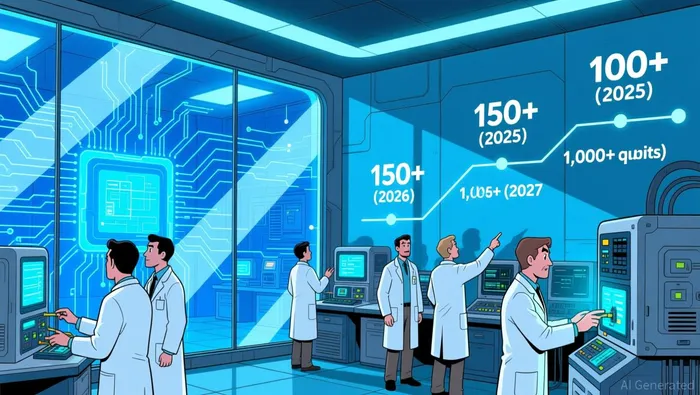
The technology roadmap itself is a critical differentiator. Rigetti aims to deliver a 100+ qubit system by year-end 2025, with 150+ and 1,000+ qubit systems slated for 2026 and 2027, respectively. These milestones, if achieved, could position RigettiRGTI-- to compete with IBM and Google in the race for quantum supremacy.
Cash Runway: Robust Reserves, But Burn Rate Looms
Rigetti's cash runway remains a double-edged sword. With $600 million in reserves, the company has sufficient liquidity to fund operations for at least 18–24 months, assuming current burn rates. However, the Q3 operating expenses of $21 million up from $17.3 million in Q3 2024- a significant increase-suggest a trajectory of increasing costs. The GAAP net loss of $201 million also hints at non-operational write-downs or restructuring charges, which could strain future flexibility.
The firm's recent warrant exercises according to market reports, which boosted cash balances to $600 million, provide temporary relief but do not address underlying profitability challenges. For now, Rigetti's balance sheet remains strong, but investors must monitor whether revenue growth can outpace expense increases.
Risk vs. Reward: A Quantum Leap?
Rigetti's story is one of high-risk, high-reward innovation. The company's stock has surged 121.3% year-to-date, reflecting optimism about its long-term potential. Yet the Q3 earnings report underscores the fragility of its business model. While strategic partnerships and a clear product roadmap are positives, the path to profitability remains uncertain.
For risk-tolerant investors, Rigetti's leadership in quantum hardware and its expanding client base-spanning defense, academia, and enterprise-justify a speculative bet. However, those prioritizing near-term stability may find the expanding losses and opaque cost structure concerning.
Conclusion
Rigetti Computing's Q3 results encapsulate the paradox of quantum computing: groundbreaking innovation paired with financial fragility. The company's earnings beat and strategic progress are encouraging, but the $201 million GAAP loss and rising burn rate demand vigilance. As the firm races to deliver on its qubit roadmap, its ability to secure recurring revenue and manage costs will determine whether it becomes a quantum leader or a cautionary tale. For now, the stock offers a high-stakes wager on the future of computing.





Comentarios
Aún no hay comentarios