
Riding the Volatility Wave: Why Financial Sector Equities Are Poised to Outperform
The financial markets of 2025 have become a testing ground for resilience, with volatility acting as both a disruptor and an opportunity. Bank of America's (BofA) stellar Q2 2025 results, which highlighted a record $1.53 billion in Global Markets net income, offer a critical lens through which to analyze this dynamic. For investors, the question is clear: Can the profitability surge in trading desks like BofA's persist, and how can this inform strategic allocations to financial sector equities?
BofA's Q2 Performance: A Microcosm of Volatility-Driven Profitability
BofA's second-quarter earnings revealed a stark contrast between its core lending business and its trading operations. While net interest income (NII) of $14.60 billion grew 7% year-over-year, it fell short of expectations due to lower interest rates and tepid loan demand. The real star was its trading arm, where equities and fixed-income desks thrived amid heightened market turbulence. This performance underscores a broader truth: trading desks are the ultimate beneficiaries of volatility.
When markets swing, investors turn to hedging, arbitrage, and speculative trades, driving trading volumes higher. BofA's results are not an anomaly but a reflection of a sector-wide trend.
Why Volatility Fuels Trading Profitability—and Why It's Here to Stay
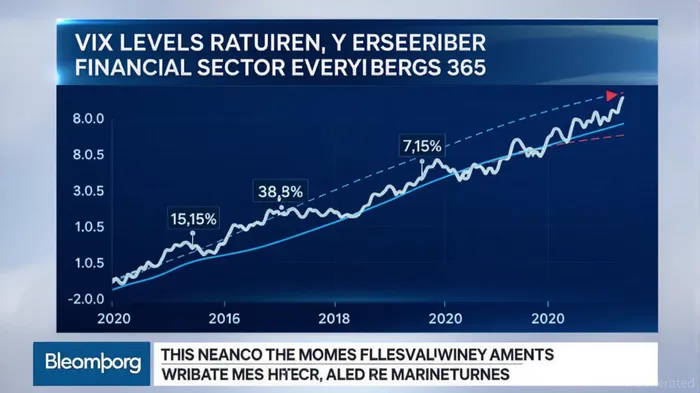
The VIX (volatility index), which spiked to a near-record 30.8 in April 2025 amid tariff-related panic, has since retreated but remains elevated. This reflects a market stuck in a “wait-and-see” mode, wary of geopolitical risks, trade wars, and the Federal Reserve's delayed rate cuts. For trading desks, this environment is gold.
- High Volume, High Fees: Volatile markets mean more client activity, from hedging equity exposures to currency swaps. Banks with deep liquidity and risk management tools capitalize on bid-ask spreads and commission fees.
- Structural Shifts: The rise of AI-driven trading algorithms and real-time data analytics has amplified the ability of top-tier banks to exploit short-term dislocations.
- Geopolitical Tailwinds: Trade disputes and currency fluctuations create cross-border arbitrage opportunities. BofA's global footprint and expertise in emerging markets give it an edge here.
Sustainability: A Delicate Balance of Risks and Rewards
Experts project the VIX to remain elevated through 2025 but not to repeat April's extreme spike unless new shocks emerge—such as a full-blown trade war or a rapid rise in inflation. This creates a “Goldilocks” scenario for trading desks: enough volatility to drive activity, but not so much that systemic risks derail markets.
However, two risks loom large:
1. Policy Overreach: Aggressive trade tariffs or sudden Fed rate hikes could destabilize markets, leading to abrupt volatility spikes that test banks' risk management.
2. Profit Margins: Lower interest rates and deposit growth headwinds (as seen in BofA's NII shortfall) could pressure banks to rely even more on trading—a risky bet if volatility fades.
Investment Implications: Allocating to Trading Powerhouses
The case for financial sector equities hinges on three criteria:
1. Scale and Diversification: Banks like BofA, JPMorganJPM--, and CitigroupC-- dominate trading operations, benefiting from economies of scale and global client networks.
2. Balance Sheet Strength: Avoid institutions overly reliant on loans to volatile sectors (e.g., real estate). Focus on those with robust capital ratios and liquidity buffers.
3. Tech-Driven Trading Edge: Firms investing in AI and data infrastructure (e.g., Goldman Sachs' Marcus platform) can sustain trading revenues in low-volatility phases.
The Bottom Line
For investors, BofA's Q2 performance is not just a quarterly success story but a roadmap. Volatility is here for the foreseeable future, and banks with strong trading arms are positioned to convert this turbulence into steady profits. While risks exist, the current macro backdrop favors strategic overweight allocations to financial sector equities—particularly those with global reach, technological prowess, and diversified revenue streams.
In this era of heightened uncertainty, the best offense remains a well-calculated defense: invest in institutions that thrive when markets shake.





Comentarios
Aún no hay comentarios