
Richardson Electronics: Harnessing Wind Energy Tailwinds for Double-Digit GES Growth in FY2026
The global transition to renewable energy has created a fertile ground for companies that can align innovation with sectoral demand. Richardson ElectronicsRELL--, Ltd. (RELL) stands at the intersection of technological differentiation and strategic market positioning in the wind energy sector. With its patented ULTRA3000® ultracapacitor pitch energy modules (PEMs) securing multi-million-dollar contracts and a clear focus on green energy solutions, the company is well-positioned to capitalize on the surging demand for sustainable infrastructure. This analysis evaluates Richardson's ability to deliver double-digit growth in its Global Energy Solutions (GES) segment in fiscal year 2026 (FY26), supported by market tailwinds, operational execution, and financial resilience.
Strategic Differentiation: ULTRA3000 and Market Validation
Richardson's ULTRA3000 units represent a paradigm shift in wind turbine pitch systems, replacing traditional lead-acid batteries with ultracapacitors that offer extended lifespan, reduced maintenance, and lower environmental impact, according to a GlobeNewswire release. The technology has already secured two multi-million-dollar production contracts with major North American wind farm operators, with shipments expected in 2025, as noted in a Nasdaq article. These contracts not only validate the technical superiority of Richardson's solution but also underscore its alignment with the decarbonization goals of the wind energy industry.
The global total addressable market for wind turbine applications is estimated at $454 million, according to Richardson's Q1 FY2026 slides, a figure that grows more compelling when viewed through the lens of sectoral trends. North America's wind energy market, valued at $30 billion in 2025, is projected to expand at a compound annual growth rate (CAGR) of 8–10% over the next decade, according to a LinkedIn analysis. Offshore wind, in particular, is accelerating, driven by floating turbine technology and supportive policies such as the U.S. Inflation Reduction Act, as reported by a GM Insights report. Richardson's focus on this segment-evidenced by its partnership with KEBA Industrial Automation to deliver cost-efficient pitch control systems-positions it to capture a disproportionate share of this growth, as described in Richardson's press release.
Financial Performance and Operational Momentum
While Richardson's Q3 2025 results revealed a 10.2% year-over-year decline in GES sales due to the non-recurrence of a large EV locomotive order, as noted in the Q3 earnings transcript, the Q4 2025 report painted a more optimistic picture. The GES segment saw a 14.1% year-over-year sales increase, driven by higher demand for wind turbine battery modules in the Q4 2025 results. This rebound highlights the segment's resilience and the growing traction of Richardson's wind energy solutions.
The company's broader financial health further strengthens its growth prospects. RichardsonRELL-- ended Q4 2025 with $36.7 million in cash and equivalents, no debt, and five consecutive quarters of positive operating cash flow, according to the Q4 FY2025 slides. These metrics provide the flexibility to reinvest in R&D, expand production capacity, or pursue strategic acquisitions-all critical to scaling in a high-growth sector. Additionally, the declaration of a $0.06 per share quarterly dividend, reported in a QuiverQuant note, signals management's confidence in sustained cash generation, a rare trait for a company in an emerging market.
Sectoral Tailwinds and Long-Term Catalysts
The wind energy sector's trajectory is underpinned by structural forces. North America is expected to add 60 gigawatts of onshore wind capacity between 2025 and 2030, with 92% of this growth concentrated in the U.S., according to a Mordor report. Offshore wind, meanwhile, is projected to grow at a CAGR of 14.6% through 2034, driven by federal tax credits and state-level renewable portfolio standards; GM Insights projects this acceleration in its offshore analysis. Richardson's ULTRA3000 technology, with its environmental and operational advantages, is uniquely positioned to benefit from these trends.
A critical catalyst lies in the Energy Storage Solutions (ESS) market, which is forecasted to expand from $25 billion in 2024 to $114 billion by 2032, according to a GM Insights study. Richardson's engineering expertise and partnerships position it to leverage this growth, particularly as wind farms increasingly integrate advanced storage systems to optimize grid reliability.
Risks and Mitigants
Despite its strengths, Richardson faces challenges. The GES segment's reliance on large, lumpy orders introduces volatility, as seen in Q3 2025. However, the diversification into wind turbine pitch systems and ESS, coupled with a growing backlog of $134.2 million (noted in the Q4 results), mitigates this risk. Additionally, the company's debt-free balance sheet provides a buffer against macroeconomic headwinds, such as interest rate fluctuations or supply chain disruptions.
Conclusion: A Compelling Case for FY2026 Growth
Richardson Electronics' strategic alignment with the wind energy sector's technological and regulatory tailwinds, combined with its financial discipline and innovative product offerings, creates a compelling case for double-digit GES growth in FY2026. As the world accelerates its shift toward renewables, companies that can deliver both sustainability and operational efficiency-like Richardson-will emerge as key beneficiaries. Investors seeking exposure to the green energy transition would do well to monitor the company's execution against its ambitious targets.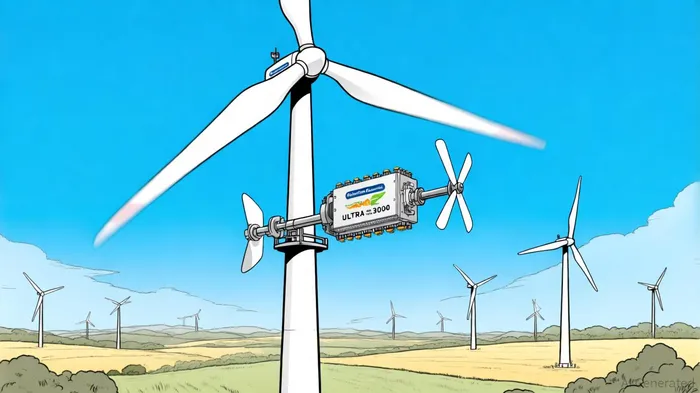





Comentarios
Aún no hay comentarios