
Richard Branson's Virgin Group Locked Out of Railways: Battle for State Control
Generado por agente de IAHarrison Brooks
sábado, 8 de febrero de 2025, 3:19 am ET2 min de lectura
CHRO--
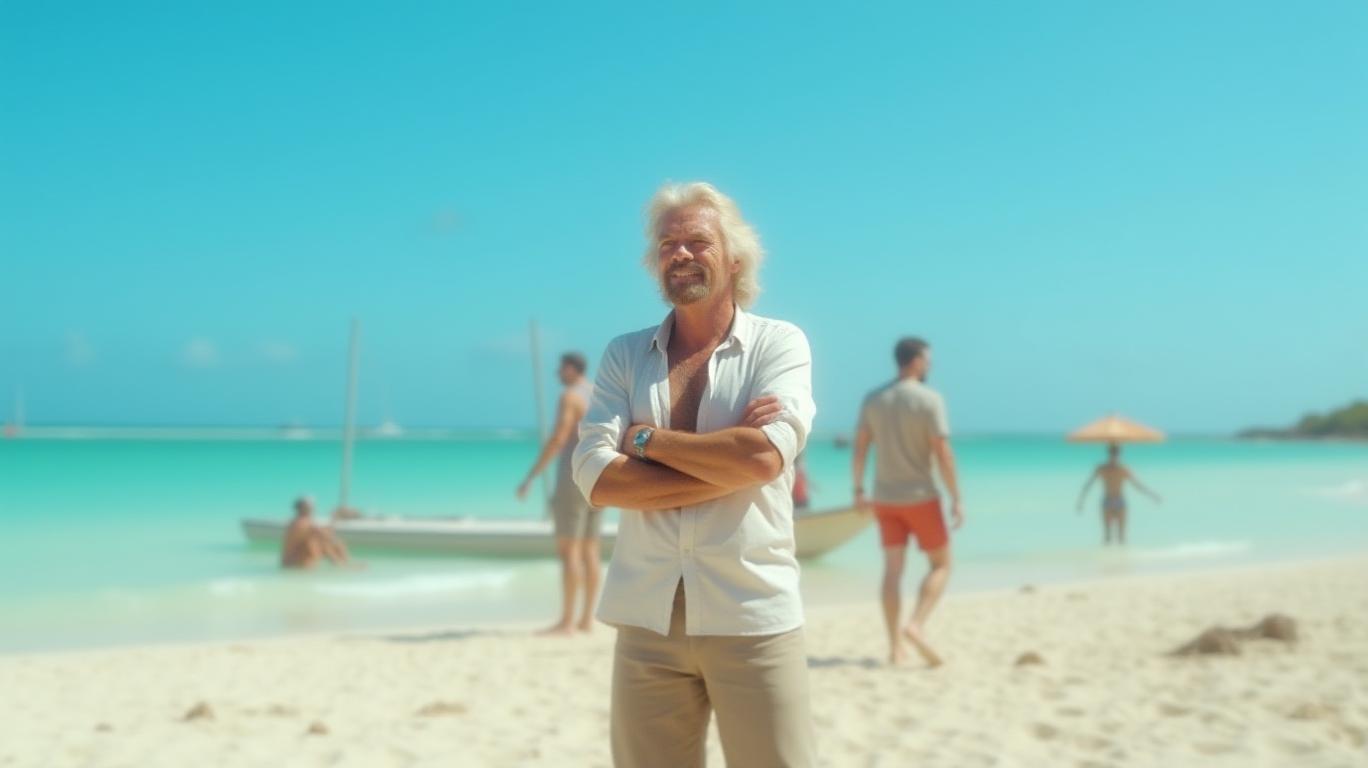
Sir Richard Branson's Virgin Group is locked in a battle to secure access to the UK's state-controlled railway infrastructure, as it seeks to challenge Eurostar's monopoly on high-speed cross-Channel train services. The dispute centers around access to the Temple Mills depot in East London and platform space at London's St Pancras International station, both of which are crucial for operating a new service.
Eurostar, the incumbent operator and majority-owned by the French state railway SNCF, has objected to Virgin's requests to use Temple Mills, arguing that the depot is already at capacity with its own fleet. The Office of Rail and Road (ORR) is currently reviewing the broader question of whether the existing infrastructure can accommodate additional operators, with a decision expected to influence which new entrant, if any, can commence services.
Phil Whittingham, the project lead for Virgin's proposed service, has suggested that the first company to sign a firm train contract could have a better case for receiving maintenance and depot capacity from the regulator. This has led to a race to secure rolling stock, with Virgin in talks with two shortlisted suppliers—drawn from Alstom, Siemens, Hitachi, and Talgo—and expecting to place the order during this financial quarter.
However, the market's ability to support three different operators on the Channel Tunnel route is uncertain, with economic and logistical constraints potentially limiting growth. Whittingham has raised doubts about whether the market can realistically support three different operators, citing both economic and logistical constraints. This suggests that the demand for cross-Channel train services might not be sufficient to sustain three operators, leading to potential competition for passengers and reduced profitability for each operator.
In response to these challenges, Virgin has been exploring various strategies to overcome Eurostar's objections and secure access to the necessary facilities. These include:
1. Securing a firm train contract: By securing a contract with one of the shortlisted suppliers, Virgin can strengthen its position in the negotiations with Eurostar and the ORR.
2. Demonstrating the need for additional capacity: Virgin can argue that the existing infrastructure can accommodate additional operators, as the market can realistically support more than one operator. By presenting a strong business case and showing the potential demand for their services, Virgin can make a compelling argument to the ORR that additional capacity is necessary.
3. Negotiating with external partners: Branson is ready to take as big an equity stake as possible in the project, but it is also anticipated that one or more external partners could provide additional investment to support the project. These external partners could potentially help Virgin secure access to Temple Mills and St Pancras International station platforms by providing additional resources or political influence.
4. Addressing Eurostar's concerns: Virgin can work with Eurostar to address their concerns about capacity at Temple Mills depot. This could involve negotiating a sharing agreement, investing in infrastructure upgrades, or finding alternative maintenance facilities. By addressing Eurostar's concerns, Virgin can increase the likelihood of securing access to the necessary facilities.
The outcome of this battle for state control will have significant implications for the UK's high-speed rail market and the broader European rail industry. As the ORR's decision on depot capacity approaches, industry observers will watch closely to see which new entrant, if any, can commence services and potentially reshape competition—and passenger choice—on one of Europe's most heavily traveled international rail corridors.
ROAD--
ST--
Sir Richard Branson's Virgin Group is locked in a battle to secure access to the UK's state-controlled railway infrastructure, as it seeks to challenge Eurostar's monopoly on high-speed cross-Channel train services. The dispute centers around access to the Temple Mills depot in East London and platform space at London's St Pancras International station, both of which are crucial for operating a new service.
Eurostar, the incumbent operator and majority-owned by the French state railway SNCF, has objected to Virgin's requests to use Temple Mills, arguing that the depot is already at capacity with its own fleet. The Office of Rail and Road (ORR) is currently reviewing the broader question of whether the existing infrastructure can accommodate additional operators, with a decision expected to influence which new entrant, if any, can commence services.
Phil Whittingham, the project lead for Virgin's proposed service, has suggested that the first company to sign a firm train contract could have a better case for receiving maintenance and depot capacity from the regulator. This has led to a race to secure rolling stock, with Virgin in talks with two shortlisted suppliers—drawn from Alstom, Siemens, Hitachi, and Talgo—and expecting to place the order during this financial quarter.
However, the market's ability to support three different operators on the Channel Tunnel route is uncertain, with economic and logistical constraints potentially limiting growth. Whittingham has raised doubts about whether the market can realistically support three different operators, citing both economic and logistical constraints. This suggests that the demand for cross-Channel train services might not be sufficient to sustain three operators, leading to potential competition for passengers and reduced profitability for each operator.
In response to these challenges, Virgin has been exploring various strategies to overcome Eurostar's objections and secure access to the necessary facilities. These include:
1. Securing a firm train contract: By securing a contract with one of the shortlisted suppliers, Virgin can strengthen its position in the negotiations with Eurostar and the ORR.
2. Demonstrating the need for additional capacity: Virgin can argue that the existing infrastructure can accommodate additional operators, as the market can realistically support more than one operator. By presenting a strong business case and showing the potential demand for their services, Virgin can make a compelling argument to the ORR that additional capacity is necessary.
3. Negotiating with external partners: Branson is ready to take as big an equity stake as possible in the project, but it is also anticipated that one or more external partners could provide additional investment to support the project. These external partners could potentially help Virgin secure access to Temple Mills and St Pancras International station platforms by providing additional resources or political influence.
4. Addressing Eurostar's concerns: Virgin can work with Eurostar to address their concerns about capacity at Temple Mills depot. This could involve negotiating a sharing agreement, investing in infrastructure upgrades, or finding alternative maintenance facilities. By addressing Eurostar's concerns, Virgin can increase the likelihood of securing access to the necessary facilities.
The outcome of this battle for state control will have significant implications for the UK's high-speed rail market and the broader European rail industry. As the ORR's decision on depot capacity approaches, industry observers will watch closely to see which new entrant, if any, can commence services and potentially reshape competition—and passenger choice—on one of Europe's most heavily traveled international rail corridors.

Divulgación editorial y transparencia de la IA: Ainvest News utiliza tecnología avanzada de Modelos de Lenguaje Largo (LLM) para sintetizar y analizar datos de mercado en tiempo real. Para garantizar los más altos estándares de integridad, cada artículo se somete a un riguroso proceso de verificación con participación humana.
Mientras la IA asiste en el procesamiento de datos y la redacción inicial, un miembro editorial profesional de Ainvest revisa, verifica y aprueba de forma independiente todo el contenido para garantizar su precisión y cumplimiento con los estándares editoriales de Ainvest Fintech Inc. Esta supervisión humana está diseñada para mitigar las alucinaciones de la IA y garantizar el contexto financiero.
Advertencia sobre inversiones: Este contenido se proporciona únicamente con fines informativos y no constituye asesoramiento profesional de inversión, legal o financiero. Los mercados conllevan riesgos inherentes. Se recomienda a los usuarios que realicen una investigación independiente o consulten a un asesor financiero certificado antes de tomar cualquier decisión. Ainvest Fintech Inc. se exime de toda responsabilidad por las acciones tomadas con base en esta información. ¿Encontró un error? Reportar un problema




Comentarios
Aún no hay comentarios