
Rheinmetall's Ukraine Air Defense Order: Strategic Implications for Defense Stocks
Rheinmetall's Ukraine Air Defense Order: Strategic Implications for Defense Stocks
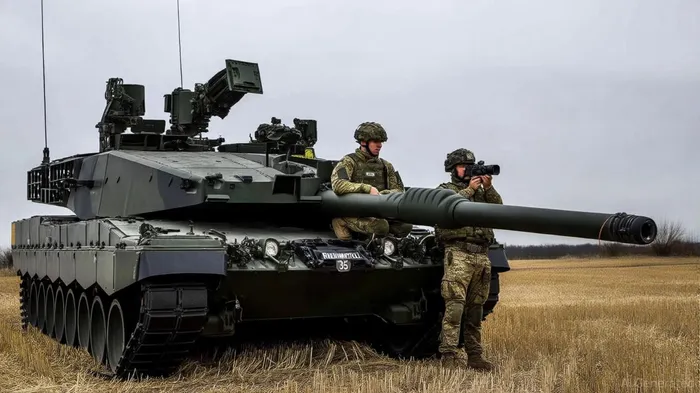
The Russian invasion of Ukraine has catalyzed a seismic shift in European defense policy, transforming the continent's military-industrial landscape. At the forefront of this transformation is Rheinmetall AG, whose recent €hundreds-of-millions contract to supply Skyranger air defense systems to Ukraine underscores the growing geopolitical-driven opportunities in the European defense sector. This order, financed by an EU member state using proceeds from frozen Russian assets for the Skyranger 35, is not an isolated event but a microcosm of a broader rearmament wave sweeping across Europe. For investors, the implications are clear: defense stocks are poised for sustained growth as governments prioritize self-reliance and modernization in response to shifting global dynamics.
Rheinmetall's Ukraine Contract: A Strategic Win
Rheinmetall's Skyranger 35 system, designed to neutralize drones and low-flying threats, represents a critical upgrade for Ukraine's air defense capabilities. The first units are slated for delivery by late 2025, with production centralized at Rheinmetall Italia's Rome headquarters, according to DefenseFeeds. This system, mounted on Leopard tanks and capable of securing a 4x4 km area, leverages programmable AHEAD airburst ammunition-a technological edge that enhances its effectiveness against evolving aerial threats, as United24 reported.
The contract's funding mechanism-tapping frozen Russian assets-reflects a pragmatic approach to circumventing traditional budgetary constraints. This model, endorsed by the EU, signals a new era of resourcefulness in defense procurement, enabling rapid deployment of critical systems without straining national budgets. For Rheinmetall, the order reinforces its position as a key supplier to both NATO allies and partners like Ukraine, while diversifying its revenue streams beyond traditional European markets.
European Defense Spending: A Structural Shift
The Ukraine conflict has accelerated Europe's pivot from post-Cold War fiscal restraint to aggressive defense investment. According to a CFA Institute analysis, €800 billion will be mobilized over the next decade to bolster military readiness, with a focus on air defense, artillery, and cyber capabilities. Germany's constitutional amendment to exempt defense spending from fiscal rules-a move spearheaded by Chancellor Scholz-exemplifies this shift, with the country now targeting 5% of GDP for defense by 2035, according to Forbes.
This spending surge is reshaping the defense industry's value chain. Traditional sectors like personnel and legacy systems are being eclipsed by procurement and R&D, creating tailwinds for companies like Rheinmetall, Saab, and BAE Systems. Goldman Sachs notes that European defense stocks have surged 63% in 2025 alone, outpacing broader market indices. The sector's outperformance is driven by both near-term contract wins and long-term structural trends, including the EU's push for strategic autonomy amid U.S. policy uncertainties under the Trump administration, as the Carnegie Endowment argues.
Strategic Implications for Investors
Rheinmetall's Ukraine order highlights three key investment themes:
Geopolitical Resilience: European governments are prioritizing self-sufficiency in critical defense technologies. Rheinmetall's expansion into Ukraine-through joint ventures for artillery production and now air defense systems-positions it as a linchpin in this strategy. Its new €8.5 billion 155mm ammunition contract with Germany and allies further cements its role in replenishing stocks for the Bundeswehr and NATO partners.
Technological Edge: The Skyranger's advanced capabilities, including its ability to counter drones, align with modern warfare demands. As drone swarms and hybrid threats dominate 21st-century conflicts, companies with cutting-edge solutions will see disproportionate demand. Rheinmetall's R&D investments in programmable ammunition and modular systems give it a competitive edge.
Market Consolidation: The European defense sector is consolidating as smaller firms struggle to meet production demands. Rheinmetall's recent factory expansion in Unterlüß, Germany-set to produce 700,000 artillery shells annually by 2025-exemplifies this trend. Such scale advantages will likely widen margins for industry leaders while squeezing out less capitalized competitors.
Risks and Challenges
Despite the optimism, challenges persist. European defense industrial capacity remains fragmented, with underinvestment in AI, quantum, and cyber technologies lagging behind U.S. and Chinese counterparts, as Goldman Sachs notes. Additionally, coordination across NATO and EU member states-while improving-remains complex, risking delays in joint procurement programs. For Rheinmetall, overreliance on government contracts exposes it to political volatility, though its diversified portfolio across Europe, Asia, and Africa mitigates this risk.
Conclusion: A Defensible Long-Term Bet
Rheinmetall's Ukraine air defense order is emblematic of a sector in flux. As European nations embrace their "security future," defense stocks are transitioning from cyclical plays to strategic essentials. For investors, the combination of geopolitical tailwinds, technological innovation, and structural spending shifts creates a compelling case for long-term exposure. Rheinmetall, with its dual focus on European markets and emerging partnerships with Ukraine, stands to benefit disproportionately from this paradigm shift.







Comentarios
Aún no hay comentarios