
Rheinmetall's Strategic Expansion in the Baltic Defense Market: A Pillar for European Geopolitical Resilience
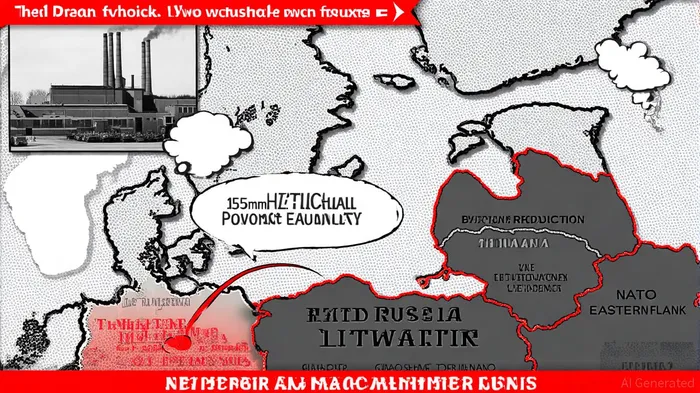
In an era of escalating geopolitical tensions and fragmented global supply chains, defense industrial base diversification has emerged as a critical priority for European nations. Germany's Rheinmetall AG, a leading defense contractor, is at the forefront of this transformation through its strategic investments in the Baltic region. By establishing advanced ammunition and artillery production facilities in Latvia and Lithuania, Rheinmetall is not only bolstering NATO's eastern flank but also addressing systemic vulnerabilities in Europe's defense supply chains. These moves align with broader European Union (EU) and NATO initiatives to reduce reliance on external suppliers and enhance strategic autonomy—a shift that holds profound implications for investors and policymakers alike.
Latvia and Lithuania: Strategic Hubs for Defense Industrial Resilience
Rheinmetall's €275 million investment in a new ammunition plant in Latvia, with a 51% stake held by the company and 49% by Latvia's State Defence Corporation, underscores its commitment to localized production. The facility, expected to produce tens of thousands of artillery shells annually, will significantly enhance Latvia's defense infrastructure while creating a critical node in NATO's supply chain [1]. Similarly, in Lithuania, Rheinmetall has partnered with local firms to establish a €180 million 155mm artillery shell production plant in Baisogala. This joint venture, with Rheinmetall holding 51% and local partners 49%, will produce advanced munitions, including sensor-fused SMArt 155 rounds, and is projected to generate 150 high-skilled jobs by mid-2026 [3].
These projects are emblematic of a broader trend: the decentralization of defense production to reduce exposure to geopolitical risks. By embedding manufacturing capabilities within NATO's eastern flank, Rheinmetall is addressing the EU's urgent need to close capability gaps in artillery systems and ammunition—a priority outlined in the EU's Readiness 2030 white paper [4].
Geopolitical Risk Mitigation and Supply Chain Resilience
The strategic rationale for Rheinmetall's Baltic investments is rooted in the EU's and NATO's shared goal of insulating defense supply chains from external coercion. China's dominance in critical raw material (CRM) processing and Russia's historical influence over European energy supplies have created vulnerabilities that adversaries could exploit. For instance, China controls over 80% of global rare earth element processing, a resource vital for advanced munitions and electronics [2]. By establishing regional production hubs, Rheinmetall is mitigating these risks through localized sourcing and cross-border collaboration.
The EU's European Defense Industry Program (EDIP), launched in March 2024, further reinforces this strategy. With €1.5 billion in funding allocated for 2025–2027, EDIP mandates that at least 70% of component costs for funded projects originate from EU or associated countries [2]. Rheinmetall's Baltic ventures, which involve multiple EU member states and align with NATO standards, are well-positioned to benefit from such initiatives. Additionally, the company's partnership with U.S.-based Lockheed MartinLMT-- to establish a European center of excellence for missile production highlights its ambition to bridge transatlantic supply chains and leverage North American technological expertise [3].
Investment Implications and Future Outlook
For investors, Rheinmetall's Baltic expansion represents a calculated bet on Europe's defense industrial renaissance. The company's target of €40 billion in revenue by 2030 hinges on its ability to scale production while navigating regulatory and geopolitical headwinds. However, the alignment of its projects with EU/NATO priorities—such as the Readiness 2030 plan and EDIP—provides a degree of policy tailwinds that could insulate it from market volatility.
A key risk lies in the execution of these large-scale projects. Delays in facility construction or supply chain bottlenecks for CRMs could impact profitability. Yet, the EU's proposed regulatory reforms, including streamlined procurement rules and increased budgetary allocations for defense, suggest a supportive environment for companies like Rheinmetall [3].
Conclusion
Rheinmetall's strategic investments in the Baltic region are more than corporate ventures—they are foundational to Europe's quest for defense self-reliance. By anchoring production in NATO's eastern flank, the company is directly addressing the EU's most pressing geopolitical risks while capitalizing on a €800 billion defense investment pipeline [3]. For investors, this represents a compelling case study in how industrial strategy can align with geopolitical imperatives, offering both financial returns and strategic value in an increasingly fragmented world.





Comentarios
Aún no hay comentarios