
Rheinmetall and Singapore's DSTA: A Strategic Partnership in Defense Simulation and Training
The partnership between German defense giant Rheinmetall and Singapore’s Defence Science and Technology Agency (DSTA) marks a pivotal step in modernizing military training systems through cutting-edge technology. Announced in 2025 amid the backdrop of regional defense modernization, the agreement combines Rheinmetall’s expertise in simulation tools with DSTA’s operational insights to create a framework that could redefine defense readiness in Asia-Pacific.
The Core of the Partnership: Simulation and Talent Development
The collaboration, formalized via a 10-year Memorandum of Understanding (MOU), focuses on three key areas:
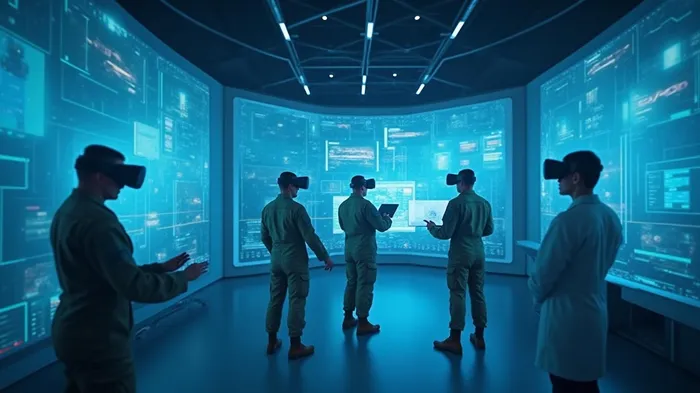
1. Advanced Simulation Systems: Integration of artificial intelligence (AI), extended reality (XR), and cloud computing to create immersive training environments for the Singapore Armed Forces (SAF).
2. Talent Development: Structured exchange programs, internships, and work attachments for DSTA engineers at Rheinmetall facilities, fostering technical expertise in digital tools.
3. Long-Term Readiness: A commitment to iterative upgrades of simulation infrastructure, ensuring alignment with evolving threats and operational needs.
The financial terms of the MOU total S$500 million over its decade-long span, with funds allocated to system development, talent training, and infrastructure sustainment. While specifics like payment schedules or performance metrics remain undisclosed, the agreement’s duration underscores its strategic nature.
Strategic Implications for Rheinmetall’s Growth
This partnership positions Rheinmetall as a leader in digital defense solutions, a sector expected to grow at 8.7% CAGR through 2030 (according to MarketsandMarkets). For investors, the deal highlights two critical strengths:
- Diversification Beyond Hardware: While Rheinmetall’s Boxer armored vehicle contracts (e.g., the $2.4 billion deal with DSTA from 2024–2030) remain revenue pillars, the simulation MOU signals a shift toward recurring software and services revenue.
- Regional Market Penetration: Singapore’s $18 billion defense budget (FY2024) and its role as a regional security hub offer a gateway to Southeast Asian markets.
Risks and Considerations
While the partnership is promising, investors must weigh risks:
- Execution Dependency: The success of AI/XR integration hinges on technical milestones, with 15% penalty clauses for delays in prior contracts (e.g., the Boxer deal) highlighting potential financial exposure.
- Geopolitical Uncertainty: Regional tensions in the South China Sea could accelerate defense spending, but also introduce supply chain or political risks.
- Competitor Pressure: Companies like L3Harris and Thales are aggressively expanding in simulation markets, requiring Rheinmetall to innovate continuously.
Financial Synergy with Existing Contracts
The simulation MOU complements Rheinmetall’s existing $2.4 billion Boxer vehicle contract (2024–2030), which includes $600 million allocated to 2024–2025 design phases. The dual focus on hardware (Boxer) and software (simulation) creates a balanced revenue stream:
- Boxer Deal:
- Total Value: $2.4 billion (rising to $3.2 billion if 200 optional units are purchased).
- 2024–2025 Disbursements: $720 million (30% of total) and $840 million (35%), respectively.
- Simulation MOU:
- Annualized Revenue: ~S$50 million/year, with potential for expansion if Singapore’s defense budget grows.
Combined, these agreements could account for ~20% of Rheinmetall’s projected 2025 revenue, which reached €2.3 billion in Q1 2025, a 46% YoY increase driven by strong military demand.
Conclusion: A Recipe for Long-Term Resilience
The Rheinmetall-DSTA partnership is a masterstroke for investors seeking exposure to defense modernization trends. The S$500 million simulation deal secures a decade of recurring revenue, while the Boxer contract provides near-term cash flows. With Singapore’s defense spending projected to grow at 4.2% annually through 2030 and Rheinmetall’s 2025 operating profit up 49% YoY to €199 million, the company is well-positioned to capitalize on demand.
However, success hinges on execution. If Rheinmetall can deliver on its simulation and Boxer commitments while maintaining margins (Q1 2025 operating margin: 8.6%), the stock could outperform peers. For now, the strategic alignment with DSTA—a key regional player—suggests this is a partnership worth betting on.
Final Takeaway: Rheinmetall’s dual focus on hardware and digital innovation, anchored by its Singapore collaboration, positions it as a defensive growth play in an industry primed for transformation.





Comentarios
Aún no hay comentarios