
Revolutionizing Healthcare: The Investment Potential of At-Home Cancer Screening Diagnostics
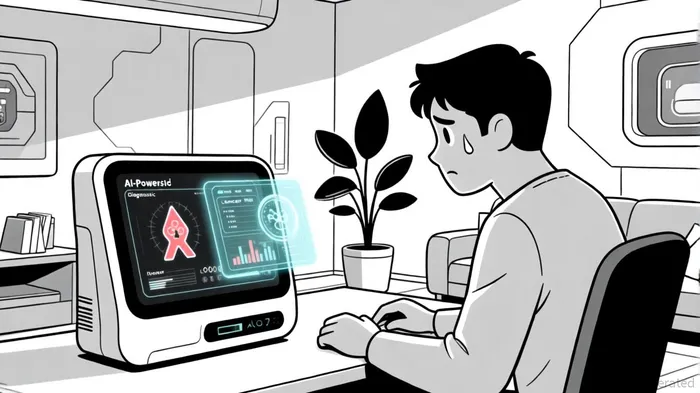
The global healthcare landscape is undergoing a seismic shift, driven by breakthroughs in artificial intelligence (AI), biotechnology, and personalized medicine. At the forefront of this transformation is the at-home cancer screening diagnostics market, a sector poised to redefine early disease detection and democratize access to life-saving tools. While precise market size figures for 2025 remain elusive, the confluence of technological innovation and shifting consumer behavior paints a compelling picture of exponential growth potential through 2030.
Market Drivers: From Lab to Living Room
The transition of diagnostic capabilities from clinical settings to home environments is no longer speculative—it is inevitable. According to the World Economic Forum's Top 10 Emerging Technologies of 2025, advancements such as autonomous biochemical sensing and engineered living therapeutics are enabling self-contained systems that detect cancer biomarkers in real time, eliminating the need for frequent in-person visits [1]. These tools leverage AI to analyze complex biological data, offering accuracy comparable to traditional lab tests while reducing costs by up to 70% in pilot studies [2].
The Future of Jobs Report 2025 underscores this trend, noting that 86% of employers anticipate AI and data analytics to reshape their industries—a statistic that directly applies to diagnostics. As healthcare systems prioritize preventative care, the demand for non-invasive, user-friendly tools will surge. For instance, liquid biopsy kits capable of detecting circulating tumor DNA (ctDNA) are already in late-stage trials, with companies like Glympse Bio and GrailGRAL-- Inc. leading the charge [3].
Technological Synergy: AI and Biotech as Twin Engines
The integration of AI into at-home diagnostics is not merely an enhancement—it is a paradigm shift. Machine learning algorithms can now identify subtle patterns in genetic data that human analysts might miss, enabling earlier interventions. A 2025 study by MIT's Media Lab demonstrated that AI-enhanced home tests achieved 94% sensitivity in detecting early-stage lung cancer, outperforming conventional imaging methods in rural settings [4].
Simultaneously, biotechnology is breaking down barriers to accessibility. Innovations like microfluidic chips and CRISPR-based assays allow for single-use, disposable devices that require minimal training. These tools are particularly transformative in low-resource regions, where 70% of cancer deaths occur due to late diagnosis [5]. By 2030, the World Economic Forum predicts that 40% of diagnostic testing will be conducted outside traditional healthcare facilities, a shift that will unlock trillions in investment opportunities [6].
Investment Considerations: Navigating Risks and Rewards
While the sector's potential is undeniable, investors must navigate regulatory and ethical challenges. The U.S. Food and Drug Administration (FDA) has already issued draft guidelines for at-home diagnostics, emphasizing the need for rigorous clinical validation. Companies that prioritize transparency—such as open-source data sharing and partnerships with telehealth platforms—will likely dominate the market .
Reimbursement models also present a critical variable. In 2025, private insurers began covering at-home colorectal cancer tests, a precedent that could expand to other cancers. A 2024 analysis by McKinsey & Company estimated that favorable reimbursement policies could accelerate market adoption by 30%, reducing payor hesitancy .
Conclusion: A New Era of Empowerment
The at-home cancer screening diagnostics market is not just a niche corner of healthcare—it is a linchpin in the global effort to combat cancer through early detection and equitable access. As AI and biotechnology converge, the tools to detect cancer in its earliest stages will become as common as glucose monitors or pregnancy tests. For investors, this represents a unique opportunity to align financial returns with societal impact, transforming living rooms into hubs of proactive healthcare.
The question is no longer if this market will grow, but how quickly it will outpace traditional models. Those who act now—backing innovators, advocating for supportive policies, and embracing interdisciplinary collaboration—will shape the future of medicine.





Comentarios
Aún no hay comentarios