
Revolution Wind Ruling: A Tactical Win for Ørsted, But the War Isn't Over
The immediate catalyst is a federal judge's decision on Monday that clears the way for Ørsted to resume work on its Revolution Wind project. This ruling directly halts the Trump administration's December 22 suspension, which had abruptly halted construction on the nearly finished offshore wind farm. The judge, Royce Lamberth, delivered a sharp rebuke to the administration's national security justification, stating it failed to show the harm was irreparable or that lesser actions could not be taken to address concerns.
Lamberth's key legal reasoning centered on the government's own timeline and the project's status. He noted officials had been made aware of newly-classified information regarding wind projects in November but waited until December 22-just three days before Christmas-to act. The judge was unconvinced that this constituted an emergency situation warranting a total stop to project activity. He emphasized that suspensions for national security must be limited to cases with "demonstrated findings of particularized harm that cannot be averted short of a total stop."
This is a clear tactical victory for Ørsted. The project is already about 87% complete and faces a critical deadline to finish the final seven turbines before a specialized installation vessel must depart for other projects by early February. The ruling removes an immediate operational threat and allows construction to restart. However, it does not resolve the underlying regulatory and political risk. The judge's order applies only to Revolution Wind, not the four other suspended projects, and the administration has already signaled it will appeal. The war over offshore wind is far from over.
The Immediate Financial and Operational Setup
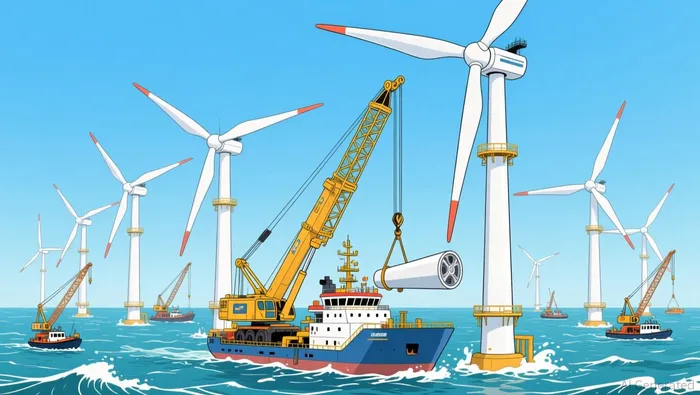
The judge's ruling is a direct financial lifeline for Ørsted. It protects a massive, nearly completed investment. The Revolution Wind project is valued at roughly $6 billion and was already 87% completed when halted. The company had already installed 44 of 84 monopile foundations and laid transmission cables. This means the core capital expenditure has largely been sunk. The immediate P&L impact is therefore not about writing off the entire project, but about avoiding the direct costs of a forced delay and potential termination.
The primary risk now is schedule disruption and the associated costs. The project faces a hard deadline to finish the final seven turbines before a specialized installation vessel must leave for other work by early February. The ruling removes the threat of a total stop, but it does not guarantee the project can be completed on time. Any further delays could trigger cost overruns, penalties, or even the loss of power purchase agreements. The balance sheet is shielded from a total write-down, but the operational timeline remains precarious.
Crucially, the project had already undergone extensive federal reviews and received all necessary permits. This makes the administration's national security justification appear weak, which is why the judge sided with Ørsted. The ruling is a tactical win that secures the existing investment. However, it leaves the project vulnerable to further regulatory or political interference, as the administration has signaled it will appeal and the judge's order does not cover the other suspended projects. The financial protection is real, but the operational clock is still ticking.
The Broader Battlefield: Legal and Political Risks
This ruling is just the opening salvo in a week of high-stakes legal battles. Monday's hearing was the first of three preliminary injunctions scheduled this week, targeting the same administration suspension. The other cases involve major projects like Equinor's Empire Wind and Dominion's Coastal Virginia Offshore Wind. The Trump administration has already escalated, filing a new lawsuit last week to halt work on Ørsted's Sunrise Wind project. This is a sustained legal offensive, not a one-off decision.
The core uncertainty now is the administration's next move. While the judge's order applies only to Revolution Wind, the government has signaled it will appeal. This creates a volatile regulatory environment where the fate of billions in investments hangs on unpredictable court rulings. The judge's skepticism toward the administration's national security justification is a positive signal, but it does not bind future judges or guarantee a different outcome for the other cases.
The risks extend beyond legal technicalities. The administration's argument relies on undisclosed, classified information about national security impacts. This lack of transparency makes it difficult for developers to effectively defend their projects or for the public to assess the claims. The judge's order highlights the government's own timeline failure, but the broader offensive continues. For Ørsted, the immediate relief is real, but the strategic battlefield has simply expanded. The company must now fight multiple fronts simultaneously, with the outcome of each case potentially setting a precedent for the entire sector.
Catalysts and What to Watch
The immediate threat is removed, but the path to strategic victory is now event-driven. The key near-term catalysts are the administration's response and the outcomes of the other two injunction hearings this week. Watch for any appeal filed by the Department of Interior, which has already signaled it will challenge Monday's ruling. This move would extend the legal battle and inject fresh uncertainty.
The other two hearings, scheduled for today and later this week, are critical for setting the broader legal trend. The outcomes for Equinor's Empire Wind and Dominion's Coastal Virginia Offshore Wind will signal whether Judge Lamberth's skepticism toward the administration's national security justification is an outlier or a pattern. A win for those projects would strengthen Ørsted's position across the sector. A loss would confirm the regulatory threat is systemic and not project-specific.
For Ørsted's own portfolio, the status of its Sunrise Wind project is a major watch item. The company filed a new federal lawsuit last week to reverse the administration's halt, and a hearing is set for today. The project is about 45% complete and has a tight October 2026 target to begin generating power. Any further delay here would compound the financial and reputational risk, especially given the new lawsuit and the administration's aggressive posture.
The bottom line is that the tactical win at Revolution Wind is just one battle. The strategic outcome hinges on a series of discrete legal events over the coming days and weeks. Investors should monitor the administration's next move, the results of the other injunction hearings, and the progress-or lack thereof-on Sunrise Wind. The setup remains volatile, with Ørsted's capital and timeline exposed to each new ruling.







Comentarios
Aún no hay comentarios