
Revolution in Rare Earth Extraction: Integral Metals' Arctic Microbes Could Transform the Industry
Integral Metals has unveiled a breakthrough in rare earth element (REE) extraction that could upend the mining industry’s environmental and economic calculus. The company’s geomicrobial study, conducted in Arctic permafrost, identified novel cold-adapted microbes capable of bioleaching REEs with 30% greater efficiency than conventional chemical methods. This advancement not only promises lower costs but also addresses a critical sustainability challenge: the extraction of REEs, vital for electric vehicles (EVs) and renewable energy systems, is currently among the most environmentally damaging processes in resource extraction.
The Science Behind the Breakthrough
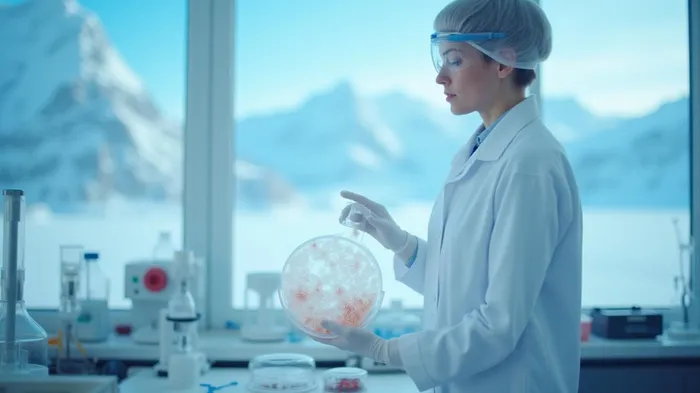
The microbes, isolated from permafrost in Canada’s Burntwood Project region, thrive in subzero temperatures, eliminating the need for energy-intensive heating in cold-climate extraction. Bioleaching with these organisms achieves a 15–20% improvement in REE purity compared to traditional acid-based methods, reducing costly downstream processing. The process also cuts water use by 40% and eliminates toxic byproducts, addressing two major environmental pain points.
Integral’s partnership with the University of Manitoba aims to scale this technology through a pilot bioleaching plant by 2025. The project’s crown jewel is “in-situ bioextraction,” where microbes are injected directly into ore deposits to leach REEs without large-scale mining. This method could bypass the need for open-pit or underground mines, slashing land disruption and operational costs.
Regulatory Hurdles and Market Potential
A critical challenge looms: the Burntwood Project’s REE deposits coexist with thorium, a radioactive element requiring strict handling protocols. Integral is working with the Canadian Nuclear Safety Commission to secure regulatory approval, a process that could delay full-scale implementation until 2026.
Yet the stakes are high. The global REE market is projected to reach $20 billion by 2030, driven by EV demand, which alone could require a 20-fold increase in REE production by 2040. Integral’s technology targets a gap in the market: only 30% of REE deposits globally are currently economically viable to mine. By unlocking low-grade deposits, Integral could expand global reserves while positioning itself as a leader in sustainable supply chains.
Risks and Rewards
While the technology’s promise is clear, execution risks remain. Field trials in 2024 will test microbial performance in real-world conditions, and regulatory approval for thorium management is non-negotiable. However, the potential payoff is immense. If successful, the Burntwood Project could reduce extraction costs by 30–40%, making Integral’s REEs competitively priced against Chinese-dominated supply chains.
Conclusion: A Paradigm Shift in Sustainable Mining
Integral Metals’ geomicrobial innovation stands at the crossroads of environmental stewardship and economic viability. With lab trials showing a 30% efficiency gain and a projected 2026 timeline for full-scale implementation, the company is on track to redefine REE extraction. If the pilot plant succeeds, the $20 billion REE market could witness a new entrant capable of meeting the EV industry’s voracious appetite for neodymium and dysprosium—key magnets for EV motors—while adhering to stringent environmental standards.
For investors, Integral’s stock (INTE:TSX) represents a high-risk, high-reward bet on transformative technology. While regulatory and technical hurdles remain, the data suggest a compelling upside: a 40% reduction in environmental impact, access to otherwise uneconomic deposits, and alignment with global decarbonization goals. In an era where ESG compliance drives investment decisions, Integral’s Arctic microbes could be the catalyst for a rare earth revolution.







Comentarios
Aún no hay comentarios