
The U.S. Reverse-Engineering Drone Revolution: A Strategic Shift in Defense Spending and Innovation
The U.S. military's adoption of low-cost, attritable drone systems-reverse-engineered from Iranian designs-marks a seismic shift in defense strategy and spending. This transformation, driven by the need to counter asymmetric threats and replicate adversaries' cost-effective technologies, is unlocking new investment opportunities in small defense firms and drone developers. As the Pentagon pivots toward scalable, rapid-response systems, companies like SpektreWorks are emerging as critical players in a redefined defense landscape.
A Strategic Flip: From Defense to Offense
The U.S. military's reverse-engineering of Iran's Shahed-136 drone has enabled a tactical reversal. Task Force Scorpion Strike (TFSS), a specialized unit under U.S. Special Operations Command Central, now deploys the Low-Cost Uncrewed Combat Attack System (LUCAS), a $35,000 kamikaze drone modeled after the Shahed-136. This move allows the U.S. to "flip the script on Iran," leveraging the same one-way attack tactics previously used against U.S. forces in conflicts ranging from the Middle East to Ukraine. The LUCAS drone's affordability, autonomous coordination, and versatility in launch methods-such as catapults and rocket-assisted takeoff-position it as a disruptive force in modern warfare according to defense analysts.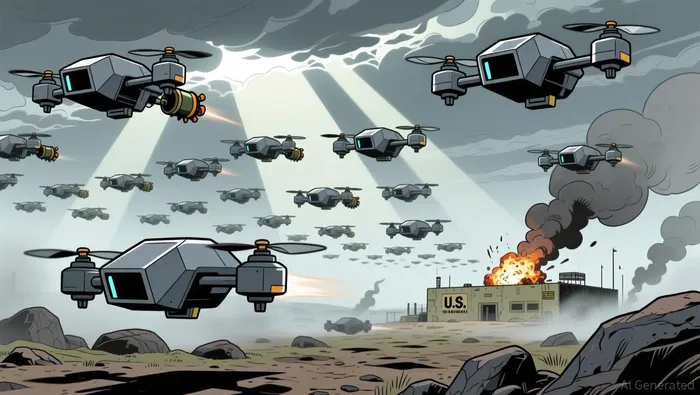
This shift reflects a broader recognition of the Shahed-136's strategic value. Iran and its proxies have used the drone to target U.S. troops, commercial vessels, and civilian infrastructure, while Russia has deployed thousands of Shahed-136s in its invasion of Ukraine. By replicating this design, the U.S. is not only countering adversaries but also addressing gaps in its own capacity to mass-produce low-cost drones.
The Replicator Initiative: Scaling Innovation
Central to this revolution is the Pentagon's Replicator initiative, launched in August 2023 with a goal of fielding thousands of attritable autonomous systems by August 2025. This program, led by the Defense Innovation Unit (DIU), emphasizes rapid deployment of systems across air, land, and sea domains. Replicator has awarded contracts to over 30 companies, including non-traditional defense contractors, and prioritizes commercial technologies and open-system architectures to streamline production.
A key component of Replicator is the development of counter-drone capabilities, reflecting the growing threat of small unmanned aerial systems (sUAS) in high-risk regions like the Middle East. This dual focus-on offensive and defensive systems-has spurred increased funding for counter-drone technologies, further reshaping defense budgets.
Small Firms, Big Impact: The Rise of SpektreWorks
While major defense contractors dominate headlines, small firms are proving indispensable in this new era. Arizona-based SpektreWorks, for instance, designed the FLM 136 (also known as "Lucas"), a Shahed-136 clone deployed by the U.S. military. Priced at $35,000, the FLM 136 contrasts sharply with traditional drones like the $16 million MQ-9 Reaper, underscoring the Pentagon's pivot toward expendable, cost-effective systems according to defense analysts.
SpektreWorks' involvement highlights a broader trend: the Replicator initiative's emphasis on non-traditional contractors and commercial technologies. By reducing barriers to entry, the program is fostering innovation among smaller firms, which are now integral to scaling production and integrating advanced features like autonomous coordination.
Budgetary Shifts and Future Implications
The reverse-engineering of the Shahed-136 has directly influenced U.S. defense budget allocations. The Air Force, for example, has prioritized acquiring exact replicas of the drone to train against its capabilities. Meanwhile, the Replicator program's $500 million annual budget has been criticized as insufficient to match the scale of potential drone swarms, signaling a need for further investment.
This shift also reflects a strategic reallocation of resources toward asymmetric warfare. As noted by defense analysts, the U.S. military's historical focus on high-cost, high-precision systems is giving way to a model that prioritizes volume and adaptability. This trend is likely to accelerate as adversaries like Iran and Russia continue refining their drone arsenals.
Investment Opportunities in the Drone Revolution
For investors, the U.S. reverse-engineering drone revolution presents compelling opportunities. Small defense firms with expertise in attritable systems, autonomous coordination, and counter-drone technologies are well-positioned to benefit from the Pentagon's strategic pivot. SpektreWorks, for instance, exemplifies how niche capabilities can align with national security priorities.
Moreover, the Replicator initiative's emphasis on commercial technologies and open architectures suggests a long-term shift toward modular, scalable systems. This environment favors firms that can rapidly iterate and integrate new capabilities, such as AI-driven targeting or swarm coordination.
Conclusion
The U.S. adoption of Iranian drone designs marks more than a tactical adjustment-it signals a fundamental reorientation of defense spending and innovation. By embracing low-cost, high-impact systems, the Pentagon is not only countering adversaries but also creating a fertile ground for small defense firms to thrive. As the Replicator initiative progresses toward its 2025 goals, investors who recognize the strategic value of attritable drones and their developers stand to gain from a defense sector in transformation.







Comentarios
Aún no hay comentarios