
Revenge Saving: A Behavioral Economics Lens on Long-Term Wealth-Building
The financial landscape in 2025 is marked by a paradox: while global markets grapple with inflation and geopolitical volatility, a growing segment of consumers is prioritizing savings over consumption. This phenomenon, dubbed "revenge saving," has emerged as a strategic response to the lingering psychological and economic scars of the pandemic. Unlike traditional savings driven by long-term planning, revenge saving is emotionally charged, rooted in a desire to reclaim control after periods of financial instability. Behavioral economics offers critical insights into this trend, revealing how psychological biases and societal shifts are reshaping wealth-building strategies.
The Behavioral Economics of Revenge Saving
Revenge saving is not merely a fiscal decision but a psychological reaction to perceived threats. At its core lies the principle of loss aversion, a cornerstone of behavioral economics that posits individuals are more motivated to avoid losses than to achieve equivalent gains, as a Forbes article explains. For many, the pandemic's economic disruptions-job losses, market crashes, and supply chain crises-created a visceral fear of future instability. This fear has driven a shift from discretionary spending to aggressive savings, particularly among Millennials and Gen Z, who now prioritize emergency funds and liquidity, according to a National Bank of Greece study.
The concept of control further amplifies this behavior. Financial institutions have long understood that perceived control over one's future reduces anxiety. Revenge saving, therefore, serves as a psychological buffer, offering a sense of agency in an unpredictable world. A 2025 study by the National Bank of Greece notes that younger generations, having navigated economic volatility during their formative years, are more inclined to adopt savings habits as a proactive measure. This aligns with the behavioral economics theory of prospect theory, which emphasizes how individuals value outcomes relative to reference points rather than absolute values.
Long-Term Wealth Implications
While revenge saving is often framed as a defensive tactic, its long-term implications for wealth-building are nuanced. On one hand, the trend fosters financial resilience. By accelerating savings, individuals create a safety net that mitigates the impact of future shocks, such as job loss or market downturns, as a 2025 systematic literature review found. For example, high-earning professionals are increasingly structuring their savings into diversified portfolios, blending high-yield accounts with strategic investments to balance liquidity and growth.
However, behavioral economics also cautions against potential pitfalls. Over-accumulation in low-yield accounts-often a byproduct of emotionally driven decisions-can erode purchasing power over time due to inflation, a 2025 Maxthon analysis warns. Additionally, the endowment effect, where individuals ascribe higher value to assets they own, may lead to suboptimal investment choices. Maxthon highlights that revenge savers risk missing growth opportunities if their portfolios lack exposure to equities or real assets.
Sustaining the Trend: Strategies for Investors
To harness revenge saving as a tool for long-term wealth, investors must balance emotional motivations with strategic planning. Behavioral economics offers actionable frameworks:
Automated Savings and Commitment Devices: Tools like automatic transfers to high-yield savings accounts leverage the present bias-the tendency to prioritize immediate gratification-by removing the friction of manual savings. Financial institutions can enhance this by offering tiered interest rates for consistent contributions.
Goal-Based Planning: Revenge saving often lacks specific objectives, making it prone to stagnation. By aligning savings with concrete goals (e.g., retirement, homeownership), investors can counteract the planning fallacy, where people underestimate the time or resources needed for tasks. Digital platforms that track progress toward these goals can reinforce discipline.
Financial Literacy and Behavioral Nudges: Education campaigns that demystify investment vehicles-such as ETFs or index funds-can counteract the status quo bias, where individuals stick to default options due to inertia. For instance, a 2025 report by Forbes highlights how personalized financial coaching has helped revenge savers transition from cash-heavy portfolios to balanced asset allocations.
Risk Management Through Diversification: While revenge saving emphasizes liquidity, behavioral economics underscores the importance of diversifying across asset classes to mitigate risk. Investors should avoid over-reliance on cash, which underperforms inflation over time, and instead allocate portions of savings to growth-oriented investments.
The Role of Financial Institutions
Financial institutions are uniquely positioned to support revenge savers. High-yield savings accounts, robo-advisors, and gamified savings apps can align with the emotional drivers of this trend while promoting long-term growth. A 2025 study emphasizes that institutions offering tailored financial literacy programs-such as workshops on behavioral biases-can foster sustainable savings habits.
Conclusion
Revenge saving is more than a reaction to economic uncertainty; it is a testament to the evolving interplay between psychology and finance. By understanding the behavioral economics principles that underpin this trend, investors can transform reactive savings into a disciplined, long-term wealth-building strategy. For financial institutions, the challenge lies in designing products that cater to both the emotional and practical needs of revenge savers, ensuring that their efforts translate into lasting financial security.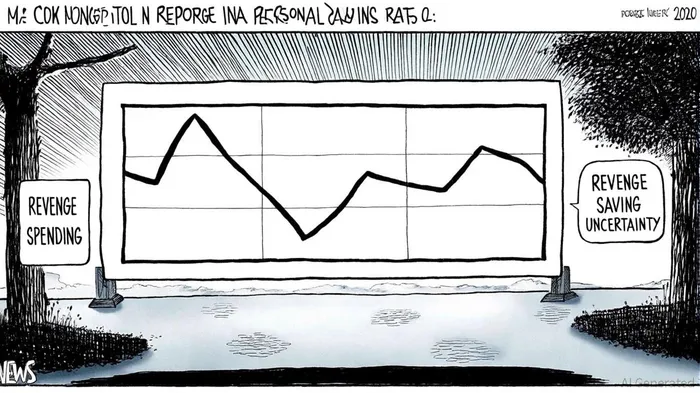







Comentarios
Aún no hay comentarios