
Rethinking Risk: Why Equities May Be Safer Than Bonds in a High-Inflation Era
Inflation isn’t just a number—it’s a silent predator. For decades, bonds and cash have been marketed as “safe” havens, but history shows this narrative crumbles when prices surge. As we stand in 2025, with inflation averaging 7.2% globally over the past two years, it’s time to ask: Are traditional “low-risk” portfolios the real gamble?
The answer, backed by over a century of data, is a resounding yes.
The Silent Erosion of “Safe” Assets
Bonds and cash are often labeled as conservative investments, but their fixed returns make them vulnerable to inflation. Let’s start with the math:
- $10,000 in bonds during the 1970s inflation surge (1968–1981) lost 43% of its real value, shrinking to just $5,720 due to average annual real returns of -3.91%.
- Meanwhile, equities—specifically those with strong momentum or shareholder yield—grew that same $10,000 to $19,624 over the same period, outperforming bonds by a staggering margin.
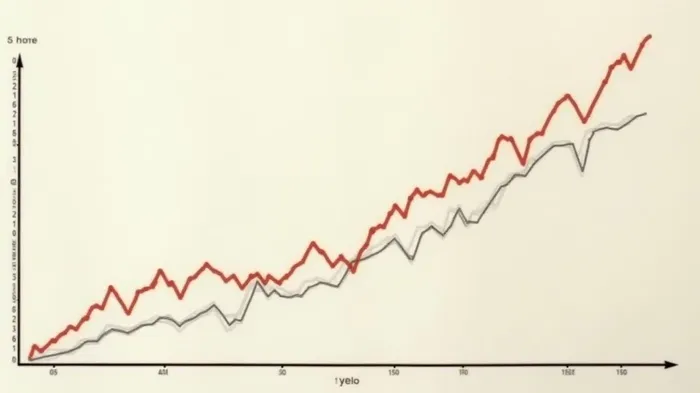
The problem? Bonds are backward-looking. Their fixed coupons and principal repayments are priced on past interest rates, not future inflation. When prices rise faster than yields, investors lose purchasing power—a loss masked by nominal gains.
Take the current era:
As of Q2 2025, the 10-year Treasury yield lags behind the 3.8% CPI inflation rate, ensuring real returns remain negative. Bonds aren’t safe—they’re a slow-motion erosion of wealth.
Equities as the Real Inflation Hedge
History reveals a stark truth: equities have consistently outperformed bonds in high-inflation environments.
Case Study: The 1940s and 1970s—Decades of Disruption
- Post-WWII (1941–1951):
- Bonds lost 3.09% annually in real terms.
The S&P 500 proxy grew at 7.06% annually, but high momentum stocks surged at 13.21%—turning $10k into $34k.
1970s Stagflation:
- Bonds lost 3.91% annually.
- The S&P 500 managed only -1.44%, but high shareholder yield stocks (those returning capital to investors) delivered 4.93% annually.
This pattern repeats across every major inflation spike since 1900. Equities, especially those with active management strategies (momentum, dividends, or shareholder yield), act as a shield against inflation’s bite.
Why Now? The 2020s Inflation Crisis
Today’s environment mirrors the worst of past eras:
- Geopolitical Volatility: Russia’s invasion of Ukraine disrupted energy supplies, pushing global gas prices to record highs.
- Supply Chain Fragility: Post-pandemic bottlenecks and protectionist trade policies keep inflationary pressures alive.
- Monetary Experimentation: Central banks, after years of ultra-low rates, face a dilemma: Raise rates too fast and risk recession, or keep rates low and fuel inflation.
The data is clear: When inflation exceeds 4.4% (the post-1971 average), equities average 2.51% real returns—a stark contrast to bonds’ -2.84%.
The Active Edge: Quality and Strategy Matter
Equities aren’t a free pass—they require selectivity.
- High Momentum Stocks: Outperformed the S&P 500 by 5-8% annually during the 1970s and 2000s inflation spikes.
- Shareholder Yield Plays: Companies returning capital via dividends or buybacks (e.g., Microsoft (MSFT), Procter & Gamble (PG)) historically retain value better than bonds.
In 2025, focus on sectors that thrive in inflation:
- Energy stocks (e.g., Chevron (CVX), NextEra Energy (NEE)) benefit from rising commodity prices.
- Consumer Staples with pricing power (e.g., Coca-Cola (KO), Wal-Mart (WMT)).
- Tech firms with recurring revenue streams (e.g., Adobe (ADBE), Microsoft (MSFT)).
Conclusion: Reallocate Now—Before Inflation Strikes Again
The data is unequivocal: Bonds are a losing bet in high inflation. Equities, when chosen strategically, not only preserve wealth but grow it.
As central banks grapple with inflation’s persistence, the risk isn’t in equity volatility—it’s in the certainty of bonds’ erosion. Act now:
1. Reduce bond exposure, especially long-dated Treasuries.
2. Allocate to quality equities with pricing power, dividends, or momentum.
3. Embrace active management—index funds alone won’t cut it.
Inflation isn’t going away soon. The question isn’t whether to shift—it’s whether you’ll do it before the next spike strips away your purchasing power.
The era of “safe” assets is over. The future belongs to those who rethink risk.
Data as of May 13, 2025. Past performance ≠ future results.





Comentarios
Aún no hay comentarios