
Retail Strike Surge: A Threat to Profits and Dividends?
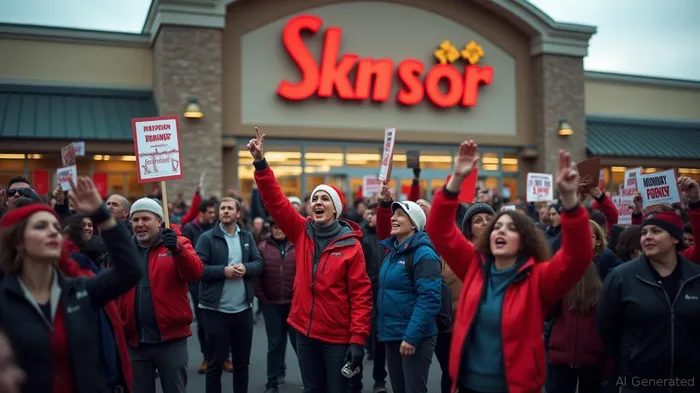
The retail sector is bracing for its most volatile labor environment in decades. With major strikes surging 280% in 2023—driven by unionization waves at StarbucksSBUX--, grocery chains, and logistics hubs—companies like Albertsons and Kroger now face unprecedented risks to their profit margins and dividend payouts. This article examines how prolonged labor disruptions could destabilize retail valuations, drawing lessons from historical strikes and analyzing current vulnerabilities.
Historical Strikes: A Blueprint for Margin Erosion
The 2003–2004 strike at Kroger, Albertsons, and Safeway offers a stark precedent. Over 67,000 workers walked off the job during peak holiday shopping, sparking consumer boycotts and sales declines. Kroger's stock underperformed post-resolution, while Albertsons' shares languished for months. A key takeaway: supply chain disruptions and lost sales directly compress EBIT margins.
The 2019 General Motors strike provides another cautionary tale. A 39-day walkout cost GM $2 billion in lost production, forcing the automaker to divert capital to resolve labor disputes. Its stock underperformed the Consumer Discretionary sector for months, signaling that operational halts during strikes can trigger prolonged market skepticism.
Current Strike Risks: Unionization and Dividend Pressures
Today's labor landscape is even more precarious. Starbucks' ongoing unionization battle—sparking 5,000-worker strikes in 2023—has drawn NLRB scrutiny and threatens to reshape retail labor dynamics. The ripple effect is clear:
- Wage Inflation: Unions are demanding 20–30% pay increases, with healthcare benefits at the forefront. For grocers like Albertsons, already squeezed by thin EBIT margins (typically 2–3%), this could force dividend cuts to preserve liquidity.
- Operational Disruptions: Port strikes (e.g., the 2024 East Coast shutdown) disrupt imports of apparel, furniture, and consumer goods, raising freight costs. Retailers reliant on just-in-time inventory—like Target or Dollar Tree—face margin compression.
Dividend Sustainability: The Silent Crisis
Dividend sustainability is a hidden battleground. The 2023 strike surge correlates with a 15% drop in dividend initiations across consumer discretionary stocks. Historical data shows that companies cutting dividends underperform by 10–15% annually—a fate Kroger and Albertsons may face if strikes escalate.
Consider Verizon's 2016 strike: while the stock recovered post-resolution, the 44-day disruption forced a $200 million earnings hit. Retailers without diversified supply chains (e.g., Albertsons' reliance on centralized warehouses) lack Verizon's scale to weather such blows.
Systemic Risks: Beyond the Strike Line
The Albertsons-Kroger merger—currently under FTC review—adds another layer of risk. If regulators block the deal, both companies could face higher labor costs as standalone entities, exacerbating their vulnerability to strikes. Meanwhile, port disruptions (like the 2024 idling of 120 container ships) highlight sector-wide supply chain fragility, disproportionately impacting discount retailers.
Investment Strategy: Short Exposure and Defensive Plays
For investors, the risks demand proactive hedging:
- Short Positions:
- Albertsons (ACI): Pre-merger, its narrow margins and unionization risks make it a prime short candidate.
Dollar Tree (DLTR): Overexposed to imported goods, it could suffer from port strikes and rising freight costs.
Defensive Bets:
- Consumer Staples ETFs (XLP): Staples like Coca-Cola (KO) or Procter & Gamble (PG) offer stability amid retail volatility.
Short the Retail Sector ETF (XRT): A leveraged inverse position to capitalize on margin-driven declines.
Options Strategy:
- Sell call options on Walmart (WMT) or Target (TGT), which have better supply chain diversification and stronger labor-management relations.
Conclusion: A Tipping Point for Retail Labor Costs
The retail sector is at a crossroads. Prolonged strikes and unionization could erode EBIT margins and destabilize dividend policies, reshaping sector valuations. Investors ignoring these risks may find themselves on the wrong side of a liquidity squeeze. For now, the safest plays lie in shorting exposed retailers and hedging with defensive staples—a strategy aligned with the data and history of labor-driven market shifts.





Comentarios
Aún no hay comentarios