
Retail Sector Resilience in 2026: Winners and Losers in a K-Shaped Recovery
The U.S. retail sector in 2026 is navigating a deeply bifurcated economic landscape shaped by a persistent K-shaped recovery. This dynamic, characterized by divergent spending patterns between high-income and middle- to low-income consumers, has redefined competitive advantages and vulnerabilities. As value-driven strategies and technological innovation become central to survival, investors must discern which retailers are best positioned to thrive-and which face existential risks-in this fragmented environment.
The K-Shaped Divide: A Tale of Two Consumers
The K-shaped recovery, where economic gains flow disproportionately to higher-income households, has entrenched itself as a defining feature of the 2026 retail sector. High-income consumers, buoyed by wealth gains from equity markets and real estate, continue to prioritize discretionary spending, luxury goods, and health-optimized products. Meanwhile, middle- and low-income households, constrained by inflation, rising tariffs, and labor market volatility, exhibit heightened price sensitivity and caution.
This divergence is evident in retail performance. Value-driven chains like WalmartWMT--, Dollar TreeDLTR--, and TJXTJX-- have seen robust sales growth, driven by both traditional budget-conscious shoppers and an influx of higher-income customers seeking affordability. Conversely, retailers reliant on discretionary spending-such as TargetTGT-- and Bath & Body Works- face declining foot traffic as middle-income consumers pull back on non-essentials. The Federal Reserve's Beige Book underscores this trend, noting that low- and middle-income spending is "declining or stagnant", while high-income households maintain aggressive consumption patterns.
Winners: Strategic Positioning in a Value-Driven Era
Retailers that have adapted to the K-shaped reality are outperforming peers through three key strategies:
Price Leadership and Operational Efficiency Walmart and Amazon exemplify this approach. Walmart's focus on affordability- bolstered by AI-driven dynamic pricing and supply chain optimization-has attracted a broad demographic, including higher-income shoppers seeking value. Amazon's Prime membership model, combined with its use of AI for inventory management and personalized recommendations, has further solidified its dominance in essential goods.
Health-Optimized Product Portfolios The rise of GLP-1 medications has reshaped consumer behavior, with users prioritizing nutrition-optimized, portion-controlled and wellness-focused products. Retailers like Kroger and Albertsons have expanded their private-label health lines, while apparel chains like Walmart and Gap have adjusted sizing strategies to cater to shifting body composition trends.
Experiential and Inclusive Retailing
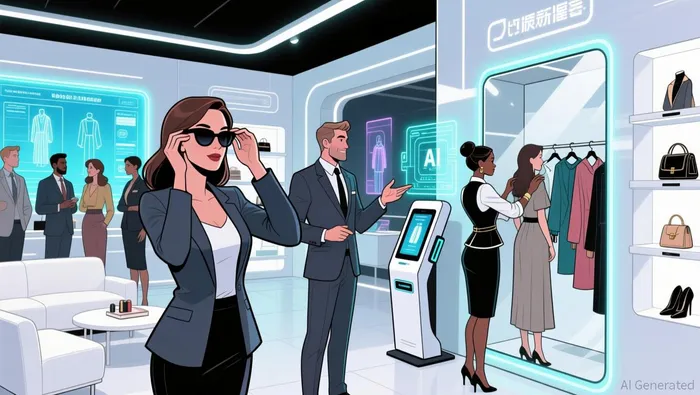 Even luxury brands are rethinking their strategies to appeal to a broader audience. Louis Vuitton and Gucci have introduced accessible entry points, such as branded cafés and pop-up experiences, to engage middle-income consumers. Meanwhile, AI-powered tools are enabling hyper-personalization, with retailers like Nordstrom leveraging data analytics to tailor promotions and product offerings.
Losers: The Vulnerabilities of Discretionary Retail
Retailers dependent on discretionary spending face mounting headwinds. Home Depot and Bed Bath & Beyond, for instance, have seen declining sales as middle-income households defer big-ticket purchases. Similarly, luxury brands that fail to innovate risk losing relevance, as younger consumers prioritize experiential value over traditional status symbols. The National Retail Federation warns that a broader economic slowdown could exacerbate these challenges, particularly if wealth corrections or market downturns erode high-income spending.
Strategic Innovations: The Path Forward
To navigate the K-shaped recovery, retailers must embrace three innovations:- AI-Driven Pricing and Inventory Management: Tools like electronic shelf labels and real-time demand forecasting are reducing costs and improving shelf compliance.
- Multitiered Pricing Models: Retailers like Costco and Best Buy are offering tiered membership programs to capture both high- and middle-income segments.
- Sustainability and Ethical Sourcing: As consumers prioritize long-term value, brands that emphasize eco-friendly practices-such as Patagonia and REI-are gaining traction.
Conclusion: A Sector in Transition
The 2026 retail sector is a microcosm of broader economic divides. While value-driven innovators are capitalizing on the K-shaped recovery, those clinging to traditional discretionary models face an uncertain future. For investors, the key lies in identifying retailers that can balance affordability, technological agility, and evolving consumer priorities. As the Federal Reserve and analysts caution, the resilience of this bifurcated recovery remains contingent on macroeconomic stability-a reminder that strategic positioning must remain dynamic in an era of persistent uncertainty.





Comentarios
Aún no hay comentarios