
U.S. Retail Sales Miss Expectations in December 2025: Sector-Specific Positioning Amid Shifting Consumer Behavior and Economic Uncertainty
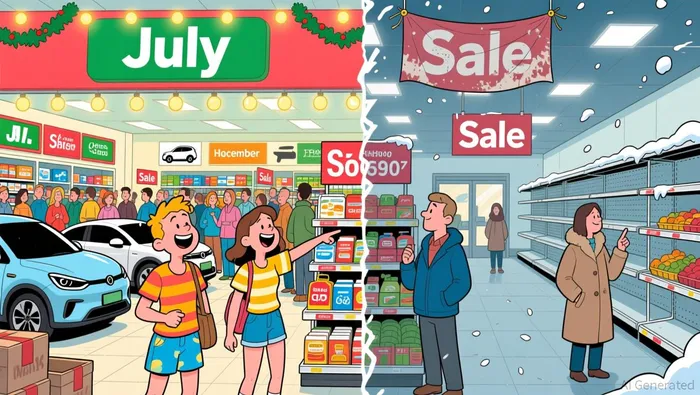
The U.S. retail sector entered 2025 with cautious optimism, buoyed by a 0.5% July sales increase and a surge in motor vehicle purchases driven by expiring tax credits. Yet, by December, the narrative had shifted dramatically. , while control sales—a key GDP indicator—contracted 0.1%, marking the weakest performance since April 2025. This divergence from expectations underscores a fractured consumer landscape, where sector-specific dynamics and evolving spending priorities are reshaping investment opportunities.
The July Optimism: A Baseline for Analysis
July's data highlighted a bifurcated retail environment. , propelled by pent-up demand and policy-driven incentives. Meanwhile, furniture and home furnishings stores rose 1.4%, reflecting a post-pandemic shift toward home-centric spending. Nonstore retailers and gasoline stations also posted gains, aided by promotional campaigns and anticipatory buying ahead of tariff hikes.
However, declines in electronics, building materials, and miscellaneous retailers signaled a growing preference for essentials over discretionary goods. Core retail sales, which exclude volatile categories, rose 0.5%, suggesting a resilient but slowing consumer sector. This baseline set the stage for December's underperformance, which revealed deeper structural shifts.
December's Miss: A Harsh Reality Check
By December, the retail sector faced a perfect storm of inflation, economic uncertainty, and policy-driven headwinds. Control sales contracted for the first time in months, with consumers prioritizing groceries, big-box discounts, and high-impact indulgences like cruises. .
Key trends emerged:
1. Essentials Over Discretionary Spending: Grocery sales remained robust, with consumers opting for shelf-stable goods and value-driven options. Big-box retailers like WalmartWMT-- and TargetTGT-- outperformed traditional department stores, .
2. Vehicle Sales Slowdown. Average transaction prices neared $50,000, deterring price-sensitive buyers.
3. : Gen Z consumers splurged on beauty and dining despite economic stress, while baby boomers prioritized essentials. This bifurcation created uneven demand across sectors.
4. : Retailers continued to discount inventories ahead of expected price hikes, but this strategy masked underlying weakness rather than addressing it.
Sector-Specific Positioning: Opportunities and Risks
Investors must now navigate a fragmented retail landscape. Sectors like groceries, big-box retailers, and essential goods are showing resilience, while discretionary categories (jewelry, electronics) face headwinds. Here's how to position for 2026:
- : Companies like KrogerKR-- and AlbertsonsACI-- are benefiting from inflation-driven demand for groceries. Big-box retailers, including Walmart and Costco, are leveraging their scale to offer discounts and convenience.
- : While December's data showed a slowdown, long-term demand for EVs remains intact. Automakers that adapt to affordability challenges—through financing programs or cost-cutting—could rebound.
- Discretionary Sectors Under Pressure: Jewelry, electronics, and luxury goods face declining intent to spend. However, niche categories like cruises and fitness services may see limited growth.
- : Retailers that diversified supply chains or absorbed cost increases in 2025 may gain a competitive edge in 2026.
: Balancing Pragmatism and Innovation
The December data reinforces a key takeaway: consumers are prioritizing value, convenience, and emotional resonance. For investors, this means:
- Overweighting Essential Goods: Allocate capital to sectors with inelastic demand, such as groceries and big-box retail.
- Monitoring Policy Shifts: Track changes in tax credits, interest rates, and tariff policies, which will continue to shape consumer behavior.
- Betting on Resilient Innovators: Companies that leverage AI-driven inventory management, sustainable sourcing, or direct-to-consumer models may outperform.

Conclusion: Navigating the New Normal
The U.S. retail sector is no longer a monolith. December's underperformance highlights a reality where economic uncertainty and shifting consumer priorities demand sector-specific strategies. While the path forward is uncertain, investors who focus on resilience, adaptability, and value creation will be best positioned to weather the storm—and capitalize on emerging opportunities.







Comentarios
Aún no hay comentarios