
Retail Investor Power: How Reddit Activism Reshapes Stock Volatility and Corporate Governance
The Volatility Engine: Retail Investors and Market Dynamics
Retail investor activity now accounts for approximately 20% of U.S. equity trading volume, a figure that has surged from negligible levels a decade ago, according to an Arc Group report. This growth is fueled by commission-free trading apps, fractional shares, and a cultural shift where investing is no longer seen as an elite pursuit but a participatory rite of passage. Younger investors, particularly Gen Z, are entering the market earlier, with over one-third of 25-year-olds already investing by 2024, as noted in a Investor Rights Forum analysis. Their behavior-driven by FOMO (fear of missing out), trend-chasing, and real-time social media updates-creates a feedback loop that amplifies market swings.
For example, during a selloff in April 2024, retail investors net bought $4.7 billion worth of equities, disproportionately allocating capital to technology and growth stocks, as found in a Forbes analysis. This pattern of "buying the dip" during volatility contrasts sharply with institutional strategies of risk reduction, creating a tug-of-war that drives short-term price swings. Platforms like Yahoo Finance and Reddit's r/StocksAndTrading act as both information hubs and echo chambers, where viral narratives can propel obscure stocks into overnight stardom-or collapse.
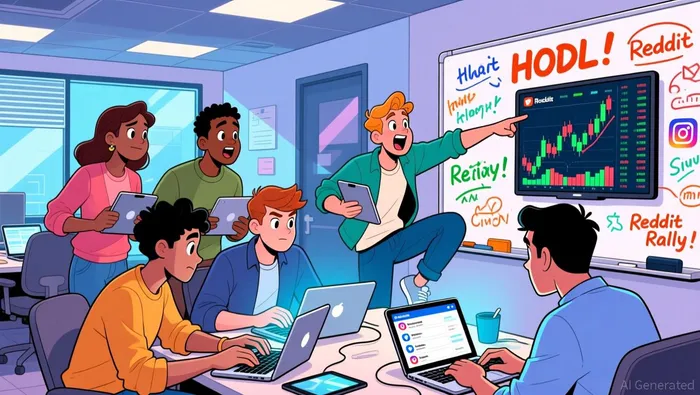
Corporate Governance in the Age of Social Media Activism
Retail investors are no longer passive shareholders; they are active participants in corporate governance. The 2021 GameStop saga, where Reddit users coordinated to short-squeeze the stock, forced hedge funds to reevaluate their risk models and highlighted the power of retail coordination. By 2025, this influence has expanded beyond stock prices to boardroom decisions. For instance, Disney's 2024 defense of CEO Bob Iger against activist investor challenges relied heavily on mobilizing retail shareholders, securing a 94% vote in favor of Iger, according to a Crunchbase report.
Retail-driven governance campaigns often leverage platforms like Reddit and WallStreetBets to amplify shareholder proposals. Historical reforms-such as independent board chairs and majority voting for directors-originated from retail-led activism and are now considered best practices, as noted in a Investor Rights Forum analysis. Companies are also adapting their IPO strategies to accommodate retail demand, as seen with Reddit's 2025 IPO, which allocated 8% of shares to superusers at a discount, according to a Crunchbase report. This trend signals a shift toward democratizing access to capital markets, though it raises questions about long-term governance stability.
Strategic Engagement: Navigating the Reddit Revolution
Companies and institutions are adopting multifaceted strategies to engage with retail investor movements. One approach is leveraging AI-driven tools to monitor and respond to Reddit discussions in real time. For example, financial services brands now use sentiment analysis to identify emerging trends in subreddits like r/Investing and r/PersonalFinance, tailoring communication to address retail concerns, as described in a FullyVested analysis. This proactive engagement helps build trust while mitigating the risk of misinformation.
Another strategy involves integrating retail sentiment into corporate decision-making. Firms like NVIDIA and Apple, frequently discussed on Reddit, have capitalized on retail hype to drive short-term momentum, as noted in a WealthDFM analysis. Conversely, companies facing meme stock status-such as Bed Bath & Beyond-must balance the financial benefits of increased trading volume with reputational risks tied to speculative behavior, as detailed in a MarketMinute report.
Regulators, meanwhile, face a delicate balancing act. The SEC's ongoing efforts to address market manipulation on social media forums must reconcile free speech protections with investor protection. As one 2025 study notes, "The rise of retail activism demands vigilant oversight and financial education to prevent systemic risks while preserving market democratization," according to a MarketMinute report.
The Road Ahead: Balancing Innovation and Stability
The future of retail investor influence hinges on how effectively companies and regulators can harness the power of social media-savvy activism without exacerbating volatility. For investors, the key lies in distinguishing between genuine value-driven campaigns and speculative hype. For corporations, the challenge is to foster inclusive governance models that incorporate retail perspectives without compromising long-term stability.
As the financial ecosystem evolves, one thing is clear: the era of passive retail investing is over. The "Reddit Bandits" have rewritten the rules, and the winners will be those who adapt-strategically, transparently, and with a keen eye on both market dynamics and governance ethics.





Comentarios
Aún no hay comentarios