
Retail-Driven Volatility in Speculative Tech and Energy Stocks: Navigating Meme Culture's Impact on Market Dynamics
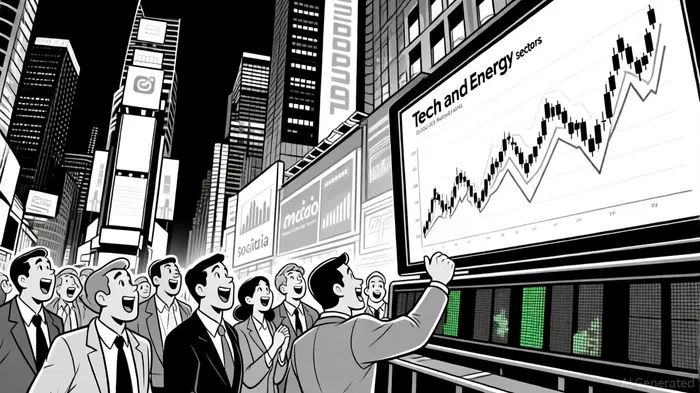
The intersection of retail investor behavior, meme culture, and speculative markets has reshaped financial landscapes in 2023–2025. What began as impulsive FOMO-driven trading in meme stocks like GameStopGME-- and AMCAMC-- has evolved into a more strategic, data-informed approach, with retail investors leveraging social media platforms to coordinate actions in high-growth sectors such as artificial intelligence (AI), biotechnology, and energy. This shift, while democratizing access to financial tools, has introduced new layers of volatility and opportunity.
Short-Term Risks: Volatility and Behavioral Biases
Retail-driven volatility remains a pressing concern, particularly in speculative stocks where coordinated buying efforts can amplify price swings. For instance, AMC Entertainment's stock price has continued to fluctuate dramatically despite inconsistent financial performance, driven by Reddit's r/WallStreetBets community and TikTok influencers, according to a MarketBeat piece. Similarly, Marathon Digital (MARA) and MicroStrategy (MSTR), both tied to Bitcoin's price movements, have become focal points for meme-driven speculation, with retail investors using options strategies and short squeezes to capitalize on their high volatility, as noted by the same MarketBeat article.
Behavioral studies further underscore the risks. A U.K.-based analysis of r/WallStreetBets sentiment revealed that retail investors exhibit loss aversion, requiring at least 36% returns to perceive a gain-a dynamic rooted in Prospect Theory, according to a Forbes piece. This psychological bias, combined with the democratization of trading apps, has created a feedback loop where social media sentiment directly influences market outcomes. Meanwhile, Morgan Stanley warns that overcapacity in AI infrastructure and capital concentration among hyperscalers like NVIDIA and Microsoft pose systemic risks, as retail investors pile into AI-linked stocks, the MarketBeat piece also cautions.
Long-Term Opportunities: AI-Energy Synergies and Strategic Diversification
Despite short-term turbulence, the interplay between AI and energy sectors presents compelling long-term opportunities. Research indicates a growing coherency between AI stock returns and energy sector movements, driven by AI's reliance on energy for training and its role in optimizing energy production, according to a ScienceDirect study. For example, AI-driven demand forecasting in retail has stabilized operations for major chains, indirectly boosting investor confidence in AI-related assets, as reported in the Forbes article. Energy investors, recognizing this link, are increasingly diversifying into AI-based assets as a hedge against volatility, treating them as "safe havens" during market extremes, the ScienceDirect study suggests.
The resurgence of meme-driven strategies in 2025 also highlights evolving retail tactics. Unlike the 2021 frenzy, today's investors share real-time analytics and sentiment-driven insights via Discord and Reddit, enabling more coordinated trades, a trend the ScienceDirect study describes. This shift suggests that meme culture is not merely a fad but a structural force reshaping market dynamics. For instance, MicroStrategy's BitcoinBTC-- holdings have become a narrative tool, blending speculative appeal with corporate strategy-a duality that could sustain retail interest, the MarketBeat article observes.
Balancing the Equation: A Call for Prudence and Innovation
For investors, the challenge lies in balancing the risks of retail-driven volatility with the transformative potential of AI and energy innovations. Short-term strategies must account for behavioral biases and overcapacity risks, while long-term allocations should capitalize on AI-energy synergies and the growing influence of social media-driven coordination.
As the line between speculative trading and strategic investing blurs, market participants must adopt a dual lens: one rooted in behavioral economics to navigate retail-driven turbulence, and another focused on technological trends to harness long-term value. The future of meme-driven markets may not lie in chaos, but in the calculated interplay of dopamine-driven incentives and data-driven decisions.





Comentarios
Aún no hay comentarios