
"Retail's Digital Revolution: Black Friday's 9.1% Online Spike Signals New Consumer Era"
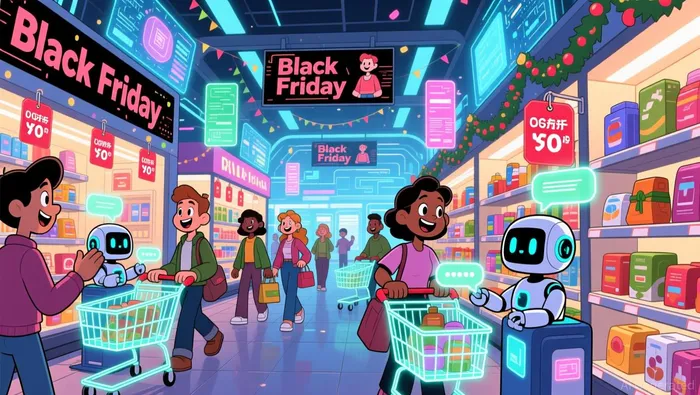
U.S. consumers spent a record $11.8 billion online during Black Friday 2025, a 9.1% increase from the previous year, according to AdobeADBE-- Analytics. This surge in e-commerce activity, driven by AI-powered shopping tools and social media campaigns, underscores a shifting retail landscape where digital platforms dominate holiday spending. Meanwhile, in-store traffic faced a 3.6% decline compared to 2024, reflecting a broader trend of consumers adopting "surgical precision" in their purchasing decisions.
The expansion of Black Friday into a full-week event has reshaped consumer behavior, with shoppers spreading purchases across extended promotions rather than rushing to stores on a single day. Retailers like WalmartWMT--, TargetTGT--, and Best BuyBBY-- opened as early as 5 a.m. local time to accommodate the demand, while others extended hours into the following week. However, tariffs imposed by President Donald Trump's administration have complicated the traditional discount-driven model. Salesforce data revealed that average selling prices rose 7% year-over-year, despite a 1% drop in order volumes, as businesses absorbed higher import costs.
 The National Retail Federation projected holiday sales between $1.01 trillion and $1.02 trillion for November and December, a 3.7% to 4.2% increase from 2024. This growth, though robust, reflects a slowing pace compared to the 4.3% rise in 2023. Mastercard SpendingPulse reported a 3.6% holiday sales increase, with online transactions accounting for 7.5% year-over-year growth-surpassing initial forecasts.
Scams and boycotts also shadowed the shopping frenzy. Norton's research indicated 31% of U.S. adults targeted by holiday fraud, and over half falling victim. Meanwhile, grassroots campaigns urged consumers to skip Black Friday to protest corporate ties to the Trump administration, though their impact on spending remains unquantified according to Forbes.
Luxury brands adapted to the evolving market by blending performance and fashion. WISKII Active, for instance, leveraged Black Friday to promote high-end activewear, offering discounts up to 70% on items like the Prestige Tweed Vest and High-Waist Scallop Scrunch Legging. Conversely, financial technology platforms capitalized on the season, with InvestingPro touting AI-driven stock-picking strategies and discounted subscriptions to attract investors navigating economic uncertainty.
Economic anxieties, including job insecurity and rising credit card debt, tempered consumer confidence. The Conference Board's index fell to 88.7 in November-the lowest since April-yet spending continued to outpace expectations. RetailNext's Joe Shasteen noted that while in-store traffic declined, Black Friday remained a critical touchpoint for consumers seeking "the right price" amid inflationary pressures.
As the holiday season progresses, Adobe projected Cyber Monday to eclipse Black Friday in online sales, with Adobe forecasting $14.2 billion in spending. The data highlights a retail ecosystem increasingly shaped by digital innovation, geopolitical trade policies, and a consumer base prioritizing value over impulse.







Comentarios
Aún no hay comentarios