
Retail's Crossroads: Why Target's Struggles Signal a Sector-Wide Reckoning
The retail landscape is undergoing a seismic shift, and Target’s recent stumble is no fluke. A combination of shifting consumer priorities, macroeconomic headwinds, and strategic missteps has exposed vulnerabilities across discretionary retail. The Bank of AmericaBAC-- Securities’ downgrade of Target to “Neutral” with a price target cut from $145 to $105 underscores a stark reality: the sector’s growth model is under pressure. For investors, this is both a warning and an opportunity to reassess exposures and pivot toward resilience.
Target’s Top-Line Crisis: A Microcosm of Broader Retail Weakness
Target’s Q1 2025 results revealed a 2.8% revenue decline to $23.8 billion, with comparable sales falling 3.8%—the worst since early 2023. The culprit? A 5.7% drop in store-originated sales, as consumers traded down to essentials and avoided discretionary purchases. Even digital sales, which grew 4.7%, couldn’t offset the slump. The company’s revised guidance—projecting a low-single-digit sales decline and $7–9 EPS—reflects a reality where discretionary spending is contracting.
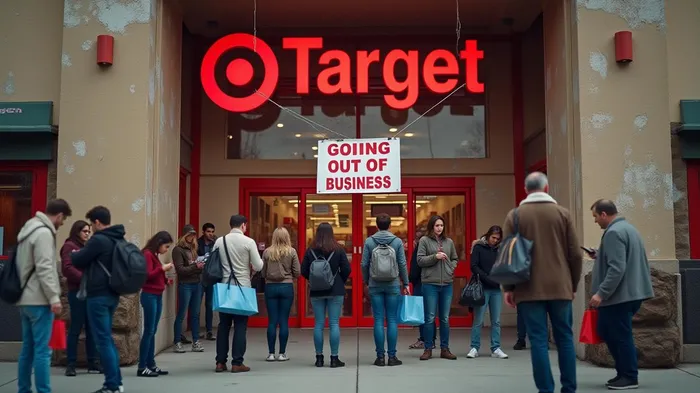
The pain isn’t confined to Target. The broader retail sector faces a trifecta of challenges:
1. Tariff-Driven Inflation: Over 80% of retailers cite tariffs as a key cost pressure, squeezing margins and forcing price hikes that deter shoppers.
2. Trade-Down Trends: 75% of consumers are opting for cheaper alternatives, with discount retailers like Walmart (+3.8% SSS) and Costco (+6.8% SSS) thriving while luxury and apparel sectors slump.
3. Consumer Caution: Discretionary categories like home decor and apparel saw double-digit declines in market share, as shoppers prioritize essentials and affordability.
BofA’s Downgrade: A Vote of No Confidence in Discretionary Retail
Bank of America’s decision to slash Target’s rating to Neutral isn’t just about one company—it’s a verdict on the fragility of the U.S. retail model. Analysts highlighted three key risks:
- Markdown Pressures: Excess inventory (up 11% YoY) forces discounts, eroding margins.
- Digital Fulfillment Costs: While same-day delivery grew 36%, the infrastructure costs strain profitability.
- Consumer Sentiment: A P/E ratio of 10.5 and a free cash flow yield of 11% reflect investor skepticism about near-term recovery.
The stock’s 20% decline year-to-date mirrors investor disillusionment with discretionary retailers. BofA’s focus on Target’s inability to regain market share in 20 of 35 key categories—despite digital growth—signals a deeper issue: retailers are losing their grip on consumer wallets in non-essential segments.
The Sector’s分化: Winners and Losers in a Slowing Economy
Not all retailers are failing. The divide between defensive and discretionary players is widening:
- Winners:
- Discount/Value Players: Walmart, Costco, and Dollar General (up 6% YoY in SSS) are capitalizing on trade-down demand.
- Essentials Retailers: Grocery and health care segments remain stable, with Target’s food sales showing slight growth.
- E-commerce Infrastructure: Amazon’s 62% earnings surge highlights the advantage of logistics and data-driven pricing.
- Losers:
- Luxury and Apparel: LVMH’s Asia sales fell 11%, and Capri Holdings’ EPS plummeted 135% due to weak demand.
- Department Stores: Kohl’s and Macy’s saw SSS declines of -5.4% and -4.3%, respectively, as shoppers abandon malls for online or discount outlets.
Investment Strategies for a Sector in Flux
The retail reckoning demands a tactical approach. Here’s how to navigate the分化:
1. Go Defensive: Allocate to Value Retailers
- Walmart (WMT): Its omnichannel dominance and 3.8% SSS growth make it a stalwart in the trade-down era.
- Costco (COST): Membership-driven models and strong digital sales (+6.8% SSS) offer insulation from inflation.
2. Short Discretionary Names with Margin Risks
- Target (TGT): High inventory levels and margin pressure (gross margin down to 28.2%) make it a prime short candidate.
- Nordstrom (JCP): Luxury apparel’s struggles and declining traffic leave it vulnerable.
3. Bet on E-commerce Infrastructure
- Amazon (AMZN): Its 57% sector-leading earnings growth and logistics scale position it to capitalize on shifting consumer habits.
4. Monitor Macro Triggers
- Inflation Data: A core PCE print above 3% could accelerate trade-down trends, further pressuring discretionary retailers.
- Tariff Developments: Any U.S.-Mexico tariff resolution could alleviate costs for retailers like Target.
Conclusion: The Retail Landscape is Redrawn
Target’s stumble isn’t an anomaly—it’s a symptom of a sector in transition. As consumers prioritize affordability and essentials, the winners will be those with low-cost models, strong digital execution, and exposure to non-discretionary goods. Investors ignoring this分化 risk obsolescence. The time to act is now: pivot toward resilience or risk being left behind in a retail world where value reigns supreme.
The sector’s reckoning is here. Position accordingly.







Comentarios
Aún no hay comentarios