
The Resurgence of Oil as a Geopolitical Hedge: Why Hedge Funds Are Reallocating to Energy
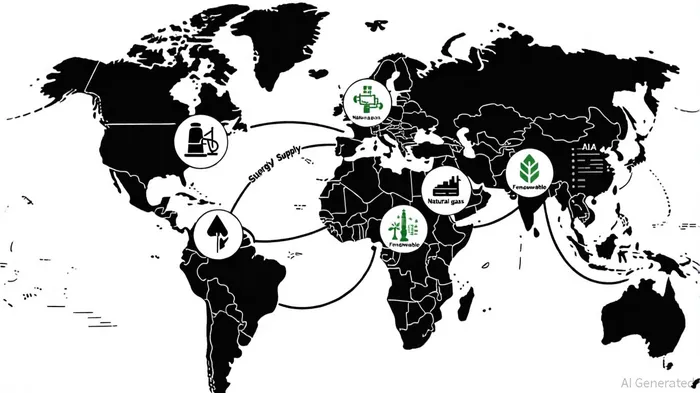
In a world defined by geopolitical volatility and a risk-on market environment, hedge funds are increasingly turning to energy as a strategic asset class. The energy sector's dual role as both a hedge against inflation and a beneficiary of global power shifts has made it a focal point for investors seeking to navigate uncertainty. By Q3 2025, this reallocation is not merely a cyclical shift but a recalibration of portfolios to address systemic risks, from supply chain disruptions to the uneven pace of the energy transition[1].
Geopolitical Risks and the Energy Sector's Resilience
Geopolitical tensions remain the top challenge for energy executives, with tariffs, supply chain bottlenecks, and shifting alliances reshaping how energy is sourced and traded[1]. For hedge funds, this environment has elevated energy commodities as a natural hedge. According to a report by KPMG, energy executives cite geopolitical risks as the most pressing concern for 2025, underscoring the sector's sensitivity to global instability[1]. Meanwhile, macroeconomic factors such as U.S. interest rate policies and the EU's reliance on LNG imports have created volatility that hedge funds are exploiting[4].
The Middle East conflict and fluctuations in crude oil prices have further amplified short-term opportunities for funds adept at capitalizing on price swings[5]. For instance, Morgan StanleyMS-- projects West Texas Intermediate (WTI) crude to trade between $53 and $56 per barrel by late 2026, a range that reflects both oversupply concerns and the sector's resilience to geopolitical shocks[3].
The Energy Transition: A Disorderly but Profitable Landscape
The global energy transition is progressing in a “disorderly” fashion, with fossil fuels and renewables receiving simultaneous investments. In the U.S. and China, for example, oil and gas projects coexist with rapid solar and wind expansion[1]. This duality has created a unique opportunity for hedge funds to diversify across subsectors. While oil prices face downward pressure, natural gas is gaining traction due to AI-driven energy demand and U.S. export growth[3].
Natural gas, in particular, is emerging as a bridge fuel in this transition. The EU's pivot to LNG imports and Japan's renewed interest in U.S. gas have bolstered demand, with Morgan Stanley forecasting a 5% annual increase in global LNG trade through 2026[3]. Hedge funds are capitalizing on this trend by overweighting natural gas producers and infrastructure plays, which offer both inflation protection and exposure to decarbonization efforts[5].
Strategic Positioning: MLPs, Nuclear, and the Infrastructure Play
Energy infrastructure investments, particularly master limited partnerships (MLPs), are becoming a cornerstone of hedge fund strategies. MLPs like Enterprise Products Partners and Energy TransferET-- offer steady income through fee-based businesses, making them a reliable hedge against inflation[2]. As noted by Tortoise Capital, midstream MLPs outperformed the broader energy sector in 2025, driven by their ability to generate consistent cash flows amid volatile commodity prices[3].
Simultaneously, nuclear power is experiencing a resurgence. Policy support from governments aiming to decarbonize data centers and industrial sectors has spurred renewed interest in nuclear energy[4]. Hedge funds are allocating to companies involved in advanced reactor technologies, viewing them as a long-term play on the energy transition[4].
Hedge Fund Strategies: Shorting Oil, Longing Renewables
A notable shift in 2025 is hedge funds' reversal of long-standing positions. For the first time in four years, funds are betting against oil stocks while reducing short positions on solar and wind energy[4]. This move reflects growing concerns over oil's supply-demand imbalance and the anticipated 25% annual growth in EV sales[4]. However, the sector's geopolitical significance ensures that oil remains a key component of diversified portfolios.
Multi-strategy hedge funds are also gaining prominence, allowing investors to hedge against macroeconomic risks while capitalizing on niche opportunities in energy infrastructure and renewables[3]. As Magistral Consulting notes, 36% of allocators plan to commit new capital to strategies that address geopolitical and macroeconomic uncertainties, a trend that underscores energy's role as a systemic hedge[3].
Conclusion: Energy as a Systemic Hedge
The reallocation to energy by hedge funds is not a fleeting trend but a strategic response to a world defined by disorderly transitions and geopolitical fragility. While oil's price pressures persist, its role as a geopolitical hedge—and the sector's broader diversification into natural gas, infrastructure, and nuclear—ensures its continued relevance. For investors, the key lies in balancing exposure to traditional and emerging energy assets, leveraging the sector's resilience to navigate both macroeconomic and geopolitical headwinds.





Comentarios
Aún no hay comentarios