
The Resurgence of Nike on StockX and Its Implications for Retail and Consumer Goods Investing
The global consumer goods market is undergoing a seismic shift, driven by post-pandemic behavioral changes, supply chain recalibrations, and the rise of digital platforms like StockX. NikeNKE--, a once-dominant force in the sneaker resale market, has faced significant headwinds in 2024, with a 21% decline in Nike and Jordan sneaker sales on StockX and a 10% drop in overall revenue for the brand. Yet, beneath the surface of these challenges lies a nuanced story of adaptation-and a broader lesson for investors: how real-time demand signals and global trading networks can identify undervalued consumer brands in a rapidly evolving landscape.
Nike's Struggles and the Resale Market's Lessons
Nike's struggles in 2024 are emblematic of a broader industry reckoning. Overproduction of popular silhouettes like the Air Jordan 1 and Nike Dunk led to oversaturation, eroding scarcity and driving down resale premiums. Retailers slashed prices on twice as many Nike sneakers in 2024 compared to 2022, with the average price dropping to $79.92 from $103.61. Meanwhile, competitors like Asics and Adidas surged, with Asics seeing a 589% growth in sneaker trades on StockX.
This dynamic underscores a critical insight: consumer preferences are no longer anchored to brand legacy alone. Nike's Q4 2024 earnings revealed a 12% year-over-year revenue decline, yet the company is experimenting with new product lines like the Vomero 18 and Air Max Phenomena, which have generated renewed interest. These efforts highlight the importance of agility in product development-a trait that StockX's real-time data can help brands and investors track.
StockX's Real-Time Demand Signals: A New Lens for Investment
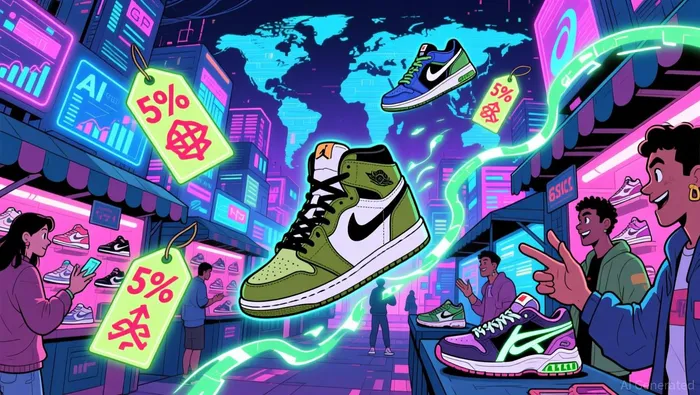 StockX's global trading network offers a unique vantage point for identifying undervalued brands. By analyzing price premiums, trade volumes, and cultural relevance, the platform reveals shifts in consumer behavior that traditional metrics often miss. For example, the Nike Air Force 1 Low Cactus Plant Flea Market Fuchsia commanded a 255% average price premium in Q4 2024, while the Jordan 1 Retro Low OG SP Medium Olive reached 222% in Q4 2024. These spikes were not random; they reflected a demand for culturally resonant designs, a trend StockX's data can quantify and predict.
The methodology extends beyond Nike. Asics' 589% growth on StockX was driven by reimagined classics like the Gel-Kayano 14, while Salomon's XT-6 and XT-Whisper models fueled a 53% year-over-year surge in sneaker trades. Clarks, bolstered by collaborations with Supreme and Human Made, saw a 58% increase in trades in early 2025. These examples illustrate how StockX's real-time data can spotlight brands that are innovating in design, sustainability, or cultural relevance-often before traditional investors take notice.
The Post-Pandemic Shift: From Scarcity to Utility
The pandemic reshaped consumer priorities, with demand shifting toward casual, affordable, and functional footwear. Nike's Dunks and Jordan 1s, once status symbols, now compete with Adidas Sambas and Asics Gel-NYCs for mass appeal. This trend is not unique to sneakers: a National Library of Medicine study notes that post-pandemic investor behavior increasingly favors brands that align with sustainability and digital engagement.
For investors, this signals a need to move beyond brand nostalgia. StockX's data reveals that resellers are now prioritizing volume over high-margin flips, with success measured in moving 50+ pairs at smaller margins rather than relying on a few premium items. This shift mirrors broader retail trends, where brands like Under Armour and Alpha Brands are leveraging AI-driven efficiencies to improve inventory management and customer engagement.
Implications for Retail and Consumer Goods Investing
The key takeaway for investors is clear: real-time demand signals are becoming indispensable tools for identifying undervalued consumer brands. Nike's struggles highlight the risks of overreliance on legacy products, while StockX's case studies demonstrate how agility and cultural relevance can drive growth. For example, Pop Mart's Labubu character became the top-selling collectible on StockX, a testament to the power of niche, community-driven brands.
Investors should also consider the structural changes in the resale market. Profit margins have compressed from 100% to 10-25% per pair, reflecting a more competitive landscape. Brands that adapt to this reality-by focusing on volume, affordability, and digital engagement-are likely to outperform. As Alpha Brands notes, AI tools are now enabling traditional consumer brands to enhance productivity and profitability, creating new opportunities for value appreciation.
Conclusion: The Future of Consumer Goods Investing
Nike's resurgence on StockX is not a return to dominance but a recalibration. The brand's recent product launches and strategic cuts in Jordan releases signal a pivot toward sustainability and exclusivity. For investors, the broader lesson is to look beyond quarterly earnings and brand heritage. StockX's real-time data offers a window into the evolving preferences of a post-pandemic consumer-one that values innovation, utility, and cultural resonance over brand alone.
As the market continues to evolve, the brands that thrive will be those that embrace these signals and adapt swiftly. For investors, the challenge-and opportunity-lies in leveraging platforms like StockX to spot these shifts early.







Comentarios
Aún no hay comentarios