
The Resurgence of Gold as a Strategic Hedge in a Fractured Global Monetary System
Gold is making a roaring comeback, and it's not just retail investors who are piling in-central banks are leading the charge. With geopolitical tensions spiking and the Federal Reserve hinting at aggressive rate cuts, gold has become the ultimate safe haven. But this isn't just about short-term volatility; it's a fundamental realignment in how nations are managing their reserves. Let's break down why gold is back in the spotlight and what it means for your portfolio.
Central Banks: The New
Central banks have been relentless in their gold-buying spree. In 2023 alone, , with China and Poland dominating the headlines. , pushing its total reserves to 2,235 tonnes, , bringing its holdings to 359 tonnes according to research. Fast-forward to 2025-2026, and the frenzy shows no signs of slowing. , and China's central bank continued its streak, accumulating 30,000 ounces (0.93 tonnes) in November 2025, even as prices hit record highs.
This isn't just about diversification-it's about power. Emerging markets like Kazakhstan and Uzbekistan may have sold gold in 2023, but the broader trend is clear: nations are rebalancing their reserves to reduce reliance on the U.S. dollar and hedge against according to analysis. Serbia, for instance, according to reports. 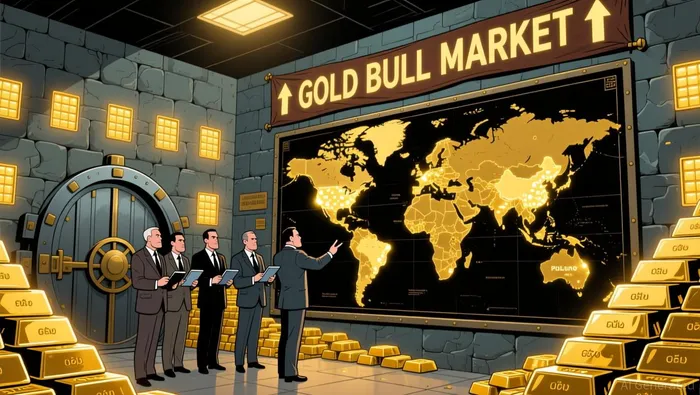
Macroeconomic Realignment: The Big Picture
What's driving this shift? Let's start with inflation. While headline inflation has moderated in some regions, central banks remain wary of de-anchoring expectations. Gold, with its and lack of counterparty risk, offers a buffer against currency devaluation. According to a report by FXStreet, geopolitical tensions-ranging from Middle East conflicts to U.S.-China trade frictions-have an ounce, signaling a new era of demand.
Then there's the . With rate cuts expected in 2026, the is under pressure. Lower interest rates reduce the opportunity cost of holding non-yielding assets like gold, making it more attractive for both central banks and investors. As ING's analysis notes, "Gold's bull run to continue in 2026" as dovish policies and currency fragmentation take hold according to analysis.
Systemic Risks and the Fractured Monetary System
The is no longer a monolith. The dollar's share of global reserves has declined steadily, while the euro and yuan face their own challenges. In this fractured landscape, gold acts as a . Central banks in South Korea, Madagascar, and others are now openly discussing gold as a according to reports.
Why? Because gold isn't tied to any one economy or political system. It's a -whether that's a banking crisis, a trade war, or a collapse in confidence in fiat currencies. As the 's actions show, even traditionally conservative institutions are now prioritizing gold's stability over paper assets.
The Bottom Line: Gold Isn't Just a Metal-It's a Strategy
For investors, the message is clear: gold is no longer a niche play. It's a core component of a in a world where systemic risks are the new normal. Central banks are voting with their wallets, and their actions will likely drive prices higher.
If you're sitting on cash or underweight in gold, now's the time to reconsider. The market isn't just reacting to today's headlines-it's pricing in tomorrow's uncertainties. And in that future, gold isn't just a hedge; it's a lifeline.







Comentarios
Aún no hay comentarios