
The Resurgence of Detroit's Giants: Why Ford and GM Are Poised for a Comeback in 2025
The automotive industry's "Big Three" have long been synonymous with American manufacturing might. Yet, for much of the past decade, FordF-- and General MotorsGM-- faced existential questions about their relevance in an era of electrification and digital disruption. By 2025, however, both companies are showing signs of a hard-earned resurgence. Strategic restructuring, aggressive investments in electric vehicles (EVs), and a recalibration of their competitive positioning have placed Ford and GMGM-- on a trajectory to reclaim their dominance in the U.S. market.
Ford's Strategic Restructuring and EV Momentum
Ford's 2025 third-quarter results underscore a company in transition. U.S. sales rose 8.2% year-to-date, with seven consecutive months of gains, driven by a 19.8% increase in electrified vehicle sales (hybrid, plug-in hybrid, and battery-electric) to 85,789 units-a 15.7% share of total sales [1]. The Mustang Mach-E and F-150 Lightning, Ford's flagship EVs, set new records: 20,177 Mach-E units and 10,005 Lightning units sold in Q3, marking their best quarters ever [2].
Yet Ford's path to recovery has not been without turbulence. The E-Transit van, once a flagship of its commercial EV strategy, saw an 85% sales drop compared to 2024, attributed to a temporary stop-sale order for safety flaws and inventory shortages [3]. This volatility highlights the risks of rapid innovation but also underscores Ford's resilience. The company has responded with a $1 billion cost-cutting initiative, including reduced stock bonuses for middle managers, to streamline operations and address investor concerns over quality assurance issues dating back to 2022 [4].
Ford's focus on performance-oriented EVs and digital services-such as Ford Pro Intelligence for commercial fleets and BlueCruise for autonomous driving-positions it to capture a niche market of tech-savvy and commercial customers. According to a report by InsideEVs, Ford's electrified vehicles outsold the combined EV sales of GM and Stellantis during the year to date, a testament to its ability to balance innovation with profitability [5].
GM's Electrification Push and Market Dominance
General Motors has taken a more aggressive approach to electrification, with results that have outpaced Ford's in key metrics. In Q2 2025, GM reported a 111% year-over-year increase in EV sales, reaching 46,280 units, driven by the Chevrolet Equinox EV-its best-selling non-Tesla model with 27,000 units sold in the first half of the year [6]. By Q3, GM's EV sales surged to 66,501 units, a 110% increase, with the Equinox EV accounting for 38% of the total [7].
This success is underpinned by GM's $4 billion investment in U.S. manufacturing, aimed at boosting production of high-margin EVs and reducing reliance on imported vehicles [8]. The company's Ultium battery platform and expanded charging infrastructure have enabled it to capture a 13.8% U.S. EV market share in Q3 2025, second only to Tesla [9]. In contrast, Ford's EV market share stood at 6.6% during the same period [10].
GM's strategic pivot-from ambitious but costly robotaxi projects under Cruise to licensing autonomous driving technology and exploring connected car services-has also improved its financial flexibility. With adjusted EBIT of $3 billion and $2.8 billion in free cash flow for Q2 2025, GM has demonstrated that electrification can coexist with profitability [11].
Competitive Landscape and Market Share Analysis
The EV market in 2025 is no longer a race between Tesla and legacy automakers; it's a multi-player contest. While Tesla's global deliveries fell 13.5% in Q2 2025, Ford and GM capitalized on shifting consumer preferences and federal incentive programs to gain ground [12]. GM's 11 EV models across Cadillac, Chevrolet, and GMC have given it a broader portfolio than Ford, which relies heavily on the Mustang and F-150 platforms.
However, Ford's focus on performance and commercial vehicles-such as the F-150 Lightning and BlueCruise-has allowed it to differentiate itself in a crowded market. Analysts at Monexa note that Ford's ability to outperform GM and Stellantis in combined electrified sales suggests its strategy is resonating with a segment of buyers prioritizing utility and brand heritage [13].
Challenges and Risks
Neither company is immune to headwinds. Ford's ongoing securities fraud investigation and quality assurance issues could erode investor confidence, while GM faces scrutiny over its reliance on government subsidies for EV production. Additionally, both automakers must navigate supply chain bottlenecks and rising battery costs, which could pressure margins in 2026.
Conclusion: A Comeback Built on Strategy and Execution
For investors, the resurgence of Ford and GM represents a compelling case study in strategic reinvention. Ford's restructuring efforts and focus on performance EVs have stabilized its market position, while GM's aggressive electrification and manufacturing investments have positioned it as a clear leader in the EV transition.
As the automotive industry shifts toward a post-Tesla era, the ability to balance innovation with profitability will determine which Detroit giants emerge as long-term winners. For now, both Ford and GM are showing that their comeback stories are more than just narratives-they're backed by data, execution, and a renewed commitment to the future.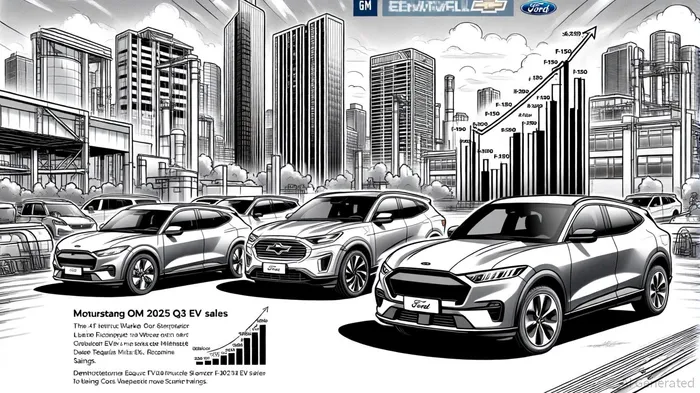





Comentarios
Aún no hay comentarios