
The Resurgence of Altseason and Its Implications for Digital Real Estate and NFT Markets
The Drivers of Altseason 2025: Beyond Hype to Utility
Altseason 2025 is being fueled by a selective rotation of capital into projects with tangible use cases. Unlike the 2017–2018 and 2020–2021 altseasons, which were characterized by broad-based FOMO and hype-driven speculation, this cycle prioritizes fundamentals. For instance, AI and DeFi tokens have surged by up to 50% in a week, outpacing traditional Layer 1 solutions, while privacy coins like Monero and Zcash have seen a 41.6% market cap increase in 24 hours, reflecting growing demand for data privacy amid regulatory pressures.
Meme coins, once dismissed as pure speculation, are also evolving. Tokens like Fartcoin are transitioning into structured digital assets with rising liquidity and social media engagement, signaling a broader acceptance of community-driven narratives in mainstream finance. Meanwhile, top-tier altcoins such as GIGA, ALGO, and ENA are gaining traction due to innovative tokenomics and real-world applications, such as decentralized cloud computing and energy trading.
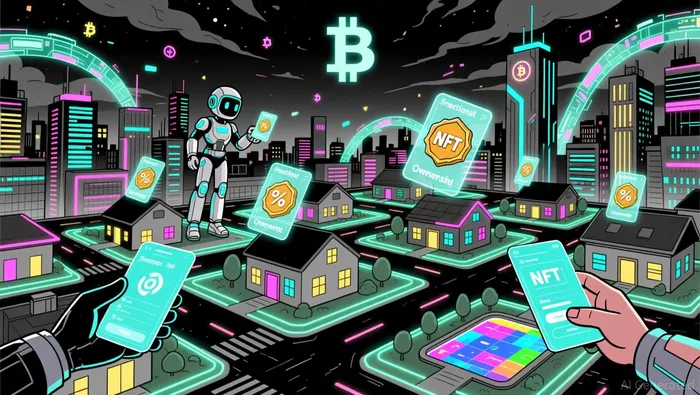
Altseason 2025 and the NFT/Digital Real Estate Renaissance
The NFT and digital real estate markets are poised to benefit significantly from this altseason. According to a report by Binance, the NFT market is projected to grow from $62.19 billion in 2024 to $711.73 billion by 2034, driven by infrastructure advancements like cross-chain interoperability and institutional adoption. Platforms are now prioritizing seamless asset transfers across blockchains, enabling broader liquidity pools and reducing friction for investors.
Digital real estate, in particular, is emerging as a key use case. Fractional ownership models, enabled by NFT tokenization, are democratizing access to high-value assets. For example, platforms like The Investors Pool allow minimum investments of $100 in tokenized real estate, leveraging Special Purpose Vehicles (SPVs) to grant token holders legally enforceable rights. High-net-worth investors are also gravitating toward institutional-grade opportunities, such as Lightstone DIRECT's tokenized multifamily and industrial properties, which align the firm's interests with investors by committing at least 20% equity in each deal.
The regulatory environment has further catalyzed this shift. The passage of the GENIUS Act in July 2025 provided a framework for stablecoins, spurring innovation in tokenized real-world assets and fostering institutional confidence. This clarity has indirectly supported the NFT market's transition from speculative frenzy to utility-driven adoption, with October 2025 marking a significant rebound in trading volume after a prolonged downturn.
Historical Context: From Hype to Fundamentals
Historically, altseasons have been cyclical, with Bitcoin's dominance dropping during periods of altcoin outperformance. For example, during the 2020–2021 altseason, Bitcoin's dominance fell from 70% to 38% as NFTs and DeFi projects captured market attention. However, the 2025 altseason diverges from this pattern. Instead of a broad-based rotation, capital is flowing into niche sectors with long-term value propositions, such as privacy-preserving protocols and AI-integrated blockchain solutions.
This shift reflects a maturation of the market. While NFTs and memecoins have rebounded-with blue-chip NFTs like CryptoPunks seeing a 36.5% sales increase-investor behavior is now more discerning, favoring projects with clear utility over speculative hype.
Macroeconomic Tailwinds: Stablecoins and Institutional Adoption
The macroeconomic landscape in 2025 is being reshaped by stablecoins, which are becoming foundational to digital finance. Circle's USDC has surpassed $73.7 billion in circulation, while Visa and JPMorgan are integrating stablecoins into cross-border payments and institutional banking. These developments are legitimizing blockchain-based assets and enabling seamless transactions in digital real estate and NFT markets.
For investors, this means a shift from short-term speculation to long-term value creation. The current altseason is not about chasing the next "moonshot" but about identifying projects that address real-world problems-whether through tokenized real estate, privacy-preserving protocols, or AI-driven DeFi platforms.
Conclusion: Navigating the New Altseason
The resurgence of Altseason 2025 underscores a pivotal moment for digital real estate and NFT markets. As macroeconomic drivers and regulatory clarity converge, investors must focus on projects with robust fundamentals, institutional partnerships, and scalable utility. While the market remains volatile, the emphasis on cross-chain interoperability, tokenization, and stablecoin infrastructure suggests a more sustainable and mature ecosystem. For those willing to look beyond the noise, this altseason offers a unique opportunity to participate in the next phase of blockchain innovation.





Comentarios
Aún no hay comentarios