
The Resurgence of M&A Activity in 2026: A Strategic Opportunity for Investors
The M&A market is primed for a seismic shift in 2026, and investors who position themselves correctly could reap outsized rewards. With the Federal Reserve signaling a downward trajectory for interest rates and over $1 trillion in private equity (PE) dry powder ready to deploy, the stage is set for a surge in strategic deals. This isn't just a rebound-it's a recalibration of capital allocation priorities in a low-interest-rate environment, where sectors like technology, healthcare, and energy are becoming the new frontiers for value creation.
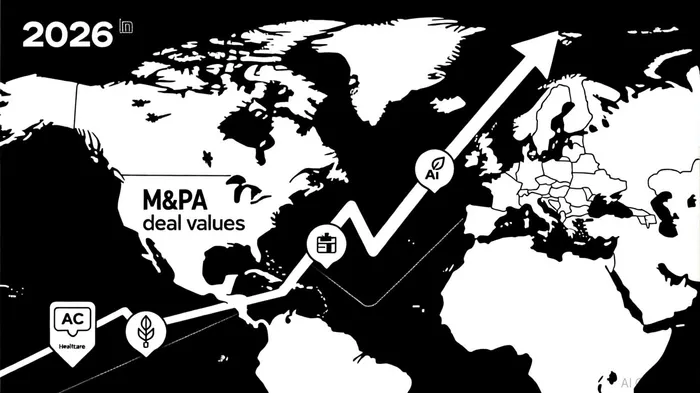
Macroeconomic Tailwinds: Rates, Capital, and Strategic Urgency
The Federal Reserve's pivot toward rate cuts has already begun to reshape the M&A landscape. Lower borrowing costs make leveraged buyouts more attractive, particularly for mid-market transactions, where financing hurdles are fewer and regulatory scrutiny is lighter [1]. According to a report by LVB, the U.S. M&A market is set to see a "major rebound" in 2026 as PE firms rush to deploy capital before fund horizons expire [1]. This urgency is compounded by macroeconomic stability and a regulatory environment that's becoming more predictable, especially in the U.S., where antitrust reviews are streamlining [2].
Private equity, with its $2.6 trillion in dry powder as of mid-2024, is the engine driving this resurgence [3]. These firms are under intense pressure from limited partners to return capital, leading to a surge in add-on acquisitions, secondary buyouts, and recapitalizations. As McKinsey notes, global M&A deal values hit $3.4 trillion in 2024 and are expected to climb further in 2026 as pent-up demand meets favorable financing conditions [3].
Sector-Specific Opportunities: Where to Allocate Capital
The sectors poised for explosive M&A activity in 2026 are those where digital transformation and ESG-driven growth intersect with strategic consolidation.
- Technology: AI, cybersecurity, and semiconductors are commanding attention. Large-scale deals like the $55 billion take-private of Electronic Arts Inc. signal a shift toward capability-driven acquisitions [4]. Tech firms are prioritizing AI infrastructure and SaaS platforms, with deal values nearly doubling year-over-year [5].
- Healthcare: Biotech, specialty pharma, and digital health are hotbeds of activity. Demographic shifts and regulatory tailwinds are pushing acquirers to target companies with innovative therapies and telehealth capabilities [1].
- Energy & Renewables: The Inflation Reduction Act and ESG mandates are fueling mergers in solar, wind, and energy storage. Infrastructure deals in this sector have more than doubled in value compared to 2024 [5].
- Financial Services: Fintech and digital banking are consolidating as traditional institutions seek to modernize. Morgan Stanley's bankers predict a wave of deals in this space as capital requirements ease [2].
Strategic Investor Positioning: Mid-Market as the New Sweet Spot
While headline-grabbing megadeals dominate the news, the real engine of 2026's M&A boom will be mid-market transactions. Deals valued between $50 million and $500 million are gaining traction due to their lower financing costs and regulatory simplicity [1]. For investors, this means opportunities to back companies undergoing digital transformation or ESG pivots without the volatility of larger, cross-border bets.
Private equity's role here is critical. As PwC highlights, PE's share of deal activity in August 2025 hit 47%, up from 34% in July, reflecting a shift toward high-conviction, sector-specific plays [5]. Investors should also watch for continuation funds and co-investments, which allow PE firms to extend fund lifespans and deploy capital more efficiently [4].
Navigating the Risks: Regulatory and Geopolitical Headwinds
Despite the optimism, challenges persist. U.S. tariff and immigration policies under the new administration could disrupt cross-border deals, particularly in manufacturing and logistics [2]. Geopolitical tensions and trade uncertainties remain constraints for mid-sized transactions, which accounted for only 34% of global deals in 2025 [4]. Investors must also balance the allure of large strategic deals with the risks of overvaluation, as seen in the 28% decline in consumer products and retail deal values in 2025 [5].
Conclusion: The Time to Act Is Now
The 2026 M&A landscape is a goldmine for investors who understand the interplay of low interest rates, sector-specific growth, and capital allocation strategies. By focusing on mid-market opportunities in high-conviction sectors like AI, healthcare, and renewables, investors can capitalize on a market that's both dynamic and disciplined. As the Fed continues to cut rates and PE firms race to deploy capital, the window for strategic entry is narrowing-so act decisively.







Comentarios
Aún no hay comentarios