
Restaurant Sector Resilience Amid Holiday Closures and Consumer Behavior Shifts
The restaurant sector's ability to adapt to evolving consumer preferences and operational challenges has been a defining feature of its post-pandemic recovery. Texas RoadhouseTXRH--, a stalwart in the casual dining space, offers a compelling case study in this resilience. Despite navigating a turbulent 2025 marked by severe weather, shifting consumer habits, and holiday closures, the chain has demonstrated strategic adaptability that underscores its long-term viability.
Operational Adaptability: Navigating External Challenges
Texas Roadhouse's first quarter of 2025 began with a 2.9% decline in comparable restaurant sales,
a drop attributed to severe winter weather, illness outbreaks, and calendar shifts such as New Year's Day falling midweek. These factors forced temporary closures and reduced foot traffic, yet the company swiftly recalibrated. A 1.4% menu price increase in Q2 2025 helped offset inflationary pressures while maintaining its "everyday value" proposition
according to company announcements. Simultaneously, the chain
invested in a Digital Kitchen System to streamline operations, reducing labor requirements and improving efficiency.
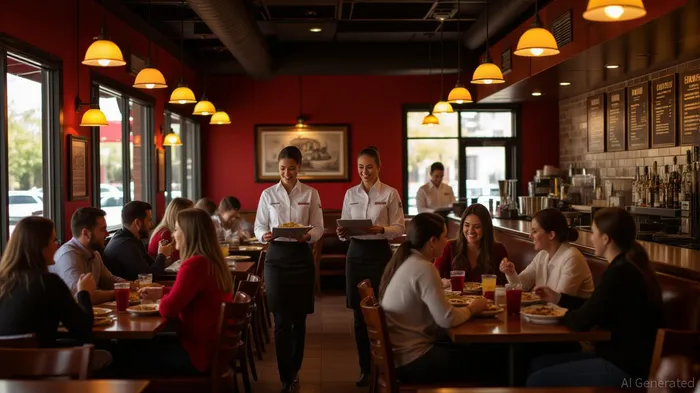 The Christmas Day 2025 closure,
a longstanding company policy to allow employees time with families, further illustrates this adaptability. While such closures typically impact holiday sales, Texas Roadhouse mitigated the effect through strategic pricing and operational upgrades. For instance, the 1.7% menu price hike in Q4 2025,
announced ahead of the holiday season, ensured margins remained stable despite rising commodity costs. Additionally, the chain's expansion into fast-casual dining via brands like Bubba's 33 and Jaggers diversified its revenue streams, with Bubba's 33
reporting over 20% revenue growth in 2024.
Investor Sentiment: Balancing Short-Term Volatility and Long-Term Confidence
Investor reactions to Texas Roadhouse's performance in 2025 have been mixed. While
the company's third-quarter 2025 results showed a 12.8% year-over-year revenue increase to $1.44 billion, earnings per share (EPS) fell slightly below Wall Street expectations,
triggering a negative market response. This volatility reflects broader investor concerns about margin pressures from inflation and commodity costs, particularly for beef
according to industry analysis.
However, the company's long-term strategy has bolstered confidence. Texas Roadhouse plans to open 35 new company-owned restaurants in 2026 and anticipates continued expansion through franchise acquisitions
according to company projections. Executives have also emphasized operational improvements, such as
upgrading guest management systems to enhance wait-time accuracy, which align with investor expectations for efficiency-driven growth. CEO Jerry Morgan's assertion that the brand's "fundamental appeal to consumers has not waned"
according to company statements further reinforces this optimism.
Consumer Behavior Shifts: Adapting to a Changing Landscape
Consumer reactions to Texas Roadhouse's adjustments have been largely positive. The chain's Q2 2025 comparable sales rose 5.8%,
driven by traffic growth and its value proposition. Menu innovations, such as the introduction of mocktails, also catered to evolving preferences
according to menu updates. Despite early-year challenges, the company
reported all-time highs in average weekly sales for its three brands by mid-2025, suggesting strong brand loyalty.
The Christmas Day closure, while a potential sales drag, aligns with consumer expectations for holiday flexibility. Surveys indicate that diners increasingly prioritize work-life balance, with many appreciating businesses that close on major holidays to support employee well-being
according to consumer feedback. This alignment with consumer values may mitigate the financial impact of such closures.
Conclusion: A Model for Sector Resilience
Texas Roadhouse's 2025 performance highlights the restaurant sector's capacity to adapt to external shocks while maintaining investor and consumer trust. By combining strategic pricing, technological upgrades, and a diversified brand portfolio, the chain has navigated a challenging environment with relative success. For investors, the key takeaway is that operational adaptability-rather than short-term sales fluctuations-will define long-term resilience in the post-pandemic dining landscape.







Comentarios
Aún no hay comentarios